
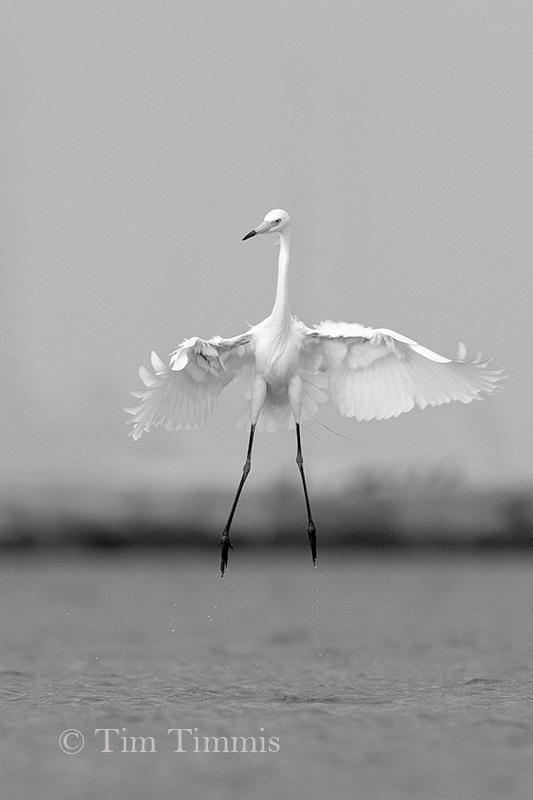
Reddish Egret Jump in B&W
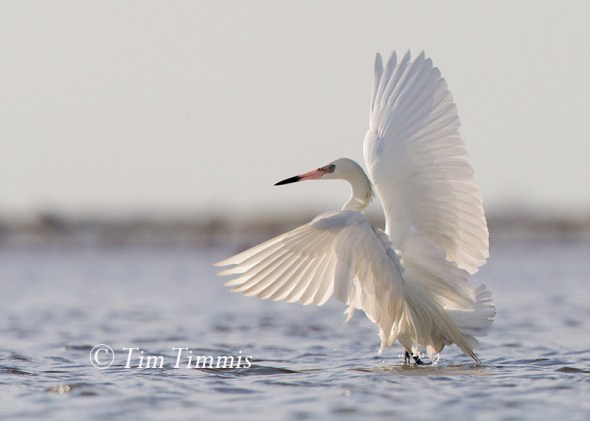
This white morph reddish egret was practicing his jumping skills at Galveston’s FeatherFest in April. This was shot #11 out of a series of 16 photos that he was in the air.
Colors were somewhat muted so I converted into B&W using NIK Silver Effects.
Taken with Canon 1DX and Canon 500mm F4 IS II mounted on Skimmer ground pod with Wimberley II gimbal head
1/1250 sec @ F9, ISO 1600, evaluative metering, +1 exposure compensation
White Morph Reddish Egret Launching
Sunday’s visit to Bolivar Flats with my last field trip for this years Galveston’s FeatherFest. Was a little worn out after 4 days but it was well worth the effort to take a couple of groups to Bolivar Flats. It was a new experience for some of them and we had some great photo op’s on both trips. We couldn’t get very close to the avocets on this trip but I did find a morph reddish egret. Spotted him at a distance and maneuvered the group close to the water as he was fishing. He worked his way back and forth in front of us making for some great photo op’s.
Taken with Canon 1DX and Canon 500mm F4 IS II and 1.4X III teleconverter mounted on Skimmer ground pod with Wimberley II gimbal head
Aperture priority, 1/3200 sec @ F9, ISO 1600, evaluative metering, +1 exposure compensation, 700mm
Brown Pelicans in a Blur
I’ve been in a major creative funk lately with it being several weeks since I’ve gone out to take wildlife photos. Life gets in the way sometimes with business travel, some dental issues, lots to do around the house and getting a new computer. I’ve been working on a blog post about my journey to find a new computer and will share that later. Also the weather in SE Texas hasn’t been cooperating on weekends for the last 8 weeks or so.
Decided to go to the Texas City Dike a couple of weeks ago to create some abstract wildlife photos with some slow shutter speeds. Made it to the dike before sunrise and waited until I could focus on brown pelicans that were diving for fish.
Used shutter priority to slow the action down while creating some interesting blurs. It’s fun but challenging to try this technique. You won’t get the same photo twice as each shot is dependent on how fast you are panning with the bird and what the bird is doing, which is part of the fun. Went back the following weekend to crank it down even further to 1/10 sec.
Taken with Canon 1DX and Canon 500mm F4 IS II with 1.4X III teleconverter, handheld out my car window
Shutter priority, 1/15 sec @ F5.6, ISO 3200, evaluative metering, +2 exposure compensation

Shutter priority, 1/20 sec @ F11, ISO 800, evaluative metering, +1 1/3 exposure compensation

Shutter priority, 1/20 sec @ F8, ISO 1600, evaluative metering, +1 1/3 exposure compensation

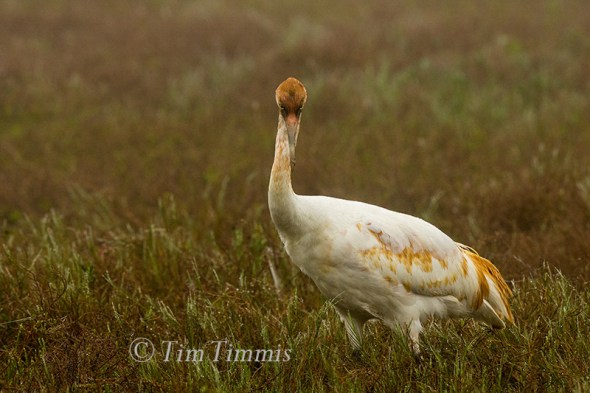
Whooping Crane
Spent this past weekend in Rockport, TX trying to find Whooping Crane at Aransas NWR via a boat with Kevin Sims. Had a great time as always. Thanks again Scott for the invite.
Saturday with very foggy and had to start late and tried to wait out the fog. No luck with that strategy, so Kevin worked the shoreline. We found three whooping cranes that were looking for crabs in a small pond close to the shoreline. We got very luck as they worked their way towards us and ended up walking out of the pond and got very close. Ended up having to taking off my 1.4X teleconverter as I was only getting head shots. A great problem to have when shooting whooping cranes.
Got this stare down from the juvenile crane. They stuck around for about 1/2 hour and then walked away. Was a great experience.
Taken with Canon 1DX and Canon 500mm F4 IS II lens mounted on tripod with Wimberley II gimbal head
1/500 sec @ F9, ISO 1600, spot metering, +2/3 exposure compensation
Yellowstone in Winter 2018 – Day 1
Just got home last week from my second journey to Yellowstone National Park in winter, traveling on Jared Lloyd’s Winter in Yellowstone Workshop. My first trip last year was one of those so called life changing experiences with it being an easy decision to go back again this year before the airplane wheels touched down in Houston. Last year was very special with fishing coyotes, bull elk, jumping fox, frosty bison and a long-tailed weasel. Also got to see wolves in the Lamar Valley about 1 mile away through a spotting scope. This year changed that perspective, just slightly, forever.
Day 1 in the park started out with a slight delay with the snow coach but it all worked out with us entering the park at the West Yellowstone entrance around 7:30 a.m. We had heard about a carcass near the road with wolf activity, so we were very excited to see what the morning would bring. As we approached the location, we could see what was left of the carcass but no wolves, so we kept going in search of other wildlife along the Madison River. We worked the river to the warming hut and headed back west.
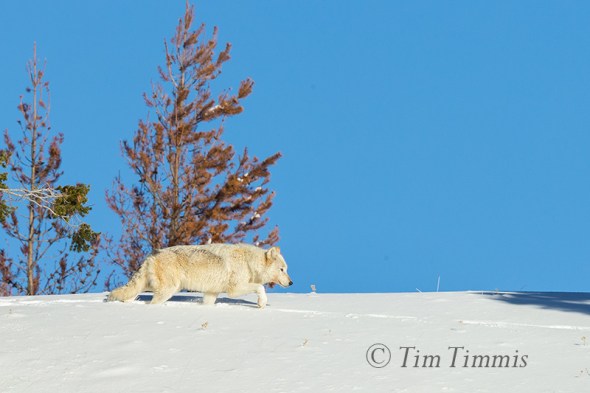
Just past the seven mile bridge, we spotted two wolves on a hillside that were watching a young bison that was standing in the river. The bison had apparently been attacked earlier by the wolves on her rear legs and was seeking shelter in the river.
Manual mode, 1/2000 sec @ F10, ISO 500, spot metering off the snow, +2 stops
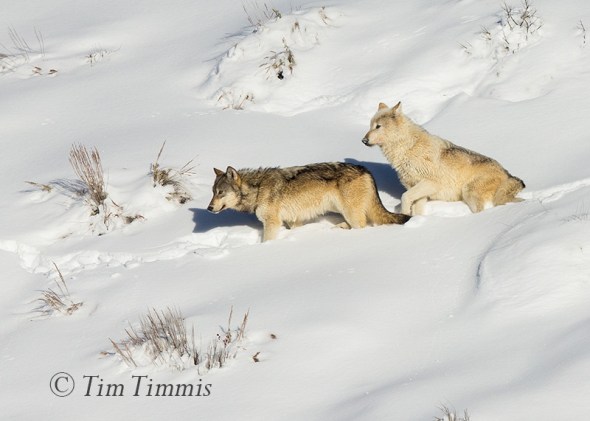
Manual mode, 1/1600 sec @ F10, ISO 400, spot metering off the snow, +2 stops

We photographed the wolves for over two hours and they eventually moved over the hill out of sight. The bison took that que to try to make an escape by walking along the river right in front of us and then up on the road heading east, limping along as she walked. We found her later on the opposite side of the road lying down next to a tree.
We all knew what would likely be her fate by the next morning, which came to pass. The circle of life is very hard to watch in person but inevitable in the wild.
Manual mode, 1/1000 sec @ F10, ISO 400, spot metering off the snow, +2 stops

Manual mode, 1/1000 sec @ F10, ISO 400, spot metering off the snow, +2 stops
Manual mode, 1/4000 sec @ F6.3, ISO 320, spot metering off the snow, +2 stops
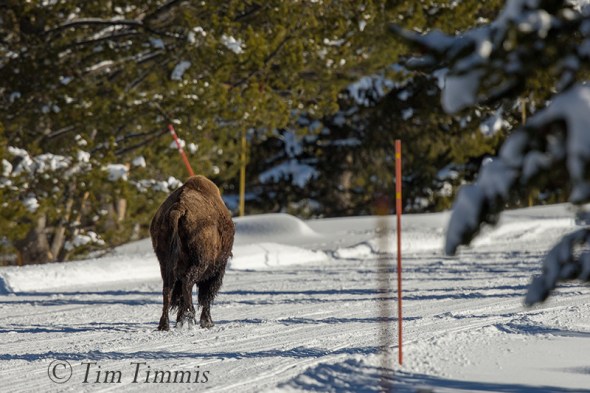
Taken with Canon 1DX and Canon 500mm F4 IS II with 1.4X III teleconverter mounted on Induro tripod with leveling head and Wimberley II gimbal head, some hand held.
White Tailed Hawk
Hope that everyone survived new years celebrations. We did our usual Mexican restaurant for dinner and headed home before the crazies got on the road.
For my old friend Joe, here are a few shots of a White Tailed Hawk that I found on the road leading up to Anahuac NWR while guiding Stephen Bontempo around a few weeks ago. These were taken out my car window. Pulled up and had to quickly get ready to shoot. He laughed before I got the first shot off but got several photos of him as he took off and flew away. Good times…
Taken with Canon 1DX and Canon 500mm F4 IS II with 1.4X III teleconverter.
1/1000 sec @ F8, ISO 800, evaluative metering, +2/3 exposure compensation

1/1000 sec @ F8, ISO 800, evaluative metering, +2/3 exposure compensation
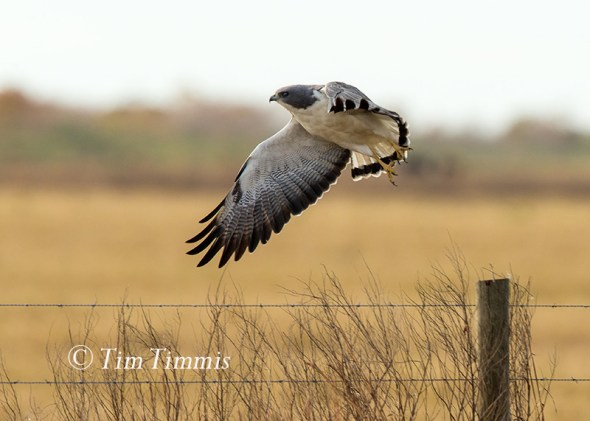
1/2000 sec @ F8, ISO 800, evaluative metering, +2/3 exposure compensation

1/1600 sec @ F8, ISO 800, evaluative metering, +2/3 exposure compensation

Happy New Year!
Hoping that all of you had a great 2017. My plan was to post my favorite shots for 2017 before now but I got tied up over the holidays so it will have to wait for early Jan.
2018 will start out with a bang for me from a photography perspective and then have some challenges. It’s going to be an interesting year for sure.
Spend the morning of Christmas Eve at Bolivar Flats along the gulf coast taking shorebird photos, along with a few raptors. While walking out along the shoreline, saw a dark spot out on the sand that looked out of place. Trusted my instinct and picked up my camera and spotted a peregrine falcon. Got very excited and walking slowly closer to him, laid down, took a couple of shots, went to check my histogram and he took off.
Walked away from that area over to one of my favorite spots around the corner and spotted a couple of hundred Avocets feeding just off shore. Laid down and belly crawled towards them. The muck was very slimy and ended up on my knees and pushed my ground pod along for about 60 ft and stayed put for a couple of hours.
All of a sudden, all of the birds flew away, which usually means that either a raptor or human was nearby. Spun around on my stomach thanks to the slimy muck and caught this Northern Harrier flying along the vegetation line.
Ended up seeing a couple of Harriers and four Caracara’s. Tis the season for migrating raptors.
Taken with Canon 1DX and Canon 500mm F4 IS II with 1.4X III teleconverter mounted on Skimmer ground pod with Wimberley II gimbal head.
Aperture priority, 1/1000 sec @ F5.6, ISO 3200, evaluative metering, +2 exposure compensation.
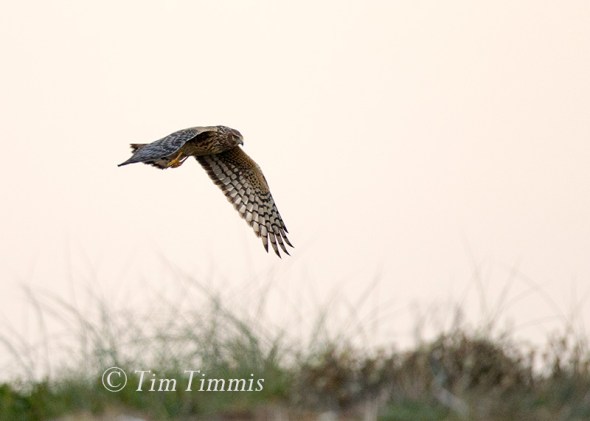
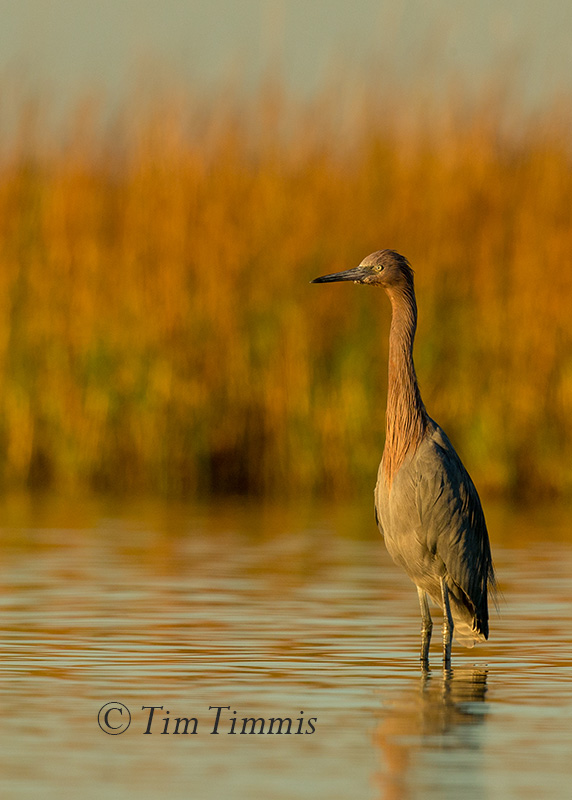
Reddish Egret Portrait in Golden Light
Golden light at sunrise rocks. Got this Reddish Egret portrait shot from Bolivar Flats along the Gulf Coast on Friday. As usual, was using my ground pod to get the low-level look.
I try to get into position about 1/2 before the sun comes up to get some cool pre-dawn color but that’s not practical with the time change. Have to get up at 4:00 a.m. at the latest to make the 6:00 a.m. Bolivar Ferry. Was walking out to my spot when the sun popped but it was still good. Don’t know about the birds, but I had a great time.
Started out shooting black necked stilts when this reddish egret flew in. He didn’t stick around long but loved the golden light on him and the weeds in the background.
Taken with Canon 1DX and Canon 500mm with 1.4X III teleconverter mounted on Skimmer ground pod with Wimberley II gimbal head
Aperture priority, 1/800 sec @ F9, ISO 1600, evaluative metering, +1 exposure compensation, 700mm
B&W Sea Otters
Here are some more sea otter photos from Morro Bay, CA. There were two pups in the group and it was difficult to get a decent shot of them.
Converted these to B&W using NIK Silver EFfx Pro 2.
1/640 sec @ F4.5, ISO 1600, evaluative metering, +2 exposure compensation, 500mm mounted on tripod

1/400 sec @ F8, ISO 1600, evaluative metering, +2 exposure compensation, 560mm with 100-400 II lens and 1.4X III teleconverter, handheld
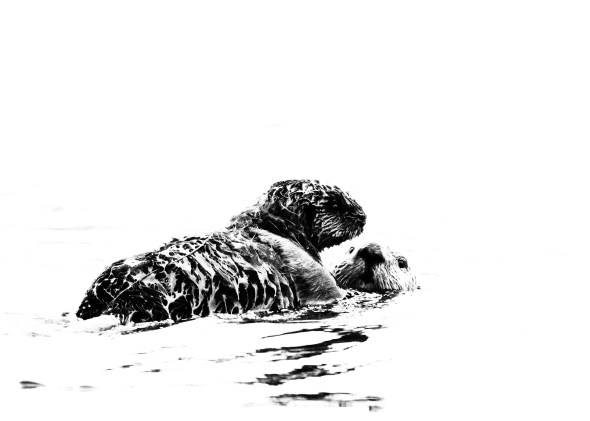
1/500 sec @ F8, ISO 1600, evaluative metering, +2 exposure compensation, 560mm with 100-400 II lens and 1.4X III teleconverter, handheld
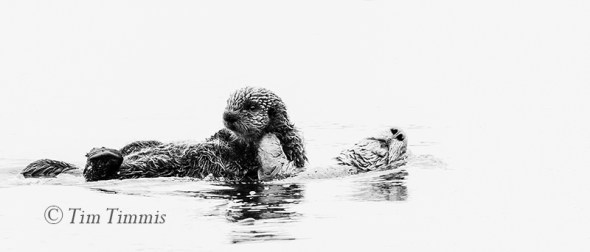
Sea Otters at Morro Bay, CA
Spent last weekend at Morro Bay in California taking photos of sea otters. This was my second trip there in the last 4 1/2 years. Got some time to see some old friends and make some new ones. Love this small bay town and need to try to make this an annual trip.
Day 1 was cloudy with about 20 otters wrapped up in sea weed near the Morro Bay rock. They wrap themselves in kelp to keep them from floating away at night while sleeping.
Tried to get as close to the water as possible, which meant positioning my tripod on the rocks and sitting on a rock for a few hours. Had to shift position when the water came up with the tide.
Taken with Canon 1DX and Canon 500mm F4 IS II mounted on tripod with Wimberley II gimbal head.
Aperture priority, 1/800 sec @ F5.6, ISO 1600, evaluative metering, + 1 2/3 exposure compensation, 500mm

Aperture priority, 1/400 sec @ F5.6, ISO 1600, evaluative metering, + 2 exposure compensation, 500mm

Aperture priority, 1/640 sec @ F4.5, ISO 1600, evaluative metering, + 2 exposure compensation, 500mm
Reddish Egret Fight
These two reddish egrets went toe to toe yesterday at Bolivar Flats along the gulf coast of Texas. Had my ISO cranked up to 3200 while taking static shots of a couple of white morph reddish egrets when these two started fighting. Should have increased to ISO to 6400 but didn’t have enough time to change any settings as the action happened very fast. Lots of blurred action in this series but it was very fun to watch and photograph. More to come…
Taken with Canon 1DX and Canon 500MM F4 IS II with 1.4X teleconverter mounted on skimmer ground pod with Wimberley II gimbal head.
1/20 sec @ F5.6, ISO 3200, evaluative metering, + 1 1/3 exposure compensation

Sandhill Chasing Whooping Crane
While taking pictures of a lone whooping crane, three sandhill cranes came flying in. They apparently thought that they had power in numbers and tried to chase off the whooping crane. It made for some very cool photo op’s. They were almost successful when all of a sudden two other whooping cranes flew in what I thought was an attempt to save the day. In reality, they ended up chasing away the original whooping crane. Go figure…
1/500 sec @ F9, ISO 800, evaluative metering, – 1 1/3 exposure compensation
Taken with Canon 1DX and Canon 500mm F4 IS II mounted on tripod with Wimberley II gimbal head

Black Skimmer’s Landing Gear
This black skimmer was doing a fly-by and actually skimming at Bolivar flats, which is a somewhat rare event in that location. From my experience over the past several years, they usually just fly around looking for a place to land so this was a very nice change of pace. Especially since this was during a guide trip that I was leading with three great guys from New Zealand, Canada and Indiana.
It’s always a challenge to capture these birds in flight while using a ground pod since your range of motion is limited while laying on the ground. Added bonus was he briefly turned directly towards me. Also like that his feet were hanging like landing gear coming down.
Taken with Canon 1DX and Canon 500mm F4 IS II with 1.4X III teleconverter mounted on Skimmer ground pod with Wimberley II gimbal head.
1/1250 sec @ F10, ISO 800, evaluative metering, +1 exposure compensation

All Puffed Up
This white morph reddish egret was all puffed up while strutting around Bolivar Flats. There has been a record crop of white morph’s around this neck of the woods lately, which is very cool.
Taken with Canon 1DX and Canon 500mm F4 IS II with 1.4X III teleconverter mounted on Skimmer ground pod with Wimberley II gimbal head
1/2000 sec @ F8, ISO 400, evaluative metering, no exposure compensation
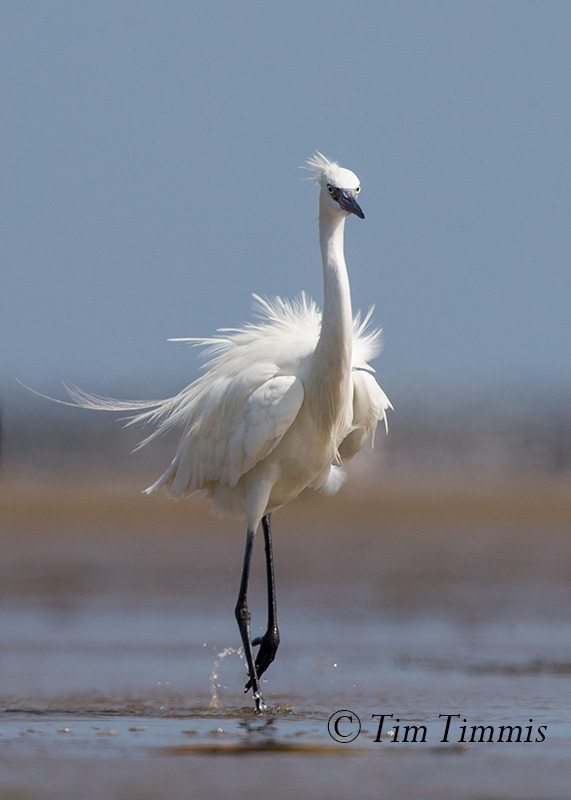
Reddish Egret Stalking
This reddish egret was stalking its prey just after sunrise. He had his head on the down low while running towards the fish. His legs lined up perfectly that it looks like he only has one leg with two feet attached to it.
Taken with Canon 1DX and Canon 500mm F4 IS II with 1.4X III teleconverter mounted on Skimmer ground pod with Wimberley II gimbal head
1/125 sec @ F10, ISO 1600, evaluative metering, +1 1/3 exposure compensation

You Lookin at Me??
You lookin at me? Better not be. My boys behind me will come after you.
Made another trip to Bolivar Flats over the Memorial Day weekend while guiding three clients for two days. They were at the end of a 3 week trip across south Texas with the Galveston area their last stop. Thanks again to Kent, Bill and Ian for allowing me to show you around this part of Texas. Had a great time and got to see lots of birds.
Made two stops to Bolivar Flats and found some avocets, reddish egrets and lots of snowy egrets. Had several opportunities for some interaction shots which are always fun. One was a little weird with an avocet trying to mate with an inanimate object. More on that later.
While focusing on a avocet, saw two snowy egrets walking behind him. Switched my attention to the background and visualized this shot coming as they crossed behind him. The avocet cooperated by staring at me while getting some scratching action in. Made for a cool shot.
Taken with Canon 1DX and Canon 500mm F4 IS II with 1.4x III teleconverter mounted on a Skimmer ground pod with Wimberley II gimbal head
1/1250 sec @ F10, ISO 800, evaluative metering, +1 exposure compensation

Yellowstone Winter Trees
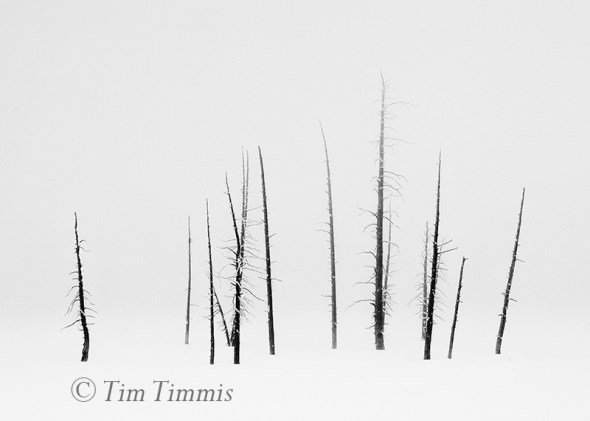
It’s getting quite toasty with the heat/humidity in SE Texas so I thought that it was time to cool it down a touch with a couple of photos from Yellowstone in winter. My trip was focused on “wildlife” but we did stop a couple of times for some landscape photos. Proof that I can somewhat take non-critter photos.
I wasn’t the best prepared traveling without my ball head but made
do. Trying to use a 17-40mm lens on a gimbal head was a challenge though. Plus breaking my 100-400 lens on day 1 didn’t help so the last shot was with my 500mm lens. Next time I’ll have my back-up camera ready with my wide-angle lens for just such an occasion.
Taken with Canon 1DX and Canon 17-40mm lens mounted on tripod.
Manual mode, 1/60 sec @ F11, ISO 200, spot metered off the snow + 2 stops
Taken with Canon 1DX and Canon 500mm F4 IS II handheld
Manual mode, 1/800 sec @ F5.6, ISO 100, spot metered off the snow + 2 stops

Spoonbill Wingspan
Drove down to the Rockport, TX area at the end of April to participate in a workshop with Hector Astorga. We spent two mornings visiting the Aransas NWR rookery by boat. We experienced very high winds and high surf but boat captain Kevin Sims did an excellent job as always. It was quite the roller coaster ride getting to the rookery with three foot waves bouncing the small flat-bottomed boat around in the dark before sunrise.
Once we arrived at the rookery, the waves reduced but the anchor wasn’t successful at keeping the boat still so Kevin put on his waders, jumped into the water and held onto the boat to keep it from moving around. He would then push the boat around manually when we needed to switch positions around the island. He definitely went above and beyond the call of duty on this trip
The rookery was filled with great blue herons and spoonbills, along with a few snowy egrets, reddish egrets, black crowned night herons, oystercatchers and terns. Most of the chicks were fairly large but were still actively being fed by their parents.
Caught this spoonbill coming in for a landing with his wings outstretched while positioned at the upper deck of the boat. With the wind/waves, it was challenging to keep the camera steady on my tripod. Took way too many photos but liked how this one turned out. Very minimal cropping on the right side. Had to crank up the ISO to 3200 to get a decent shutter speed.
Taken with Canon 1DX and Canon 500mm F4 IS II mounted on tripod with Wimberley II gimbal head
Aperture priority, 1/1000 sec @ F5.6, ISO 3200, evaluative metering, 500mm

Pelican Stealing White Morph’s Fish
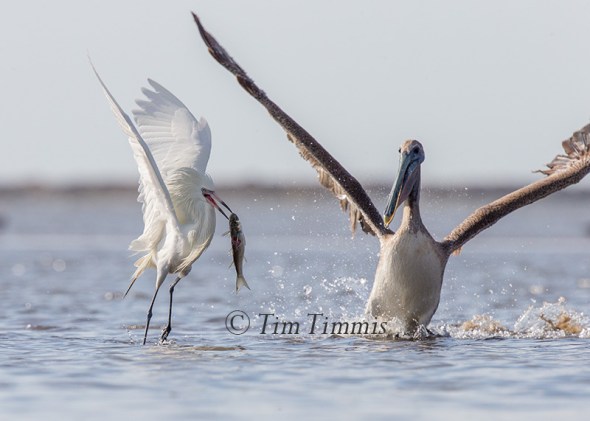
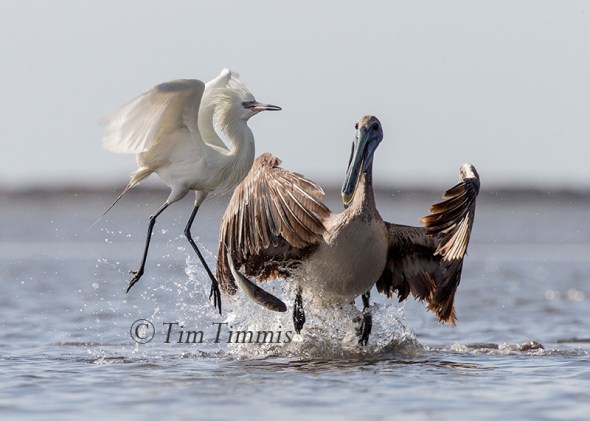
Here are some photos of the brown pelican scaring the white morph reddish egret in order to steal his fish. He surprised me as well and they were too close at 700mm and ended up clipping the pelican’s wings in the first shot. You can see the fish drop in the second photo with the pelican getting ready to enjoy his spoils in the last shot.
Taken with Canon 1DX and Canon 500MM F4 IS II with 1.4X III teleconverter mounted on Skimmer ground pod with Wimberley II gimbal head
1/1600 sec @ F11, ISO 800, evaluative metering, +1/3 exposure compensation
1/1600 sec @ F11, ISO 800, evaluative metering, +1/3 exposure compensation
1/1600 sec @ F11, ISO 800, evaluative metering, +1/3 exposure compensation

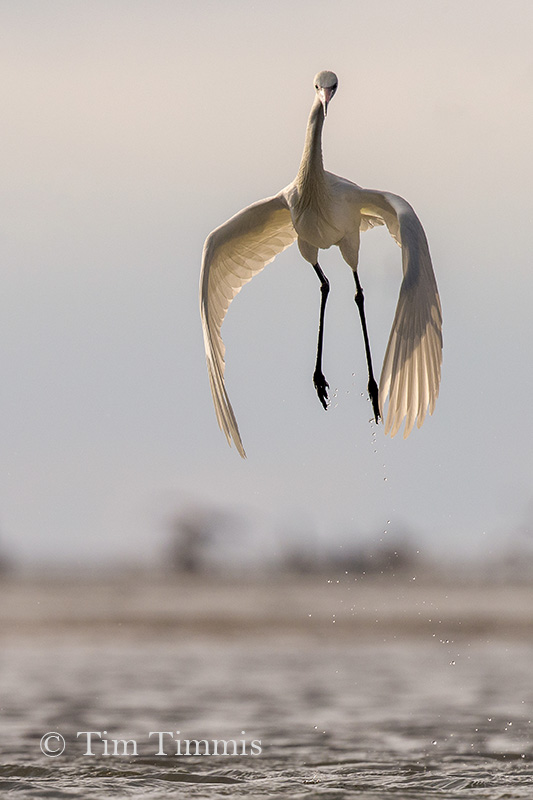
Flying Fish – White Morph Style

As a continuation from my last post, both white morph reddish egrets that we saw caught some very large fish. A lazy or very smart brown pelican then started to chase the white morphs to scare them into dropping the fish so that he could reap the benefits of the great fishing skills of the egrets.
This white morph apparently fled the scene and kept the fish in tow while flying, which was a first for me to see, let alone photograph. Luckily he landed fairly close to us with a very nice wing spread.
Got some photos of the pelican getting one of the white morphs to drop his fish later in the morning. I’ll post those next time.
This was one of my most successful guiding trips to Bolivar Flats. This was a very rare event to witness/photograph so I’m very pleased that my client got to see this behavior and get some great photos.
Taken with Canon 1DX and Canon 500mm F4 IS II with 1.4X III teleconverter mounted on Skimmer ground pod with Wimberley II gimbal head.
Aperture priority, 1/2500 sec @ F11, ISO 800, evaluative metering, +1/3 exposure compensation

Aperture priority, 1/1600 sec @ F11, ISO 800, evaluative metering, +1/3 exposure compensation
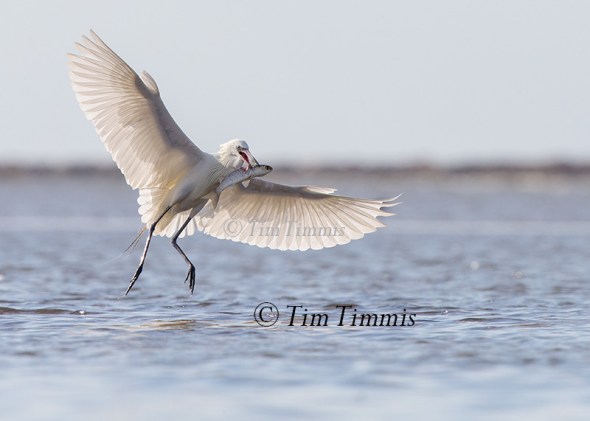
Aperture priority, 1/1600 sec @ F11, ISO 800, evaluative metering, +1/3 exposure compensation

White Morph Reddish Egret
On this recent trip to Bolivar Flats in Texas, the reddish egrets were out in force, including two white morph’s. I was guiding Bruno from San Diego, who hadn’t seen a white morph before so it was great timing. They danced around right in front of us and both ended up catching some very large fish and had a close encounter with a brown pelican. More photos to come.
Taken with Canon 1DX and Canon 500mm F4 IS II with 1.4X III teleconverter mounted on Skimmer ground pod with Wimberley II gimbal head
1/1600 sec @ F10, ISO 800, evaluative metering, +1/3 exposure compensation

1/2000 sec @ F11, ISO 800, evaluative metering, +1/3 exposure compensation
Brown Pelicans in Missing Man Formation
These brown pelicans were flying in formation in a line when three of them broke off in what looks like the missing man formation. Taken during my second trip to Galveston’s FeatherFest.
Taken with Canon 1DX and Canon 500MM F4 IS II mounted on Skimmer ground pod with Wimberley II gimbal head
1/1600 sec @ F5, ISO 400, evaluative metering, +1/3 exposure compensation

Ground Level Bird Photography Field Trip #1 – Galveston FeatherFest 2017
Last Thursday through Sunday was a very busy time for me at Galveston’s Texas FeatherFest. I led three classroom workshops and three field trips. This was my 5th year being one of the photography leaders and it was a blast, as always.
My field trip on Saturday started off by catching the 6:00 a.m. Bolivar Ferry. I met up with my group once we got off of the ferry and they followed me to Bolivar Flats. It was going to be a sunny morning with low tide so I was hoping that the birds were going to be out. Reports from the previous day indicated that the tide was abnormally low along the jetty without many birds in that area. Upon pulling up to the parking area on the beach, I could see that there were some exposed sandbars and what looked like a flock of avocets, which was a major relief. After we geared up, I gave everyone a quick lesson on how to try to try to keep their hands clean when lying down and getting up and we headed out.
There were two other photographers lying on the beach shooting the avocets so I decided to take my group out on the sandbar so that we weren’t looking into the sun all morning. We walked through the water to the sandbar without incident, which wasn’t the case on Sunday. More on that on my next post.
Ended up having the group lay down on the sandbar in a long row so that we wouldn’t be in each others line of fire for photography. We had 8 participants along with myself and my liaison, who helps me keep track of everyone and gets us back to the headquarters on time. I had the first person lay down near the water line at the north edge of the sandbar since the tide was supposed to be receding. Well that theory didn’t work too well as the water level came up later and the first couple of people started getting wet so we had to shift the line to the right, which would have been an interesting video.
The flock of avocets kept walking back and forth across the area between the sandbars, which provided some decent photo op’s. It’s always a challenge of trying to get one of the birds isolated from the flock. Decided to get a little closer after a while so we practiced crawling on the sand while pushing our ground pods along.
After the action died down, I had the group rotate 180 deg. so that we could get some photos of willets that were in the water behind us. Also, I had noticed several groups of avocets and brown pelicans flying by our sandbar and it finally hit me that we should turn around and get photos of them flying towards us. That turned out to be a great decision as they birds kept coming our way for the rest of the field trip.
Thanks to Richard Howard for being my liaison and to everyone who came out to play in the wet sand with me. I’m hoping that you had as much fun as I did and got some great photos from a different perspective that what you normally see.
Taken with Canon 1DX and Canon 500mm F4 IS II with 1.4X III teleconverter mounted on Skimmer ground pod with Wimberley II gimbal head.
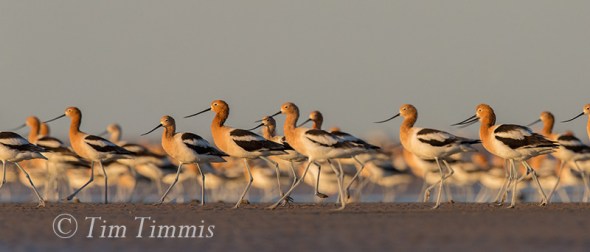
This photo is of the flock of avocets that kept walking back and forth in front of us.
Aperture priority, 1/1250 sec @ F10, ISO 1600, evaluative metering, +2/3 exposure compensation, 700mm
Caught these two avocets that were isolated from the rest of the group. I’m always looking for how two birds will interact of make an interesting photo together, such as their beaks crossing when coming close to each other, etc. These two made a cool mirror image of each other.
Aperture priority, 1/1600 sec @ F10, ISO 1600, evaluative metering, -1/3 exposure compensation, 700mm

After we turned around, several groups of avocets flew close to us. This group was clustered together when I first spotted them and they then spread out as they got closer to us. The ones on my far right were doing some very cool synchronized flying with common wing positions.
Aperture priority, 1/1600 sec @ F10, ISO 800, evaluative metering, +1/3 exposure compensation, 700mm

This is the same group 1 second later as they got a little closer.
Aperture priority, 1/1600 sec @ F10, ISO 800, evaluative metering, +1/3 exposure compensation

Here are the group photos so that I have evidence that yes, they actually laid down in the wet sand and…
Aperture priority, 1/1250 sec @ F9, ISO 800, evaluative metering, +1 exposure compensation, 700mm

…that they got wet and dirty. Mission accomplished.
Aperture priority, 1/1250 sec @ F9, ISO 800, evaluative metering, +1 exposure compensation, 700mm

Willet Wars
On my last trip to Bolivar Flats, the willets were in fighting mode with breeding season in full swing. While taking photos of avocets, the willets were squawking away and chasing each other around. These two started going at it and were circling around after one grabbed the others neck. He then lifted off trying to get away but the other one held on for a while. He finally broke free and left the area.
Taken with Canon 1DX and Canon 500mm F4 IS II with 1.4X III teleconverter mounted on Skimmer ground pod with Wimberley II gimbal head.
Aperture priority, 1/1000 sec @F 7.1, ISO 1600, evaluative metering, + 1 1/3 exposure compensation

 Tim Timmis Photography