Nebraska Sandhill Crane Migration
Made my second annual trip to Nebraska to see the Sandhill Crane migration along the Platte River in Nebraska. Had a great time last year and had to try again. It was peak timing with over 200,000 Sandhill’s estimated to be in the area. Worked a 20 mile stretch of dirt back roads south of the Platte river east of Kearney, NE for 2 1/2 days. Only had one day of sun but it was tough shooting during mid-day with the sun out. It was a little chilly in the mornings with temp’s in the 20’s (deg F).
One lesson learned was that I should have taken my beanbag on this trip as my arm got worn out with handholding my 500mm lens out the car window for most of the trip. Took my tripod but didn’t use it as I opted to hand hold my 100-400 lens while on the railroad bridge over the river at sunrise and sunset. Ended up getting some decent sunset shots that I’ll post later.
Taken with Canon 1DX and Canon 500mm F4 IS II with 1.4X III teleconverter, handheld
This Sandhill was being praised as he was getting ready to stick the landing.
1/800 sec @ F11, ISO 1600, evaluative metering, no exposure compensation, 700mm
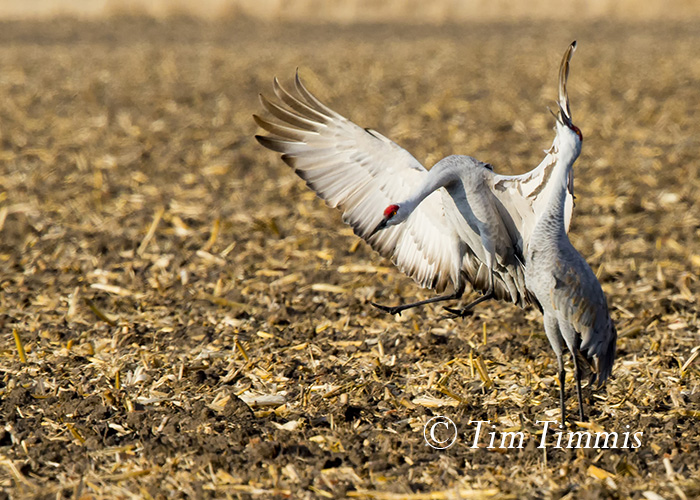
Mating dances were going on all around me, which was fun to capture.
1/800 sec @ F11, ISO 1600, evaluative metering, no exposure compensation, 700mm

1/1000 sec @ F11, ISO 1600, evaluative metering, no exposure compensation, 700mm

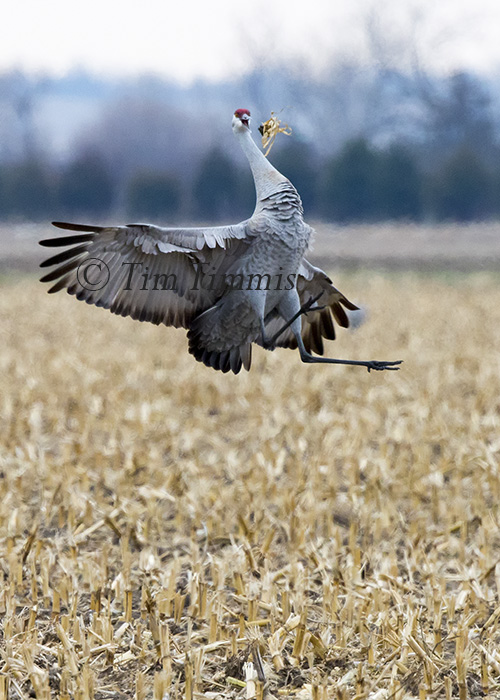
Some Cranes would pick up corn stalks from the ground and through them up into the air. Got several shots of this behavior.
1/1250 sec @ F13, ISO 2500, evaluative metering, no exposure compensation, 700mm
Love in the Air
Made my first trip to High Island’s rookery last Monday and the birds are out in force. Lots of activity with mating dances in full breeding plumage. Some Great Egrets sitting on eggs already. Caught this Great Egret mating shot before the sun came up. Not enough light to get sharp photos so went into blur mode.
Taken with Canon 1DX and Canon 500mm F4 IS II mounted on tripod with Wimberley II gimbal head.
1/13 sec @ F4, ISO 5000, evaluative metering 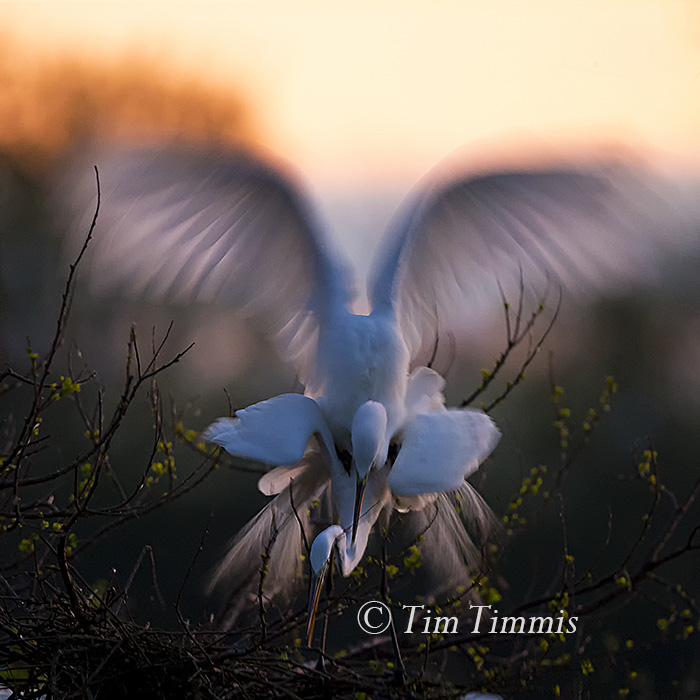
Catching the Light
With the water jumping above the surface from the quick thrusting of his beak, this Reddish Egret was able to catch some food and some nice light. As he came up with a small bite, the sunlight reflected off the water at the tip of his beak and radiated down in its reflection.
My goal every time that I go out is to play with the light at sunrise. This Reddish Egret was literally playing along with me.
Taken with Canon 1DX and Canon 500mm F4 IS II and 1.4X III teleconverter mounted on Skimmer ground pod with Wimberley II gimbal head
1/1250 sec @ F10, ISO 1600, evaluative metering, +1 exposure compensation

Legs of Yellow
Hence their name, Yellowlegs. These shorebirds move around very fast while feeding in the shallow water. It’ a challenge to track them and keep them in focus so I tend to use all focus points on them when they get close. They have been in abundance this year at Bolivar Flats.
Taken with Canon 1DX and Canon 500mm F4 IS II with 1.4X III teleconverter mounted on Skimmer ground pod with Wimberley II gimbal head
1/2000 sec @ F9, ISO 1600, evaluative metering, +1/3 exposure compensation

1/1250 sec @ F0, ISO 1600, evaluative metering, +2/3 exposure compensation
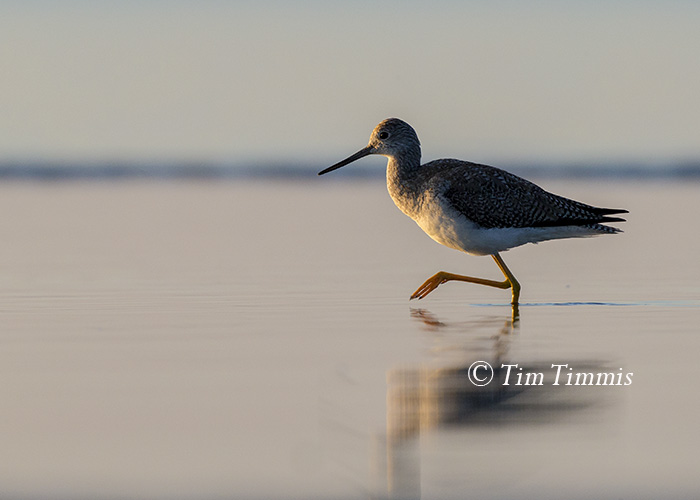
1/1250 sec @ F10, ISO 1600, evaluative metering, +1/3 exposure compensation

Incoming Avocets
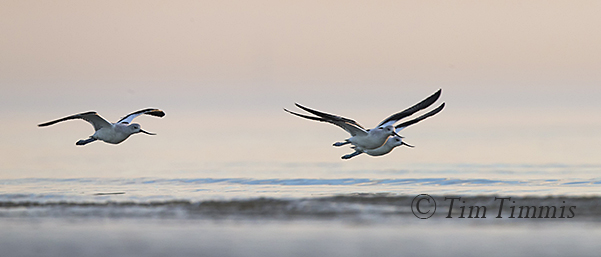
Time for an Avocet flight shot. It’s almost always a group shot with these birds as they travel in flocks.
Taken with Canon 1DX and Canon 500mm F4 IS II with 1.4X III teleconverter mounted on Skimmer ground pod with Wimberley II gimbal head
1/640 sec @ F8, ISO 1600, evaluative metering, +1 exposure compensation

Long Billed Curlew
This Long Billed Curlew was showing off his landing and flying skills.
Taken with Canon 1DX and Canon 500mm F4 IS II with 1.4X III teleconverter mounted on Skimmer ground pod with Wimberley II head
1/800 sec @ F5.6, ISO 4000, evaluative metering, +1 exposure compensation
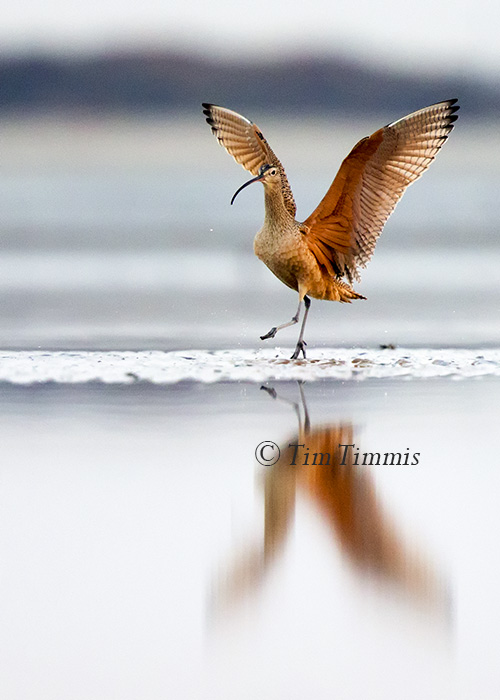
1/1600 sec @ F8, ISO 1600, evaluative metering, +1 exposure compensation
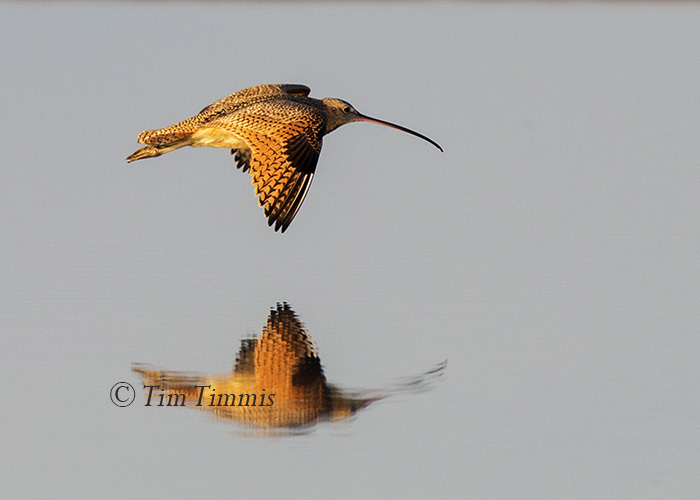
Fur-Like Feathers
The feathers on a Reddish Egret’s head can sometimes look more like fur than feathers. The textures make this bird one of my favorites to photograph. They can be very territorial and ruffle up their feathers when another Reddish Egret comes around as shown in the first photo below. On a previous post, Lyle commented about the “mane” on these egrets, which is a good description, especially in the last photo.
Taken with Canon 1DX and Canon 500mm F4 IS II with 1.4X teleconverter mounted on Skimmer ground pod with Wimberley II gimbal head
1/1250 sec @ F10, ISO 1600, evaluative metering, +1 exposure compensation

1/1000 sec @ F10, ISO 1600, evaluative metering, +1 exposure compensation
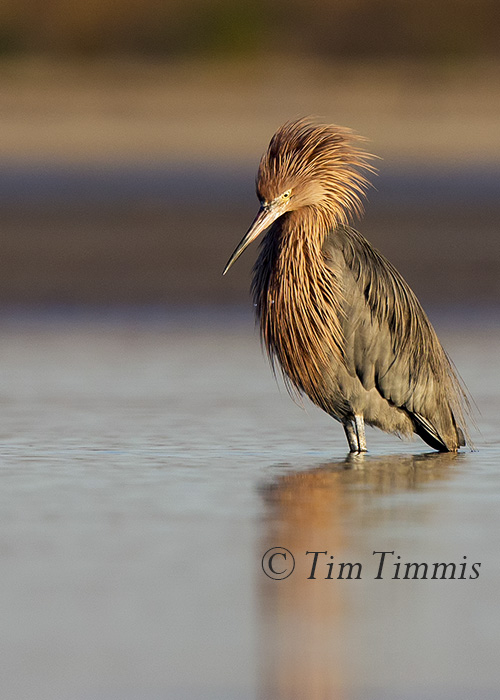
1/1250 sec @ F10, ISO 1600, evaluative metering, +1 exposure compensation
1/1000 sec @ F10, ISO 1600, evaluative metering, +1 exposure compensation

New Canon 100-400 II Lens
Since the new Canon 100-400 II lens came out, I’ve been reading the positive reviews and finally decided to take the plunge and replace my old 100-400. Unfortunately, my usual source for camera gear, B&H, along with most of the other reliable on-line retailers have been out of stock for several weeks. Ended up getting it at a local Best Buy.
Purchased my old 100-400 back in 2005 and used it for wildlife photography until I got my 500mm lens a couple of years ago. It’s been a great lens but needs some repairs. The rotating collar is worn out, for the second time, one of screw holes for the collar alignment pins has stripped out, and it needs to be torn apart and cleaned internally with some dust on the inner lens. Decided to invest in the new lens with its improved image stabilization instead of spending a few hundred dollars to repair the old one.
First impressions out of the box compared to the original model is that it’s a little heavier, the hood design is much improved, the rotating collar appears to be a better design and obviously the push-pull zoom design has been replaced with a twist zoom design. It will take some getting used to the new zoom mechanism as I loved the push-pull.
Will be taking the new lens along on some upcoming photography trips. I’m anxious to get it out into the field to try it out. I’ve ordered a RRS replacement foot to keep from having to add a plate like on my old lens and I’m not thrilled with the twist lock on the foot that comes with the new lens. This will be my go-to airshow lens and lens when shorter focal lengths are in order.
Here is a photo of the old and new 100-400. I’ll post some photos taken with the new lens when I’ve had a chance to try it out. Of course, it’s supposed to rain all weekend in SE Texas.

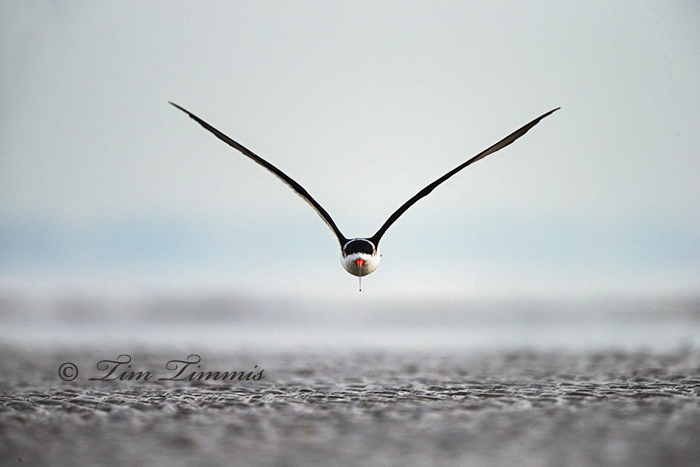
Busy Flight Line
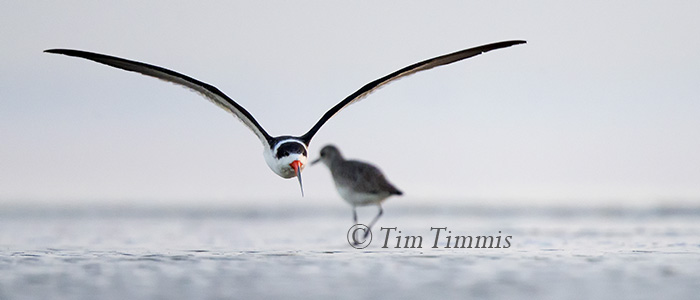
This Black Skimmer had to dodge some of the local ground traffic as he was buzzing the tower. ” Talk to me Goose”….
Another photo from my most excellent Skimmer adventure with Matt and Susan. Focused on this one from a distance as he was flying with two other Skimmers. When the 1DX locks on focus it doesn’t let go. This was photo #32 out of 37 shots of him, all of which were in focus. Some minor cropping to the wide format.
Taken with Canon IDX and Canon 500mm F4 IS II with 1.4X III teleconverter mounted on Skimmer ground pod
1/1600 sec @ F5.6, ISO 4000, evaluative metering, +1 exposure compensation
Reddish Egret Up Close
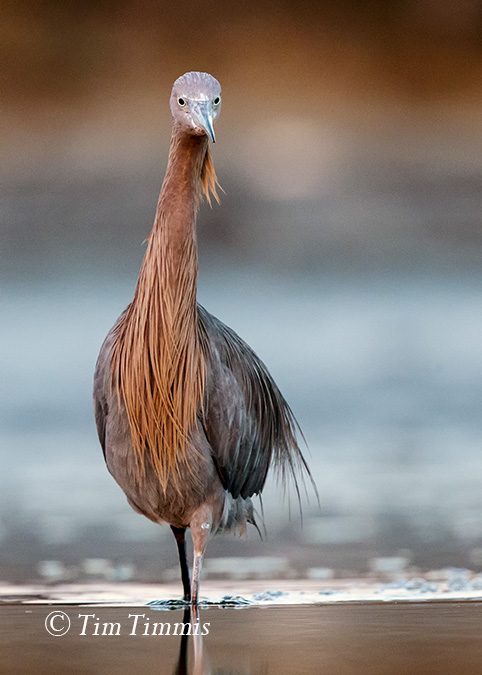
This Reddish Egret landed near by and ended up walked around me. Makes lying around in the wet sand worth it. These are close to full frame shots cropped to vertical.
Had to crank up the ISO to 5000 to get up to 1/500 sec shutter speed. Helps to justify the price tag (to me but not my wife) on the 1DX as I wouldn’t have gotten this shot with my 7D as the noise would have been too bad at these settings.
Taken with Canon 1DX and Canon 500mm F4 IS II with 1.4X III teleconverter mounted on Skimmer ground pod with Wimberley II gimbal head
1/500 sec @ F8, ISO 5000, evaluative metering, +1/3 exposure compensation

1/500 sec @ F8, ISO 5000, evaluative metering, +1/3 exposure compensation
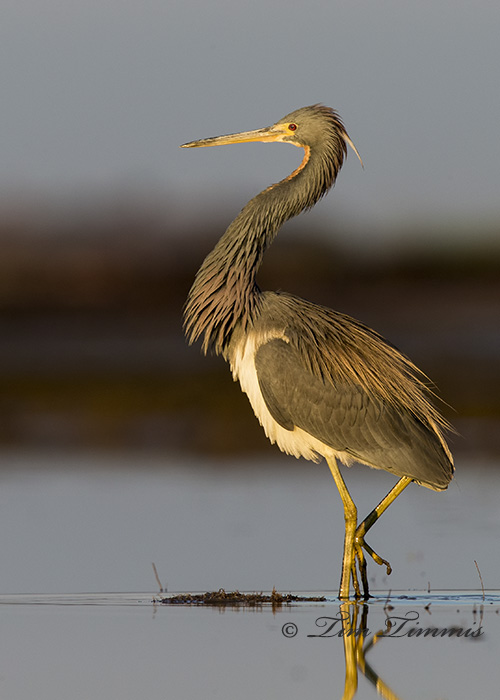
A Tri-Colored First at Bolivar
Another successful trip to Bolivar Flats yesterday left me some photos that I’ve never taken there before, a Tricolored Heron. I’ve never seen one on the flats before and was very surprised when this one showed up. First spotted him when he literally tried to land on top of me. Was lying on a sandbar when he had to make a quick aborted landing when he finally spotted me. I was disappointed that he didn’t stick around. As luck would have it, he returned later and landed right in front of me. Must have picked a good spot.
Had to shift from +1 exposure compensation to +1/3 to keep from blowing out the whites on his chest. Very minor cropping on this shot to get a vertical photo.
Taken with Canon 1DX and Canon 500mm F4 IS II with 1.4X III teleconverter mounted on Skimmer ground pod with Wimberley II gimbal head
1/1000 sec @ F10, ISO 1600, evaluative metering, +1/3 exposure compensation
B&W Splash
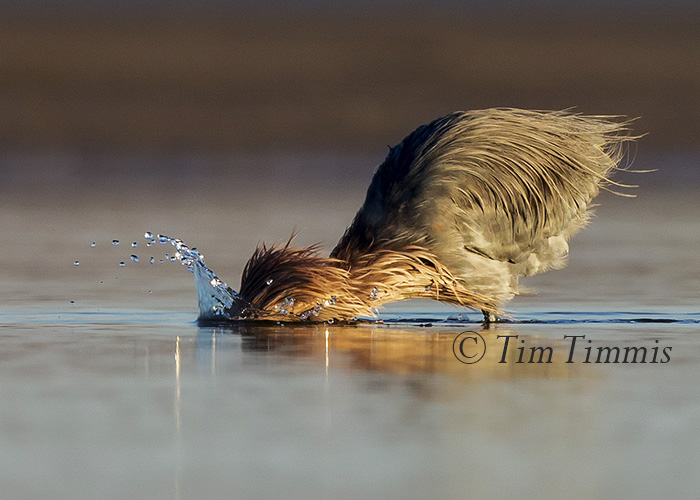
While walking back to my car, saw this Redding Egret fishing near the shoreline. Almost kept walking as I was worn out from an active early morning shoot but decided to lay down one more time. Glad that I did as he cooperated with some good feeding shots.
One way to get action shots with shorebirds is to start shooting a burst of shots when their head starts moving down towards the water. Was able to capture a nice see-through splash as his head dove into the water. The high shutter speed froze the action when the splash was at its peak.
With the light being harsh around 9:00 a.m., the colors were very muted so decided to use B&W on this one.
Taken with Canon 1DX and Canon 500mm F4 IS II with 1.4X III teleconverter on Skimmer ground pod with Wimberley II gimbal head
1/2000 sec @ F11, ISO 1600, evaluative metering, +1 exposure compensation

Long Billed Silhouettes
Another quick trip to the Gulf coast yesterday found several Long Billed Curlews at sunrise that were prime time for some silhouette shots. Was hoping for some more Skimmers but didn’t see any on this trip. The randomness keeps me going back as you never know what you are going to see.
Taken with Canon 1DX and Canon 500 F4 IS II with 1.4X III teleconverter mounted on Skimmer ground pod with Wimberley II gimbal head
1/1000 Sec @ F8, ISO 1600, evaluative metering, +1 exposure compensation

1/2500 Sec @ F11, ISO 1600, evaluative metering, +1 exposure compensation

In the Skimmer Lane
Calm winds and low tide equaled some good low-level photo op’s at Bolivar Flats yesterday. Met up with a couple of other photographers, Matt & Susan, and hit the sand bars. Started out getting some Avocet silhouette shots and then moved west. Picked a good spot and ended up directly in the flight path of more Black Skimmers than I’ve seen for a long time. They kept coming flying right towards us in waves. My camera did a good job of keeping the birds in focus for the head-on shots.
Taken with Canon 1DX and Canon 500mm F4 IS II with 1.4X III teleconverter mounted on Skimmer ground pod with Wimberley II gimbal head
1/500 sec @ F8, ISO 1600, evaluative metering, +1 exposure compensation
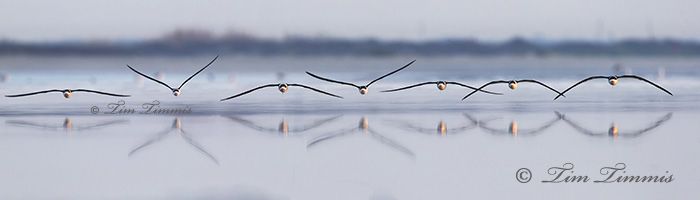
1/500 sec @ F8, ISO 1600, evaluative metering, +1 exposure compensation
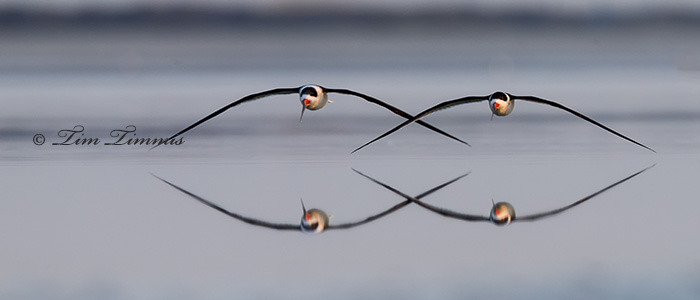
1/400 sec @ F5.6, ISO 4000, evaluative metering, +1 exposure compensation
Blurred Blast-Off
Blast off’s by a large flock of Geese are always fun to hear and photograph. It’s a challenge to get sharp photos before the sun comes up so I typically go for blurred shots using shutter priority. First photo is of Geese and the second is a flock of Black Birds. Taken on a chilly morning at Anahuac NWR in SE Texas last weekend.
Taken with Canon 1DX and Canon 500mm F4 IS II with 1.4X III teleconverter, handheld
Shutter priority, 1/8 sec @ F9, ISO 1600, evaluative metering, +1 exposure compensation

Shutter priority, 1/8 sec @ F18, ISO 1600, evaluative metering, +1 exposure compensation

Reflecting on the Start of 2015
It’s tough to express any true reflections on a year that just started, so instead, here is my first reflection shot from 2015. Looks like it could be a good year.
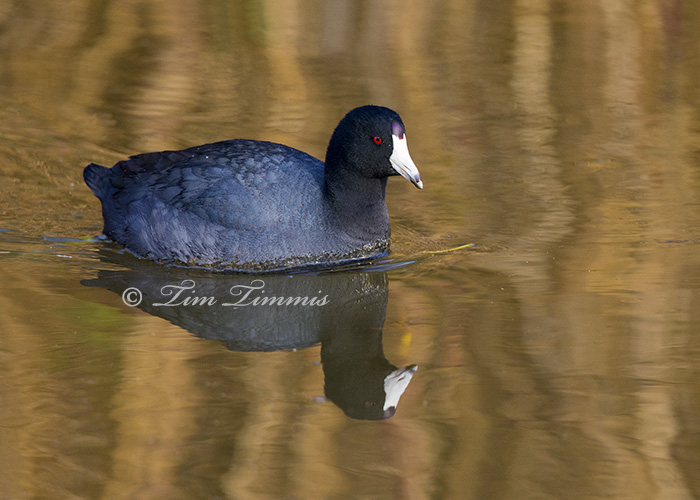
It’s easy to ignore Coots in SE Texas as they are very abundant and can be somewhat boring but in the right light with a good background, they can stand out with the best of them. Had to expose for the white beak so no positive exposure compensation on this one. Taken at Anahuac NWR in Texas.
Taken with Canon 1DX and Canon 500mm F4 IS II with 1.4X III teleconverter, handheld out the car window
1/800 sec @ F7.1, ISO 1600, evaluative metering
My 2014 Favorites
As 2014 comes to a close, I wanted to share some of my favorite photos from this year. It was challenging for me to get out and shoot on a routine basis but ended up with some photos that made it worth while.
Highlights in 2014 included seeing the Sand Hill Crane migration in Nebraska, leading successful workshops and field trips at Galveston’s FeatherFest, getting published again and finally upgrading to a pro series camera. Now that I have all of the tools, just need some more trigger time to further develop my skills.
Thanks to everyone around the world that checked out my blog and especially to those who left some comments along the way. Appreciate your support. Looking forward to more wildlife photography in 2015.
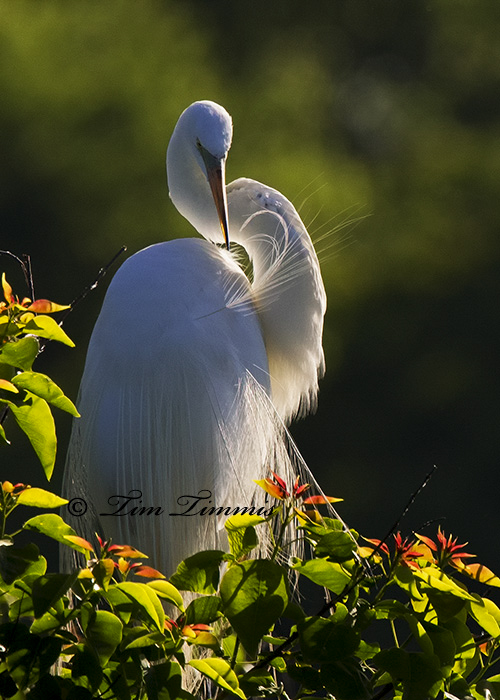
Great Egret from High Island’s rookery
Sandhill Crane from Nebraska

White Morph Reddish Egret from Bolivar Flats

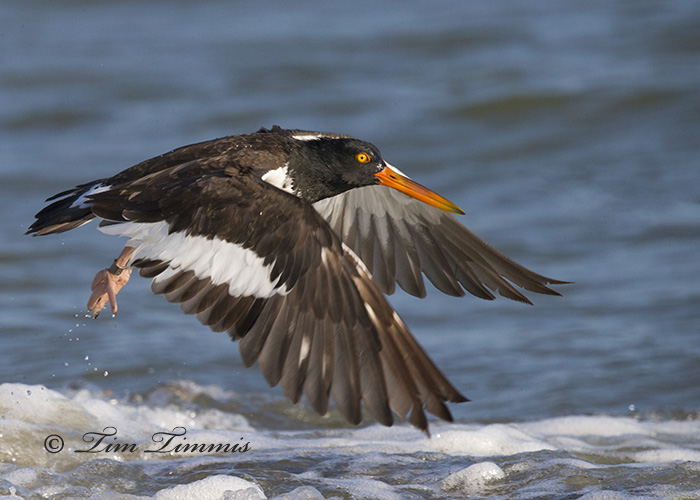
American Oystercatcher from Texas City Dike
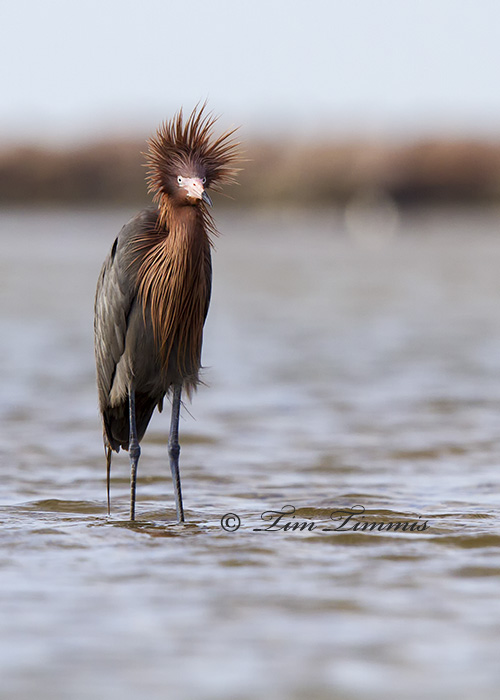
Reddish Egret from Bolivar Flats
American Avocet from Bolivar Flats

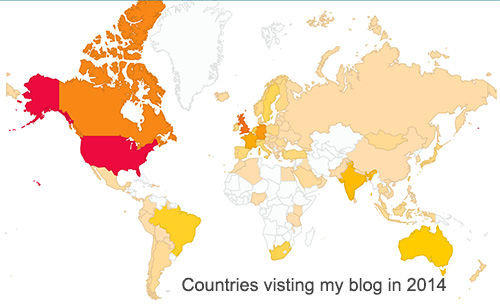
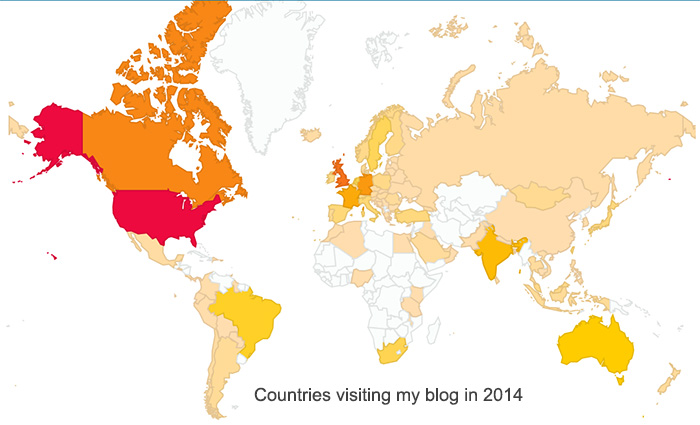
Graphic of where people were from that visited my blog in 2014
Shifting Positions
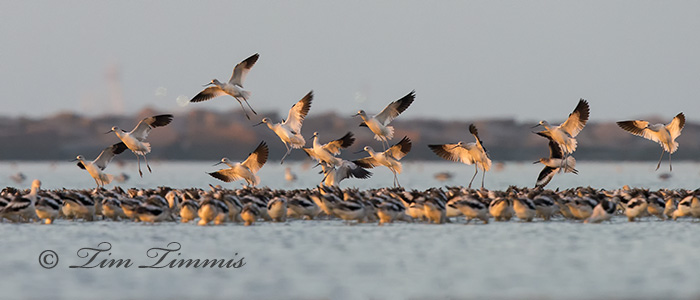
Getting close to a flock of feeding Avocets is always exciting but the photo op’s can be limited if there isn’t any action besides the feeding. You can only take so many photos of birds with their heads in the water. They feed by moving their long curved beaks back and forth to stir up the bugs and crustaceans. The good thing about a flock of feeding Avocets is that there is a constant shifting of positions as the birds move for better access to the food. Focused on these birds as they were landing, just after sunrise.
Taken with Canon 1DX and Canon 500mm F4 IS II with 1.4X III mounted on Skimmer ground pod with Wimberley II gimbal head
1/640 sec @ F8, ISO 4000, evaluative metering, +1 1/3 exposure compensation
Yours Truly – Down & Dirty
Made another trek to Bolivar Flats yesterday and had the chance to meet a couple of photographers, Jim Stevens and Willem deGroot. It was nice to see some other local photographers taking advantage of the photo op’s out there. They got some excellent sunrise photos as I headed to my favorite spot and found a large flock of Avocets. Jim took this photo of me while I was playing in the muck. It was almost too warm for my neoprene waders but you can see why I like to wear them in these conditions.

Yellow Legs in Flight
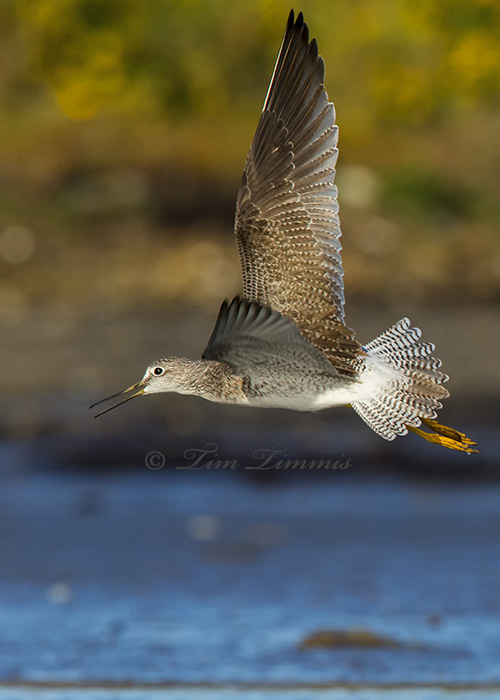
I’ve seen an abundance of Yellow Legs lately and caught this one taking off and flying away at close range. My camera did a very good job of keeping the focus locked on.
Taken with Canon 1DX and Canon 500mm F4 IS II with 1.4x III teleconverter mounted on Skimmer ground pod with Wimberley II gimbal head
1/1600 sec @ F14, ISO 1600, evaluative metering, +1/3 exposure compensation

1/1600 sec @ F14, ISO 1600, evaluative metering, +1/3 exposure compensation
Standing Alone
This Willet was hanging out by himself near one of the sand bars at Bolivar Flats. Some side lighting and nice depth of field helped to make him stand out.
Taken with Canon 1DX and Canon 500mm F4 IS II with 1.4X III mounted on Skimmer ground pod with Wimberley II gimbal head
1/2500 sec @ F5.6, ISO 800, evaluative metering, +1 exposure compensation

1/2500 sec @ F5.6, ISO 800, evaluative metering, +1 exposure compensation

Dance of the White Morph Reddish Egret
Being the rarest of the American herons/egrets, Reddish Egrets are listed as a threatened species in Texas. Total population is estimated at about 2,000 nesting pairs with 5 to 10% being White Morph’s in the US. From my experience, they are much better at fishing than Great Egrets so hopefully they will continue to make a comeback from being hunted for their plumage. They are very active when feeding and will jump around and use their wings to help find their prey.
Taken with Canon 1DX and Canon 500mm F4 IS II with 1.4X III telconverter mounted on Skimmer ground pod with Wimberley II gimbal head
1/3200 sec @ F5.6, ISO 800, evaluative metering, +1/3 exposure compensation
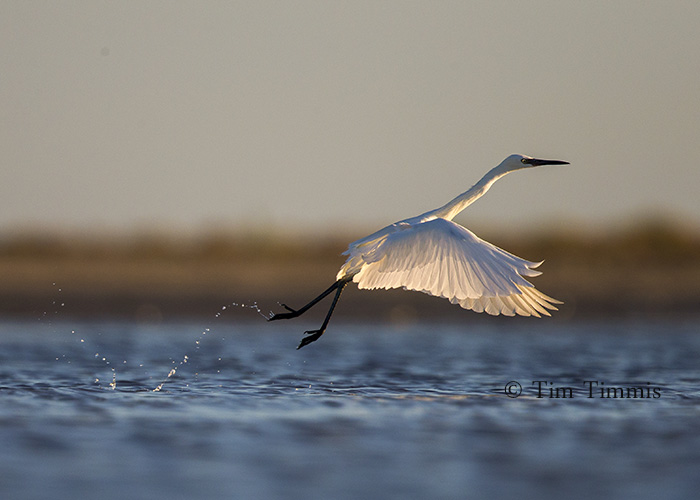
1/640 sec @ F11, ISO 800, evaluative metering, +1 exposure compensation

Focused Stare Down
This White Morph Reddish Egret was very focused as he was searching for breakfast. Had to widen the depth of field to F11 to get his head in focus with being so close. No noise reduction on this shot.
Taken with Canon 1DX and Canon 500mm F4 IS II with 1.4x III mounted on Skimmer ground pod with Wimberley II head
1/800 sec @ F11, ISO 1600, evaluative metering, + 1 2/3 exposure compensation
A Very Good Day
Bolivar Flats along the Gulf of Mexico in SE Texas continues to amaze me. Made my second trip over the long holiday weekend yesterday and this one was special. My typical goals at Bolivar include trying to find and photograph Avocets and Reddish Egrets. All other birds are icing on the cake. It was a target rich environment and had the opportunity to have my cake with lots of icing on top.
In my FeatherFest workshops, I stress to the participants to keep your head on a swivel and look behind you as the best shot may be there. Took my own advice and it paid off big time on this outing.
All photos were taken with Canon 1DX and Canon 500mm F4 IS II with 1.4X III teleconverter mounted on Skimmer ground pod with Wimberley II gimbal head. Very little cropping on most of these photos.
Got up at 3:30 a.m. and made it to Bolivar before the sun came up. Hiked along the beach to check out where the birds were located and saw this Great Blue Heron flying by. Picked up my rig, including the ground pod, and got a series of blurred flight shots. Got a nice blurred wing spread when he landed.
1/20 sec @ F16, ISO 1600, +2/3 exposure compensation, evaluative metering, handheld

Worked my way down the beach and saw a group of White Pelicans, Gulls and Avocets in the distance. Didn’t see a practical way to get close to them so headed to one of my favorite spots and settled on a small sandbar just off shore within reach of a Reddish Egret. Got a few shots of him dancing around when the tide came in and the sand bar went under water. Decided to stay put and laid in the water waiting for some more bird action. Patience paid off as I heard a group of three American Oystercatchers coming in for a landing near by. Got off my first shot as this one was landing and he gave me a very nice wing spread. They only hung around for a couple of minutes and took off.
1/640 sec @ F7.1, ISO 4000, +1 1/3 exposure compensation, evaluative metering

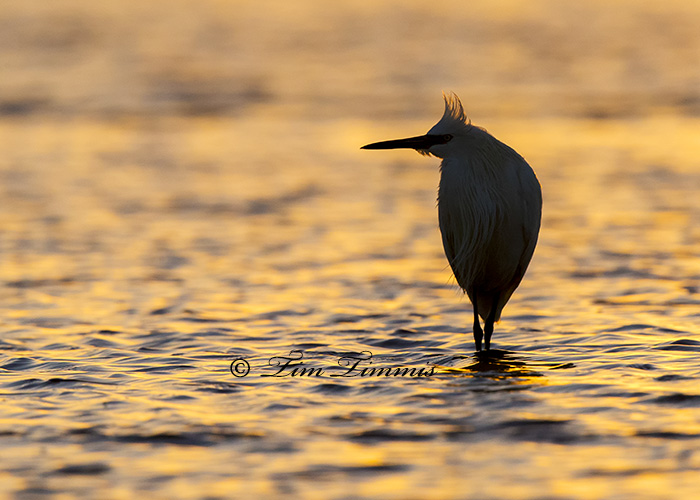
Looked behind me and saw a Reddish Egret dancing in the distance so headed back in that direction. Saw what I thought was a Snowy Egret and decided to lay down and get a few silhouette shots. Discovered that he was actually a White Morph Reddish Egret, which ended up providing some great shots over the next hour.
1/4000 sec @ F9, evaluative metering, +1 exposure compensation
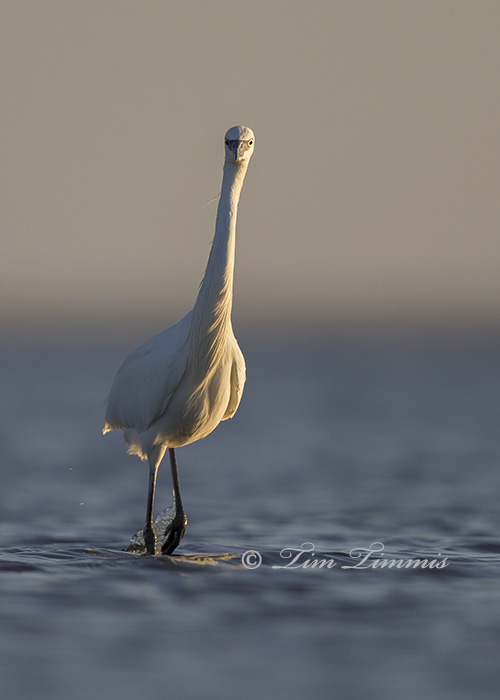
Followed this White Morph back to near my original location when a Reddish Egret flew in and scared him off. After the Reddish Egret didn’t do anything but stand there, turned around to see that the White Morph had landed back in the area where I first spotted him. Moved my position again and ended up working his way back towards me. Got some of my best White Morph shots as he danced around. I’ll post some more shots of him later.
1/640 sec @ F11, ISO 800, +1 exposure compensation, evaluative metering

After the White Morph walked passed me, heard a familiar bird and looked behind me to see a single Avocet starting to feed along side a Yellow Legs and a Willet. The challenge at this point was to rotate around in the wet sand without spooking him. The Avocet kept moving back and forth and got close enough for some head shots. This one is uncropped.
1/400 sec @ F16, ISO 800, evaluative metering

A very good day indeed.
 Tim Timmis Photography