
Blue Crab
Blue crab taken on my last trip to Bolivar Flats on the Texas gulf coast on July 1. This was my first time seeing a live blue crab so had to get a few photos. The birds weren’t very cooperative that day so was very happy to get a chance to photograph this crab.
Shows how even at F10, you can see the depth of field with blurring out the background and foreground when lying down.
1/800 @ F10, ISO 2500, evaluative metering, +2/3 exposure compensation, 700mm (R3 + 100-500 + 1.4X), Skimmer ground pod

Honorable Mention in Audubon’s 2024 Contest
I’m honored to have won “Honorable Mention” in Audubon’s 2024 contest. I’ve been taking lots of slow-motion videos over the past couple of years and it’s starting to pay off.
This video of avocets was taken this year at Bolivar Flats Audubon Shorebird Sanctuary on the Texas gulf coast.
Reddish Egret + Sunrise + Mud
Made another trip to the local mudflats yesterday and the third time was the charm for last week. On my last trip, missed a spectacular sunrise that was already up by the time that I drove onto the beach. This time, decided to get up at 3:00 a.m. to make it onto the 5:00 a.m. ferry, which turned out to be a very good move.
Found a reddish egret in the same location as previous visits, along with the mud being exposed at low tide. Went down on my knees in the mud to confirm the best spot to lay down. There were some wade fishermen walking behind me on the beach that reacted when I laid down in the mud.
Before the sun came up, this white morph reddish egret landed right in front of me. He ended up walking to my left near where the sun was going to rise.
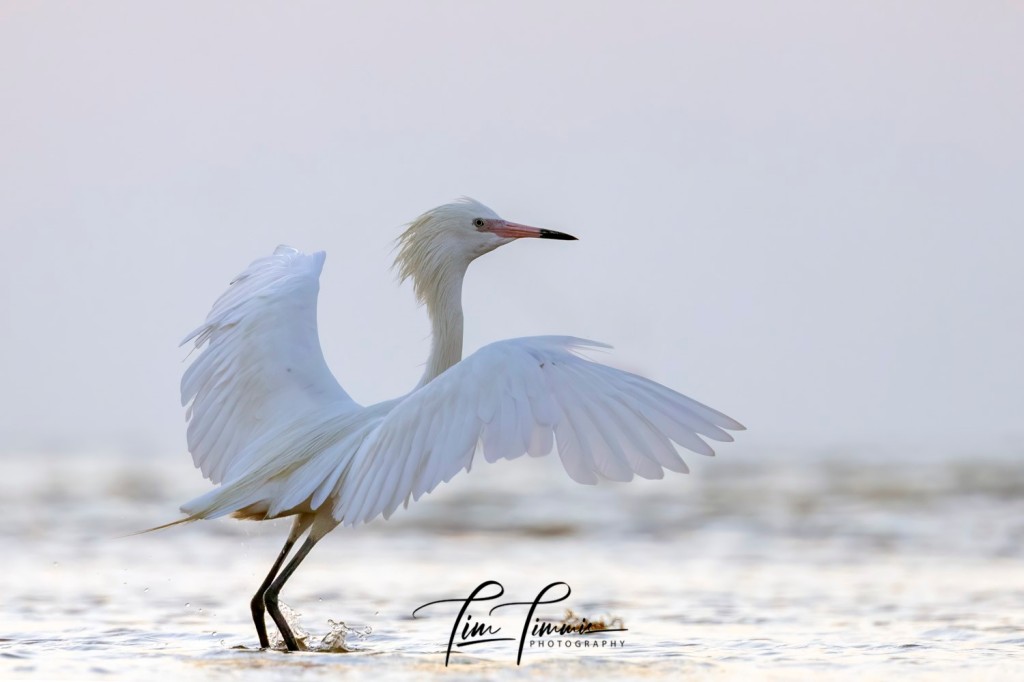
Once the sun started to pop, had to shift my position to the right to get the sun directly behind the egret, which was easier said than done. Didn’t want to get up as it could spook the bird, so did a shuffle with my elbows and knees.
Ended up being an amazing time with lots of great photo ops with this egret, some of which might be contest worthy.

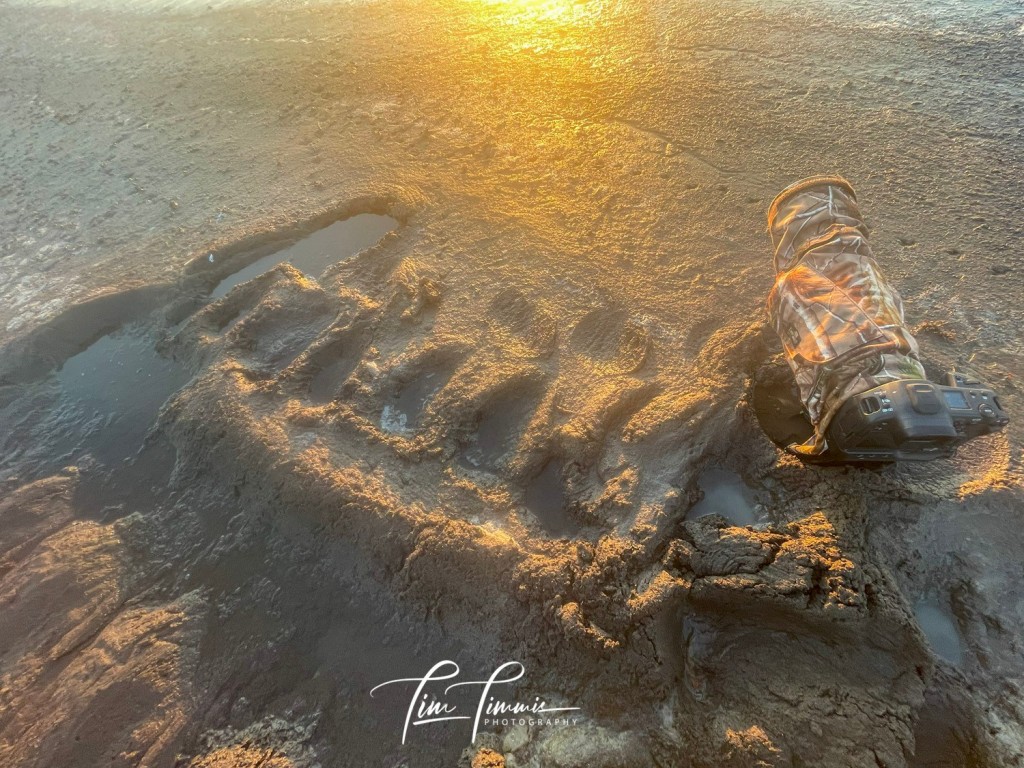
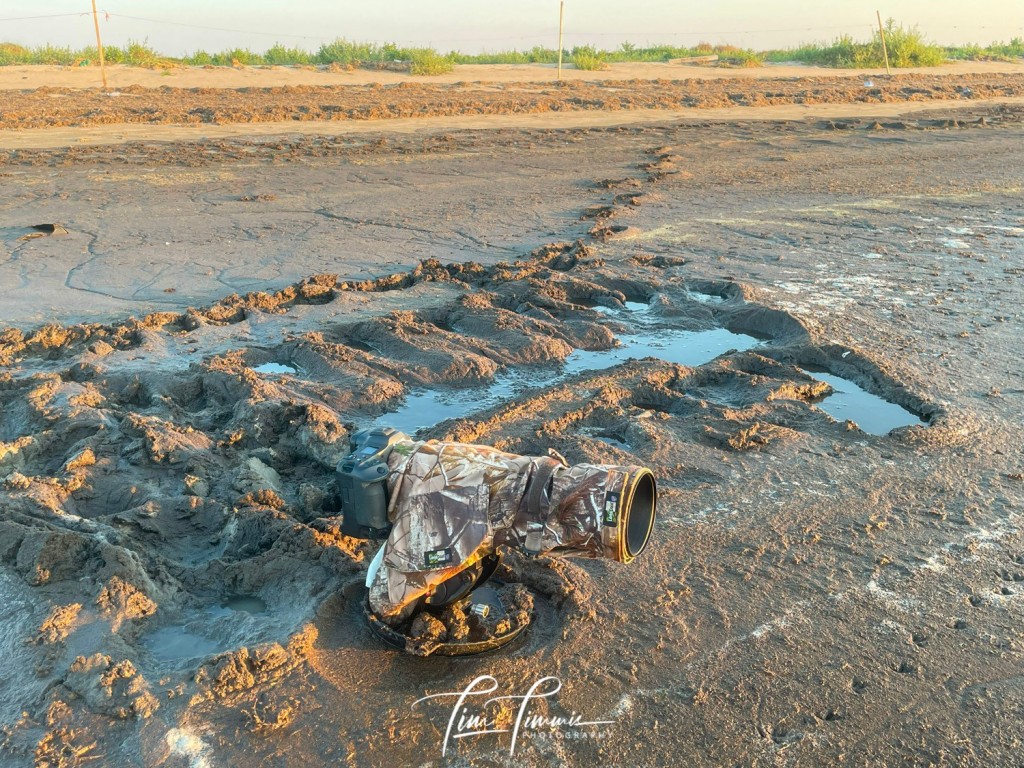
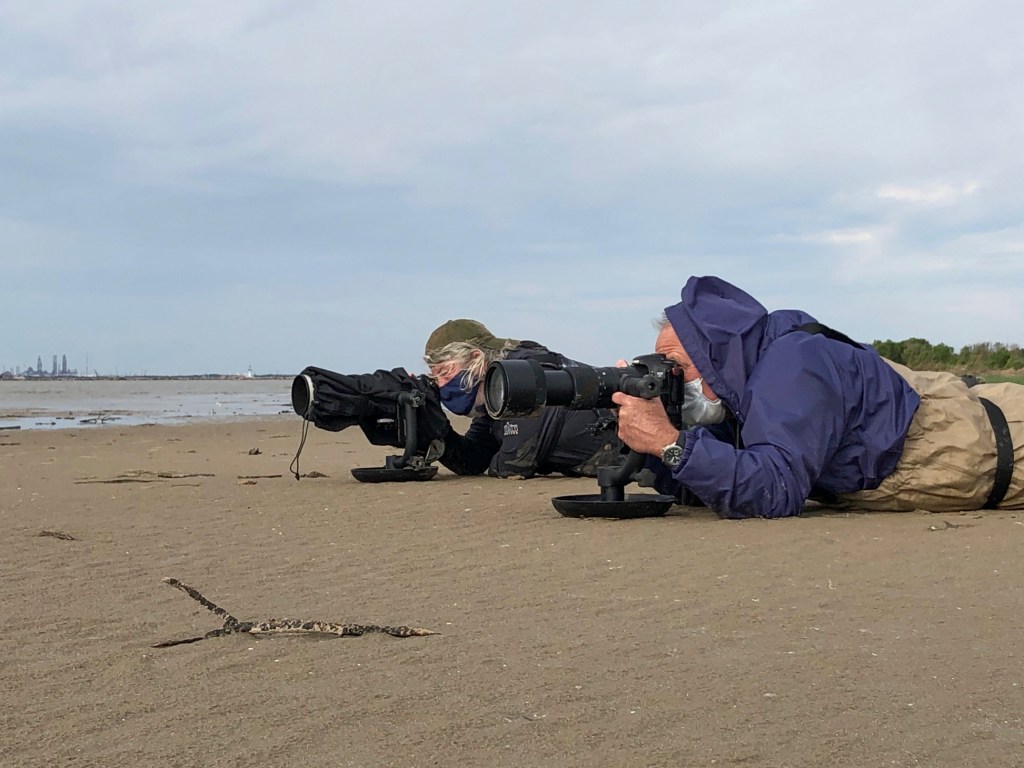
Had to take a couple of cell phone shots of my mud bogging experience. It’s a dirty job but somebody has to do it.
Tri-Colored Heron in Silhouette
Tricolored heron in silhouette taken with my ground pod from the mud bath at Bolivar Flats in Texas. He kept going back and forth catching small fish right in front of me, which was amazing. Don’t often see them offshore in this location.
The mud was deep so had to take a selfie to show that it was a great day in the mudflats. One of the first times that the mud was so deep that it came over the top of my ground pod. Had to wade out in the gulf to wash off the mud from my boots before throwing them into a garbage bag for clean-up when I got home. Clean-up is a major pain but well worth the effort to get low level photos.
1/1600 sec @ F10, ISO 640, manual exposure, 700mm (R3 + 100-500 + 1.4X), Skimmer ground pod


American Avocets at Sunrise
Had beautiful weather this weekend along the Texas gulf coast. Needed to add to my shorebird portfolio for Audubon’s photo contest so made a trip back to Bolivar Flats Audubon Shorebird Sanctuary. Will see out there next time Sheldon.
Tide was going out and fairly low when I got there before sunrise. It was one of those rare days with no wind and flat surf on the Gulf of Mexico.
The surprise of the morning was seeing a fin coming out of the water behind a small flock of avocets, just offshore near the parking area. It was a dolphin hunting for fish, which was only the second time that I’ve seen a dolphin out there in the past 15 years. Took some video of him but missed the money shot when he jumped out of the water with a fish just off of his nose.
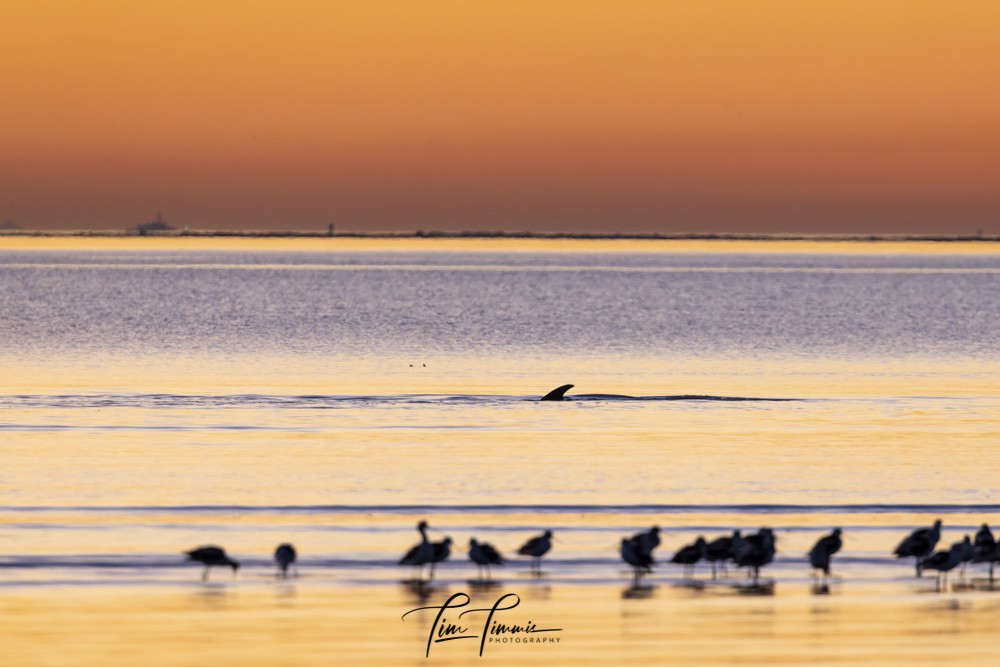
After that excitement, settled into getting some avocet photos and videos. Here is one of my favorites with back-lit feathers on some incoming birds. My happy place for sure.
1/3200 sec @ F10, ISO 800, evaluative metering, 700mm (R3 + 100-500 + 1.4X), Skimmer ground pod

Willet Feeding in the Fog
Made a scouting trip to Bolivar Flats on the Texas Gulf coast yesterday in preparation for leading four field trips for Galveston’s FeatherFest in April. It was extremely foggy and could only see a couple of car lengths in front of my car while driving on the beach. The guy following me almost crashed into the barricade.
The fog finally cleared some but then rolled in a couple of times. I’m a major fan of shooting in the fog under the right conditions when the sun pops out, which was the case on this trip.
It was high tide with lots of birds along the shoreline and in a couple of tidal pools. Captured this willet feeding in one of the pools right in front of me while I was lying is some real nasty stuff with my ground pod.
1/3200 @ F10, ISO 800, evaluative metering, +1/3 exposure compensation, 700mm (R3 + 100-500 + 1.4X) mounted on Skimmer ground pod with video head

World Bear Day
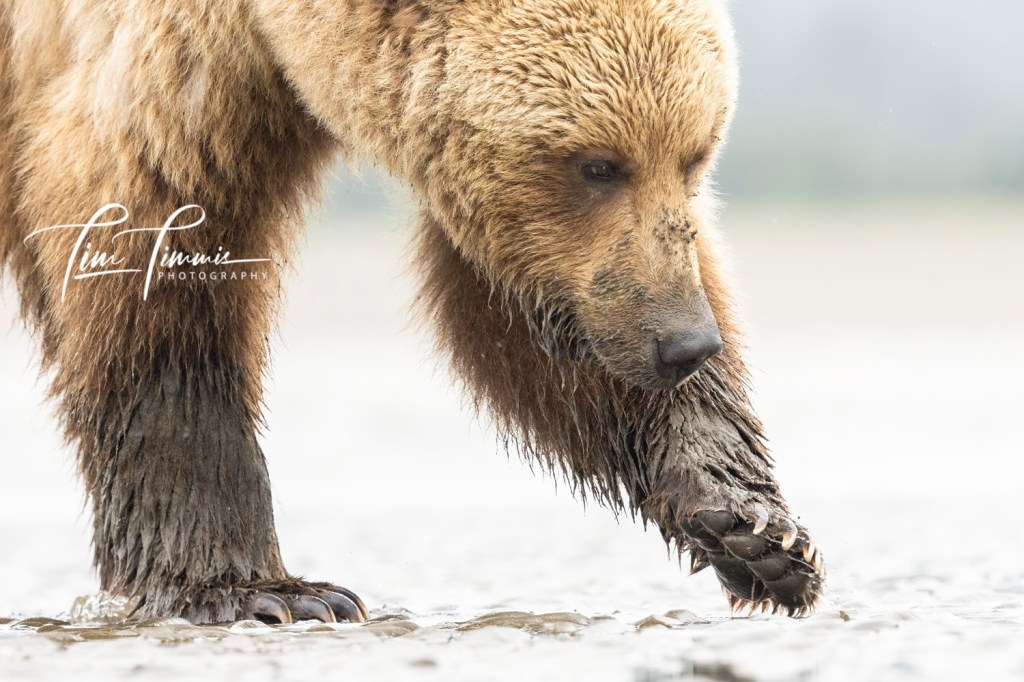
For “World Bear Day”, here is a coastal brown bear from Alaska, last June. It’s all about the claws.
1/1000 @ F11, ISO 4000, +1 exposure compensation, 700mm (R3 + 500F4 + 1.4X) mounted on Skimmer ground pod. Almost full frame.
Audubon Top 100 X 2
Honored again this year to make the Top 100 in Audubon’s photo contest with these two photos. Must have been slacking off since I had 4 in the top 100 last year. Congratulations to everyone that won and made the top 100.
First photo is a black skimmer coming in for a landing at Bolivar Flats. I love the unique wing position on this photo as it was one that I’ve never seen before.

This photo is an American avocet riding the surf at Bolivar Flats. Love the water swirling around her neck, which looks like she is getting ready to turn into a Disney princess.

Back to Alaska
Made it back to Lake Clark in Alaska for some more bear photography this year with Marc and bear guide extraordinaire, David Rasmus. Had a great time to say the least.
Last year was spent following Crimp and her cub around. This year, we saw Crimp on our first day and she was mating as she had kicked her cub out a few weeks ago. We did see her 3rd year cub and he pretty much looks the same, just larger. He was hanging out with Old Sow’s 3 year old cub on one of the days.
On this trip, we spent more quality time with the bears digging up clams on the mudflats, which I loved. Being able to get full framed shots like this still blows my mind. This bear is displaying an interesting behavior using the top of her paw for a table to eat the clam, which I don’t recall seeing last year. They have amazing dexterity with their claws and use them like fingers to pry apart the clams.
1/1600 @ F11, ISO 6400, evaluative metering, R3+500F4 on Skimmer ground pod, uncropped

Riding the Wave @ Galveston’s FeatherFest
Took this photo during my first Galveston FeatherFest field trip to Bolivar Flats Audubon Shorebird Sanctuary on the Texas gulf coast. I led four trips to Bolivar Flats again this year in April with this one being challenging with the weather that morning. The wind was blowing at 25 – 30 mph with heavy surf for this area. If it wasn’t for FeatherFest, I typically would have stayed home in those conditions, which makes me wonder how many great photo ops that I’ve missed over the years by not going in adverse conditions. This outing was unique as only one participant, Peggy, showed up for this trip.
In this photo, a group of dunlins and one ruddy turnstone were hanging out on a batch of seaweed that was bobbing up and down with the waves. A small wave came in that made the first dunlin launch up into the air. This group would then feed off of the material that washed up on the mound of seaweed.
I finally made the dive into mirrorless cameras with a Canon R3, which I’ll provide some more information on in a future post.
Taken with Canon R3 with 500mm F4 IS II lens, 1.4X teleconverter mounted on Skimmer ground pod with Wimberley II gimbal head
1/1000 @ F11, ISO 4000, evaluative metering, +1 exposure compensation

Avocet Gliding
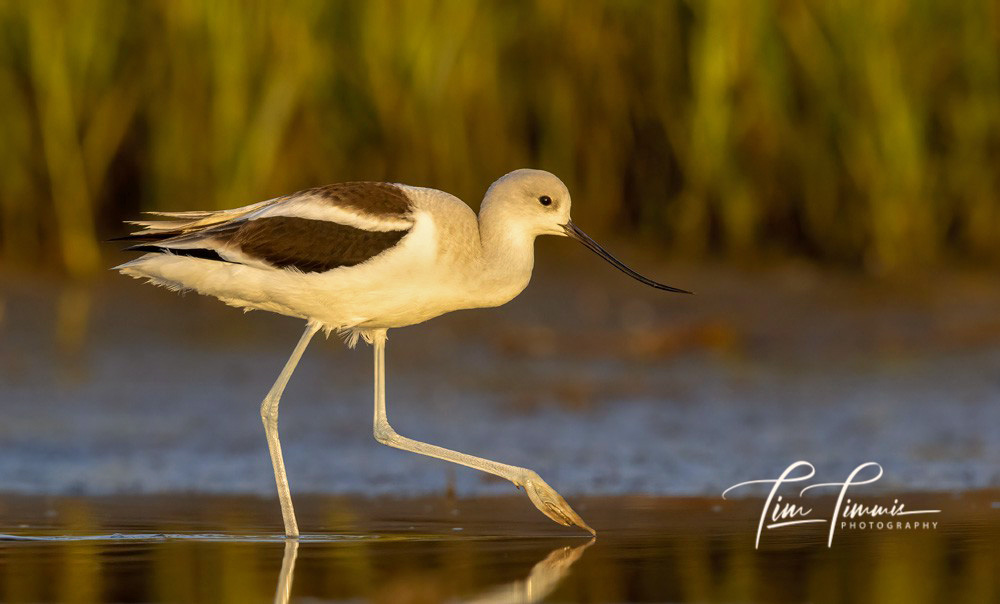
American avocet gliding along after sunrise on Texas gulf coast this morning. Sunrise was amazing with the cloud formations and red light. The sun eventually popped out of the clouds providing some good light. Ended up leaving when the sun went behind the clouds as I’m not a fan of flat light.
1/2000 sec @ F9, ISO 3200, evaluative metering, -2/3 exposure compensation, 700mm from Skimmer ground pod, minor cropping
Taken with Canon 1DX III, Canon 500mm F4 IS II with 1.4X III teleconverter mounted on Skimmer ground pod with Wimberley II gimbal head
Water Explosion Frozen in Time
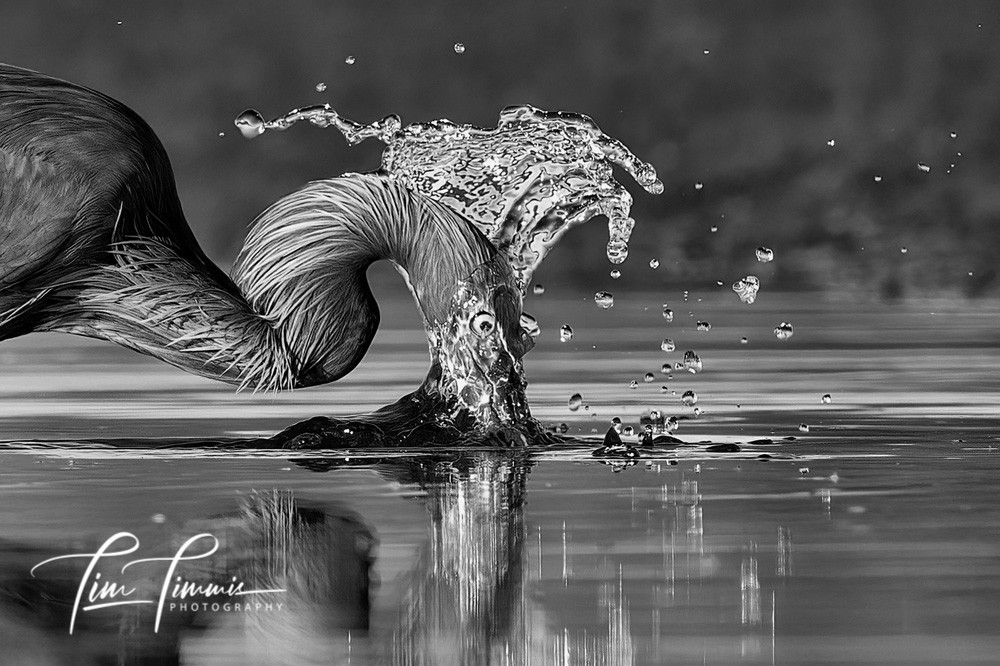
Reddish egret diving for fish in a tidal pond at Bolivar Flats Audubon Shorebird Sanctuary. While heading back to my car after a successful early morning taking shorebird photos, found this reddish egret that was catching some small fish in a separate small tidal pool. Got some very cool splash shots but didn’t like the background so converted this one to B&W and cropped in on the splash.
1/1250 @ F10, ISO 1600, evaluative metering, +2/3 exposure compensation, 700mm from ground pod
Ninja Cub
Coastal brown bear cub about to go full ninja on his mom at Lake Clark Alaska. Mom was doing her best to keep him calm. It was a blast to watch these two play.
1/800 @ F11, ISO 3200, evaluative metering, +1 2/3 exposure compensation, 500mm from Skimmer ground pod, uncropped

Clam Tasting Close-up
Here is a very close-up shot of an adult female coastal brown bear (grizzly) eating a clam at Lake Clark Alaska. The bears make their way out to the mudflats at low tide when they smell the clams. The tides are intense as they rise/fall 17 ft so when it starts coming in you had better get to higher ground.
1/800 sec @ F11, ISO 1600, evaluative metering, +1 exposure compensation, uncropped @ 500mm from Skimmer ground pod.

Published in PetaPixel.com
Got published yesterday on the photography & camera news website PetaPixel after my ground pod photo was published in Audubon. Was contacted by one of their columnists recently requesting usage of my photo and looking for one of me in action with my ground pod.
He then contacted me later about using another one of my photos including some writing from me on why I like that photo. Stay tuned for that in Sept.
Thanks again Phil for the opportunity.
Great Reads in Photography: August 15, 2021
Close Encounters of the Bear Kind
This photo sequence was a major adrenalin rush to say the least. One of my favorite bear encounters of my most awesome Alaskan adventure in Lake Clark Alaska with coastal brown bears.
Started out with mom and her cub playing near the shoreline.

Following his typical behavior, the cub took off running and he ran right past us. Tracked him while lying in the mud with my ground pod and got off a few shots while he gave me the side-eye.

Thought that was very cool experience but it got really interesting when mom decided to chase him. Glanced back to my right and saw mom coming my way. Didn’t have time to get worried or think but just react.

My years of experience with shooting from a ground pod came in very handy and quickly pivoted around on my stomach and focused on her as she “beared“ down on us. Mom was doing her “happy run” with swinging her head from side to side, which is a behavior that we witnessed several times that week.

Just follow your nose….

Very little time to react as this entire sequence with mom lasted only 4 seconds. Was challenging to try to keep her in the frame. Major rush…

She kept getting closer…

and closer…
and closer!

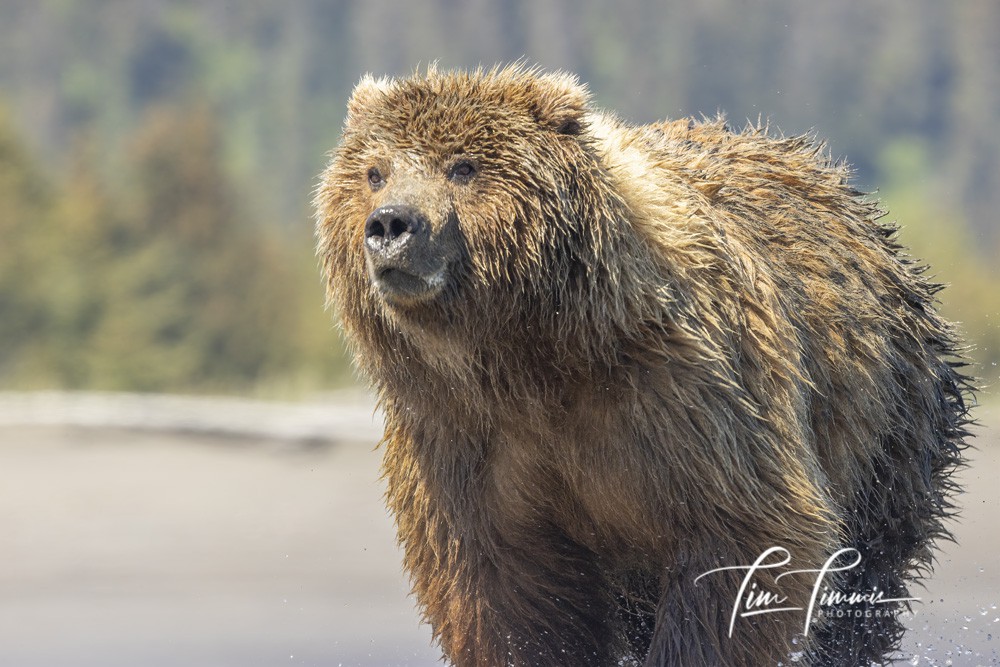
Then, direct eye contact with a full size grizzly bear as she runs past me. Doesn’t get much better than that. Didn’t know that I got this shot until getting home and downloading my photos to the computer. Couldn’t take my laptop with me due to the bush plane weight restrictions.
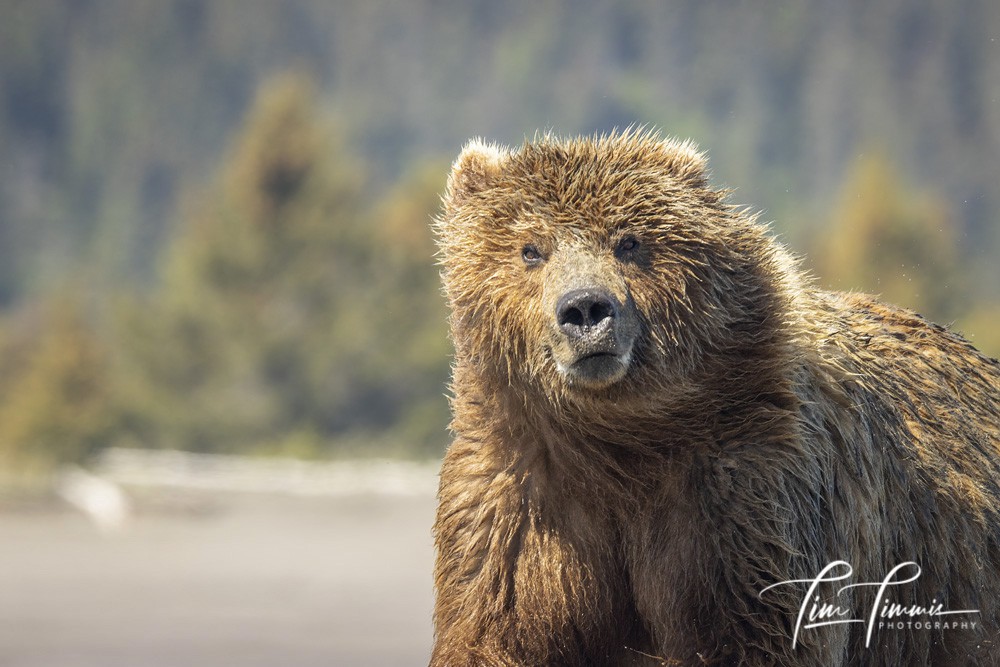
She kept going and I kept shooting…

She kept running past us with this being the last frame that I captured in this series. Just wow!
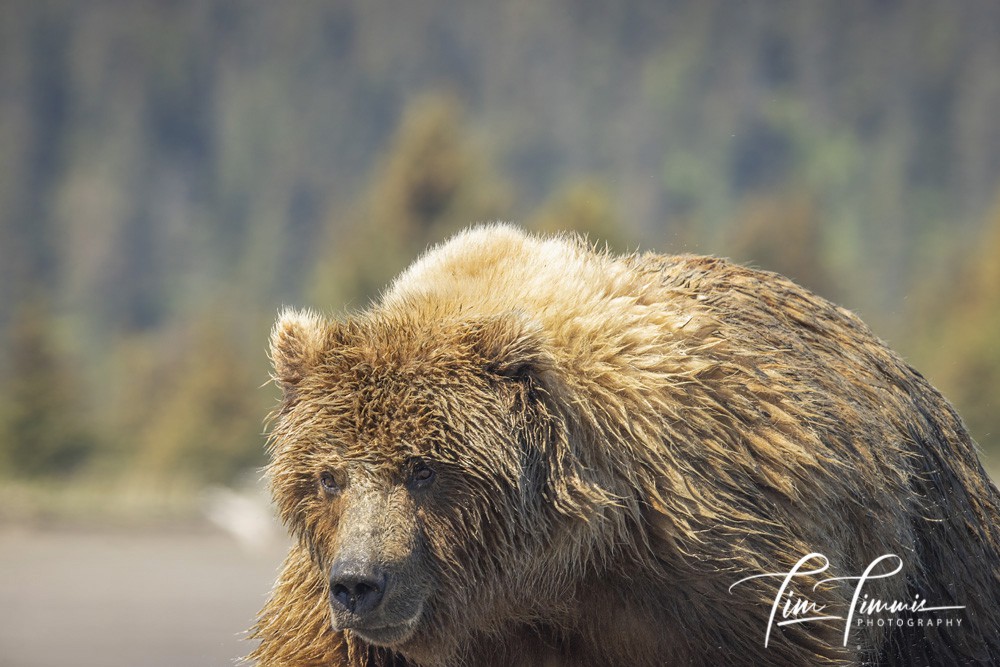
Another one of those once in a lifetime encounters on this trip that I kept having and must repeat.
Bear Thievery
The beginning of the eagle saga starts when the cub takes off running and flies by us and out towards the water. Mom then takes off after him and shows us her happy run when she would swing her head around.
The cub had found a bald eagle on a kill and was making a b-line for it. More to come…

The cub catches some air with all four feet off of the ground as he picks up speed. Had no clue on where he was going at this point.

Spun around on my stomach with my ground pod to capture him in partial silhouette as he hit max Q.

Mom followed him and was giving us her happy dance run when she would swing her head back and forth. A very happy bear once she figured out where junior was going to.
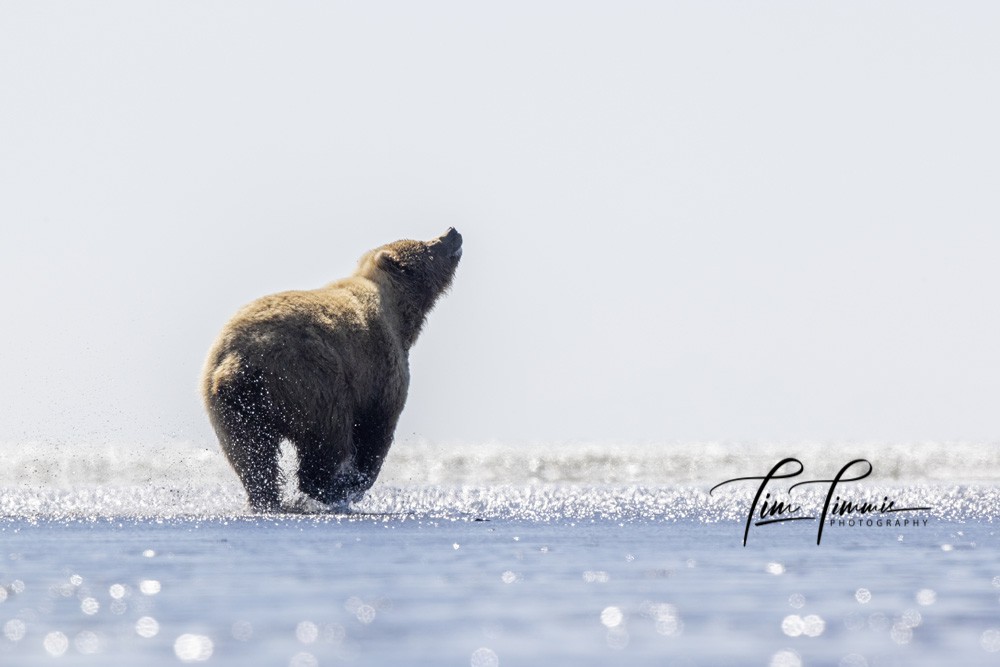
The cub was running to take away a fish that the bald eagle had caught.

Eagle Eyes
My wish list for Alaska included seeing some bald eagles, if possible. Never in my wildest dreams would have imagined that I would be getting full frame eagle shots from my ground pod as this one landed on the mudflats right in front of me!
Absolutely blew my mind, which didn’t take much at that point as my mind had already been blown by 3 days of bear photography.
He wasn’t interested in us at all as he had bears on his mind. More to this story coming later…
1/2000 sec @ F11, ISO 1600, evaluative metering, +1/3 exposure compensation, 500mm from ground pod

Lift off which was a challenge to keep him in the frame as he was so close.

Bear fly-by but he will return
Happy 4th of July
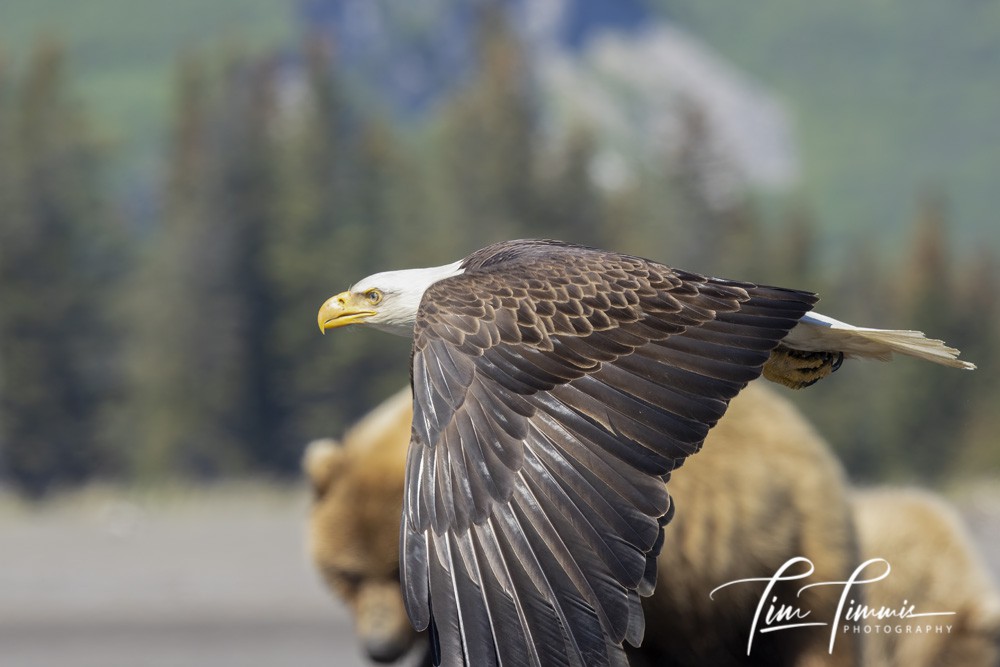
Happy 4th of July! Here is a recent photo of a bald eagle, symbol of freedom in the US, that I took in Alaska a few weeks ago. There is a very interesting story behind this eagle and my favorite pair of bears that I’ll share later.
1/6400 sec @ F11, ISO 1600, evaluative metering, -2/3 exposure compensation, 500mm from ground pod

Ground Pod Bear Photography
The best piece of camera equipment that I took on my bear photography trip to Alaska was my ground pod. If you follow my blog or on Facebook, you know that I love to use my ground pod for getting low to take shorebird photos. Never dreamed that I’d get the opportunity to take grizzly bear photos from a ground pod.
A few weeks prior to our trip to Alaska, we had a zoom call with our workshop leader and he described the mudflats at Lake Clark. When I asked him if I should take my ground pod, he said yes. Best advice in the world on this trip. Only used my tripod once but used my ground pod on a daily basis. The mudflats looked just like Bolivar only much larger, better backgrounds and with bears on it.
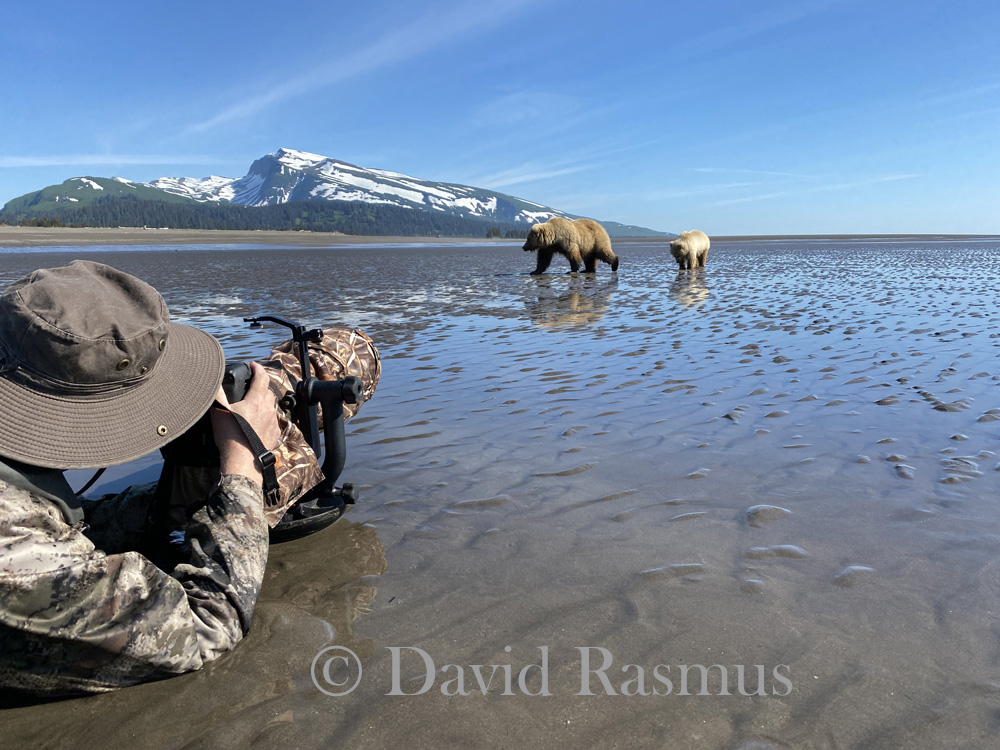
This first photo is a cell phone shot by our outstanding guide and very good photographer from Silver Salmon Creek Lodge, Dave Rasmus. Mom and her cub were working their way toward us while 3 of our group, along with Dave, were standing up taking photos and I’m the one laying down with my ground pod just shooting away. In this photo, I had already turned my camera vertical so they were getting close @ 500mm, see the 3rd photo below.
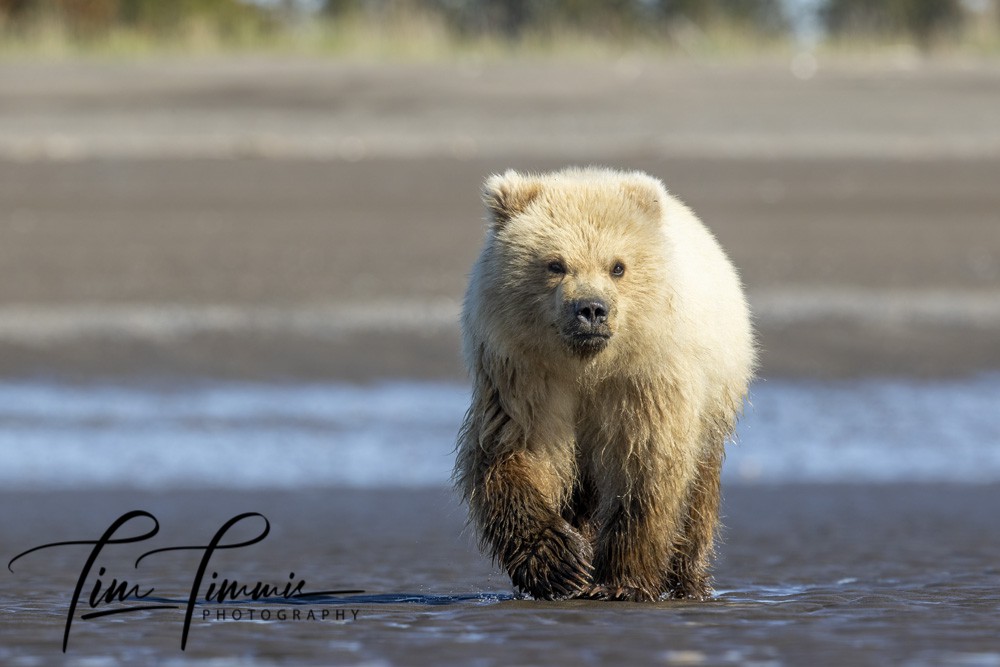
This next photo is almost full frame when they were walking towards me. Mom was off to my left but I maintained focus on the cub as he was adorable, although those claws could do some serious damage.
1/1600 @ F11, ISO 1600, evaluative metering, +2/3 exposure compensation, 500mm from ground pod
As he got closer, here is where I rotated my camera on my gimbal head to the vertical position to help try to keep him in the frame. He ended up getting very close before the guide turned him around by talking to him. Mom was a ways away and couldn’t have cared less about us.
1/1600 sec @ F11, ISO 1600, evaluative metering, +1 exposure compensation, 500mm, uncropped from ground pod

Mom later walked by and showed off her claws in this full frame/uncropped photo. Off the charts fantastic experience for sure. Wouldn’t try this anywhere but this location where we had a very experienced guide with bear spray that knows their behavior, the bears are used to people, we aren’t in their food chain, people don’t hunt/harass them.
1/800 sec @ F11, ISO 1600, evaluative metering, +1 exposure compensation, 500mm, uncropped from ground pod

Drop in a Splash – Expensive Outing
American Avocet at Bolivar Flats Audubon Shorebird Sanctuary
When using a high shutter speed, sometimes the splash is more interesting than the shorebird. I always start shooting when their head starts going towards the water as you never know what you may capture. In this case, the frozen splash also shows a cool water drop.
As mentioned in my previous post about becoming “one with the flock”, my 1DXIII camera got wet from the salt water lapping at the bottom of my camera after the tide came in while I way laying on my stomach with shooting from my ground pod. After that outing, had some issues with my fully charged camera batteries being fully discharged before I took one shot with them. Would put another battery in and it worked fine.
Sent my camera to Canon to have them check it out. My salt water encounter ended up costing me a $1,200 repair bill. Canon described the issue as: “The bottom multi-controller on the back cover is stuck and will not move. At this time the PCB ASS’Y, MAIN W/LI BATT and COVER ASS’Y, BACK will be replaced.” Apparently, it got dunked a little more than I thought in the salt water.
Will it make me think twice about doing it again next time? Nope.
1/2000 @ F11, ISO 2000, evaluative metering, -1/3 exposure compensation, 700mm (500+1.4X) from ground pod, minor cropping

Galveston FeatherFest 2021
Had a great time again this year leading field trips for Galveston’s FeatherFest. Very glad that we could have the field trips this year as last year had to be cancelled due to Covid-19. We reduced the size of the groups this year for social distancing but it turned out great. Actually like the smaller groups better from an interaction perspective at Bolivar.
The weather did not cooperate with day 1 trip to Bolivar Flats being cancelled with high surf. Had everyone cancel ahead of time except one participant that was driving from Winnie. She called me as I was waiting at the Galveston side of the ferry and the highway along the Bolivar peninsula was getting flooded and had debris on the road. Safety first so I cancelled that trip. Had another day with very high winds that turned out very well. I’ll post some of my bird photos later.
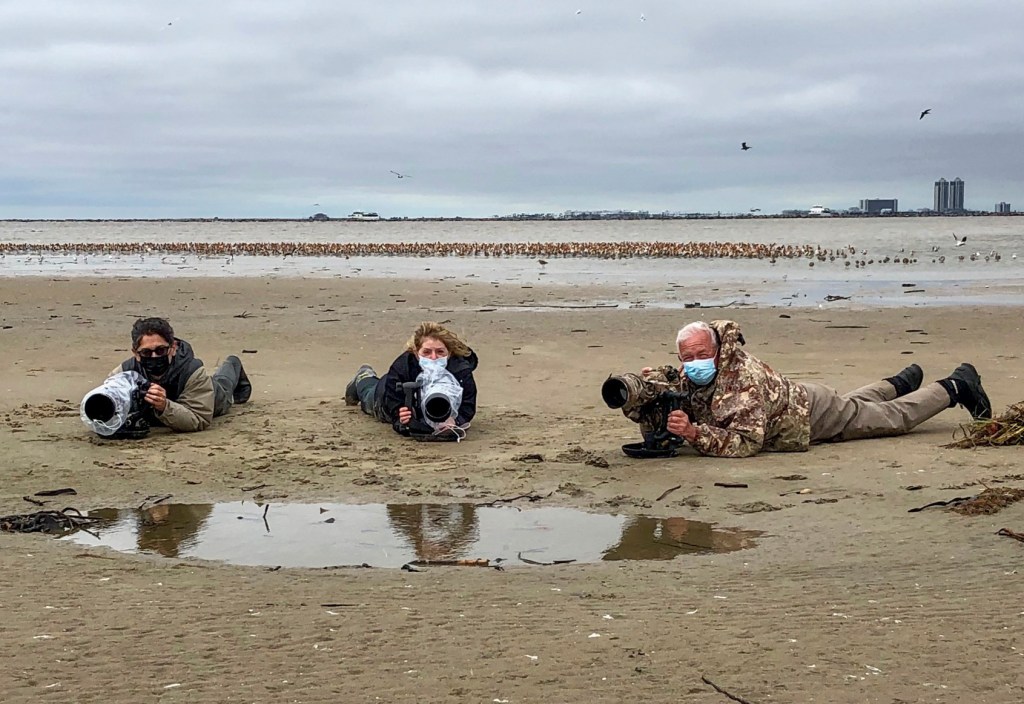
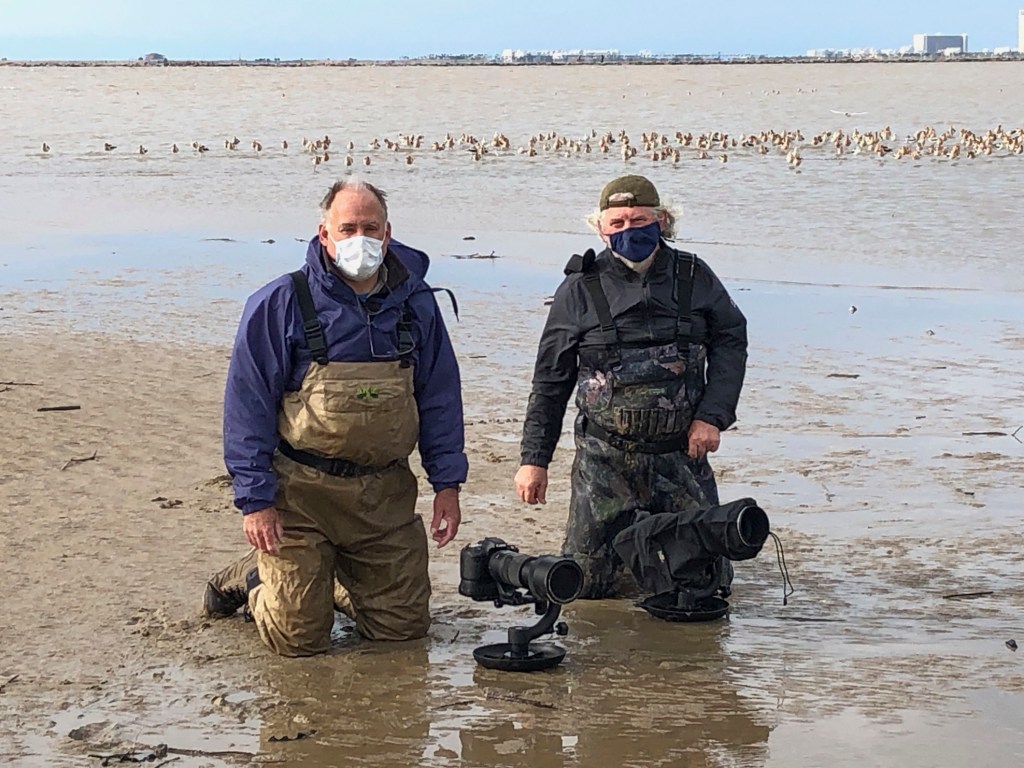
Here are some cell phone group shots from 2021 FeatherFest at Bolivar Flats and the east end of Galveston Island.



One With the Flock
Have to share some details and photos about my unique adventure on Sunday (3/7/21) at Bolivar Flats Audubon Shorebird Sanctuary on the Texas gulf coast in search of American Avocets. Needless to say, I found just a few.
While walking along the beach as the sun came up, there were a couple of flocks of avocets off shore but they wouldn’t have been worth the effort to photograph so decided to keep going to see what was around the corner. Found a group of white pelicans with some avocets feeding around them. Took the first photo with handholding my rig with ground pod/Wimberley head attached while deciding where to lay down.

The avocets were working their way to my right but couldn’t get upstream without spooking them so decided to lay down in the opposite direction in anticipation that they would eventually move that way. Laid down at the water’s edge of a sandbar and focused on flight shots as more and more avocets were coming in to join what soon became a feeding frenzy.

The enlarging flock eventually reversed course and headed in my direction. During that time, the tide was starting to come in and my sandbar ended up under water and I felt water getting into my waders. At 53 deg F air temp, 15 to 20 mph winds and 59 deg water temperature, it got really cold really fast. Tried to back up a few feet to find dry ground but looked behind me and there was no sandbar in site for over 50 ft.
With a flock of several hundred avocets heading my way, had to make the decision to get up to save my frozen body parts or grin and bare it. As my ground pod filled with water, figured that it couldn’t get much worse so stayed put as the flock was nearly upon me. When avocets feed, they put their head in the water and use their long bills to rake across the sand to find invertebrates. They just kept feeding and getting closer and closer.
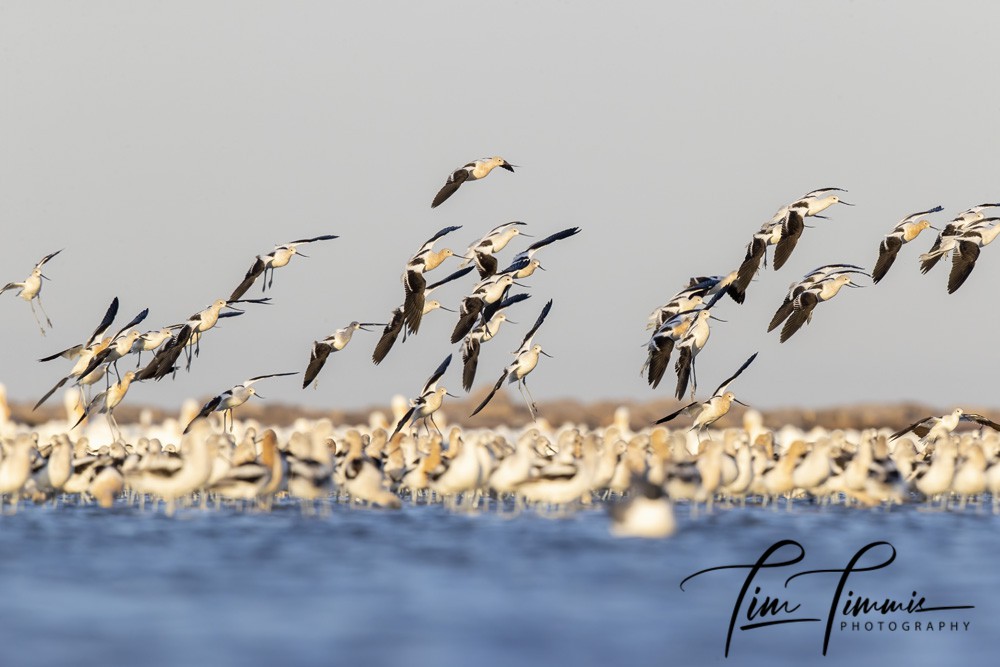
Eventually they were within 20 ft of me and just moved around me and kept feeding. Was very cool to be surrounded 360 deg. by one of my favorite birds. Don’t know if it helped but I was in full camo with the hood of my sweatshirt pulled over my head. One of the major advantages of photography using a ground pod is that the birds don’t recognize you as a person.
At this point, I became “one with the flock”, which was an amazing experience. I’ve had avocets all around me before but it was a handful, not a full flock. Got a couple of photos that may be photo contest worthy but would have loved this experience if I didn’t get any photos.

It was challenging to photograph them that close as I couldn’t shift my position without moving too much in fear of spooking them. Eventually switched to F16 for more depth of field but it didn’t help much at that distance. The white pelicans also joined the fray and flew about 10 ft over me with one landing very close. Slowly rotated my ground pod around to get a couple of shots of him.

Was so focused and in the zone that I didn’t realize my ground pod was floating in the water and had shifted so that the back end was down into the sand under the water with the front end up resting on the bottom of my 500mm lens. With my gimbal head adjustments being loose for shooting, it just floated up in the water. Pulled it back down and locked it into place for a few seconds to stabilize it when I realized that the salt water was lapping at the bottom of my camera. Shifted the camera up slightly to get it out of the water and then my lens raincoat was in the water.
Didn’t take a rocket scientist to say it was time to get up quickly, which was easier said than done with my waders/clothing full of water and my desire to not dunk my gear. Usually grab the base of my ground pod to help get up but in this case, didn’t want to move/splash my camera/lens so got up next to my gear as water poured out of my jacket. Slowly made my way back to my car while water was squishing in my wader boots. Water just poured out of my waders when taking them off. Removed my camera raincoat and put my camera in the passenger seat for the drive back to the ferry.
After getting on the ferry, noticed that there was water dripping out of my lens hood. Removed the hood and saw that the bottom part had been in the water. Took off the Lenscoat neoprene covers on my lens to dry it off. Took a couple of hours to clean up myself and my gear but was well worth it.
All photos were taken with Canon 1DXIII, Canon 500mm F4 IS II with 1.4X III, Skimmer ground pod (now a designated floaty) with Wimberley II gimbal head.

Great Blue Sunrise
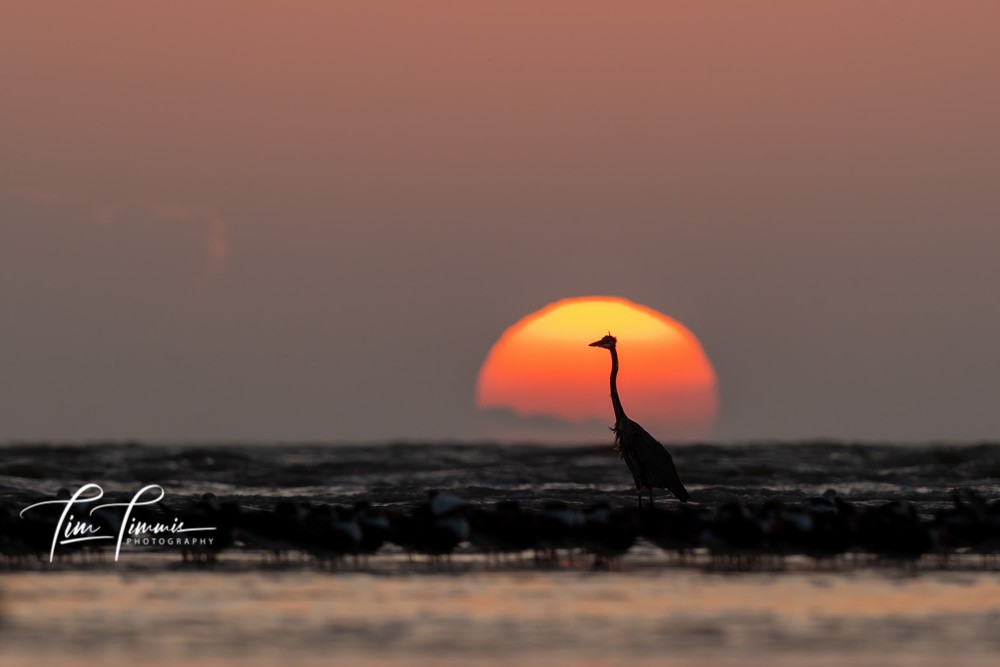
Had one of those great mornings along the Texas Gulf Coast recently when the stars aligned. One big star and a great blue heron.
Visualized this shot when spotting this great blue heron while walking on the beach when it was still dark out. Had to guess where to lay down based on the light peeking through on the horizon. Only had to shift my position slightly when seeing the sun start to pop to keep him in the sunrise. He stayed in one spot while I got off several shots.
While wishing that the skimmers weren’t in front of him, they blasted off and left me with a challenge – do I keep my focus on the GBH or do I try to take photos of the skimmers. I stuck with the heron and eventually all of the skimmers were gone. He then looked up into the sky and I’ll save that photo for a photo contest.
Taken with Canon 1DX Mark III and 500mm F4 IS II with 1.4X III teleconverter mounted on skimmer ground pod with a Wimberley II gimbal head.
1/640 sec @ F11, ISO 3200, evaluative metering, +2/3 exposure compensation, 700mm
 Tim Timmis Photography