…morning light is magic…

Latest

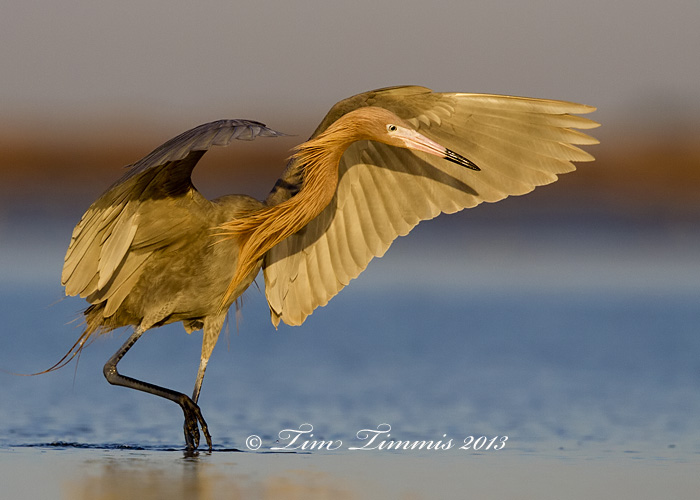
Dance of the Reddish Egret

What a difference a week makes.  At FeatherFest, Bolivar was at high tide with limited shorebird activity.  A week later, it was low tide with lots of birds.  I was disappointed that my field trip participants didn’t get a chance to see what I did.  There was another photographer already at the flats shooting when I got there before sunrise.  Good for him.  Made my way past him to check out my favorite spot and eventially hit the jackpot.

During my classroom presentation, two or my recommended tips are to 1)  keep your head on a swivel and look behind you as your best shot may be there and 2)  be patient.  Luckily I practiced what I preached and laid down and waited for the action to happen.  Was taking photos of some small shore birds when I turned around at one point to find a Reddish Egret dancing around right behind me while trying to catch a fish.  Had to turn around slow enough not to spook him.  Luckily he was more interested in the fish than me.  They are one of my favorite shorebirds to watch and photograph.  They dance around with their wings outstretched to scare the fish.  This one was in prime form and a second one joined the fun a few minutes later.

He was almost too close at 700mm but was able to get some decent nearly full framed shots of him dancing around and catching a very large fish.  I’ll save the fish photos for later.

Taken with Canon 7D and Canon 500mm F4 IS II lens with Canon 1.4x III teleconverter mounted on Skimmer ground pod with Wimberley II gimbal head

Aperture priority, 1/800 sec @ F9, ISO 400, evaluative metering, no exposure compensation or flash, 700mm

Bolivar Flats_43804202013-2

Aperture priority, 1/1600 sec @ F7.1, ISO 400, evaluative metering, no exposure compensation or flash, 700mm

Bolivar Flats_42004202013-2

FeatherFest Field Trip to Galveston

The second field trip that I led at FeatherFest this year was to East Beach on Galveston Island.  It was another early morning and we got there right at sunrise.  Had 12 of us total with a larger bus than the day before.  We found a flock of Black Skimmers near the jetty with a few seagulls mixed in.  Also found a cooperative Tri-colored Heron fishing near the jetty.  It went well except for Beth’s 7D not responding soon after we arrived.  We tried changing batteries, lenses, memory cards, etc. but no luck.  I let her borrow my 7D and 500mm lens, which could be a problem as I sense a little 500mm fever coming on. 😉   Her camera started working again once we got back on the bus, go figure.

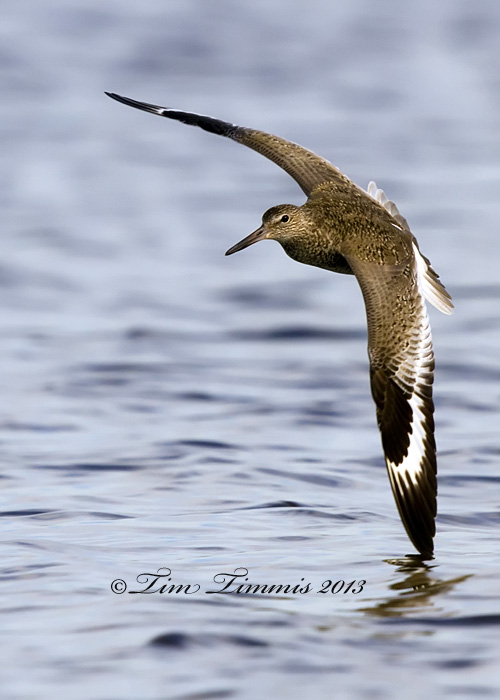
Spent the first hour of so on East Beach and then headed further north on the east end of the Island when the action at the jetty slowed down.  We found a group of Avocets in the distance but they weren’t moving around much.  We sat down and got a few decent shots of Willet’s flying around along with Black Necked Stilts hopping around on one leg.

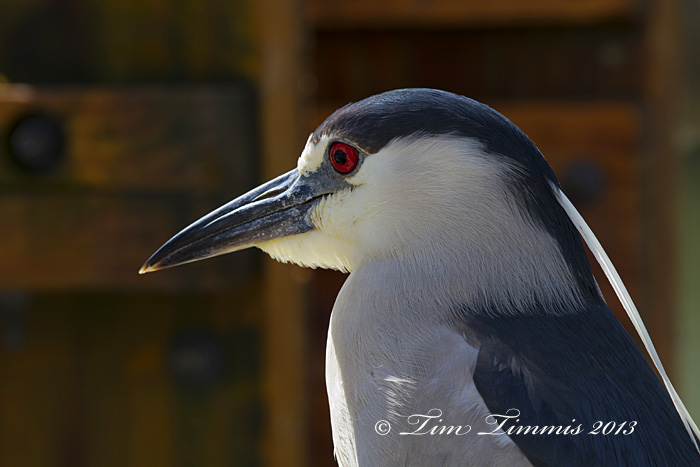
My trusty assistant, Ed, suggested that we head to the pier area behind Joe’s Crab Shack near the Strand.  It worked out great with a shrimp boat coming into the dock as we walked up.  Brown Pelicans were all over the boat trying to catch scraps that the crew discarded.  My 500mm lens had too much reach and ended up getting lots of head shots.  Everyone had some great photo op’s including a Snowy Egret and a Black Crowned Night Heron.  It worked out well that we kept searching for where the birds were the most active.

Thanks to everyone that signed up for this field trip.  It was sold out and everyone appeared to have a good time, including me.  Thanks again Ed for your help and recommendations along the way.

All of these shots were taken with Canon 7D and Canon 500mm F4 IS II lens with the last 3 being handheld

Shutter priority, 1/6 sec @ F32, ISO 400, evaluative metering, -1 2/3 exposure compensation

Galveston_01704132013-2

Aperture priority, 1/1250 sec @ F5.6, ISO 200, +1/3 exposure compensation

Galveston_04504132013-2

Aperture priority, 1/1250 sec @ F5.6, ISO 200, +1/3 exposure compensation

Galveston_06104132013-2

Aperture priority, 1/1250 sec @ F5.6, ISO 400, evaluative metering, no exposure compensation

Galveston_26004132013-2

Aperture priority, 1/500 sec @ F10, ISO 400, evaluative metering, -1 exposure compensation

Galveston_17704132013-2

Aperture priority, 1/250 sec @ F9, ISO 400, evaluative metering, no exposure compensation

Galveston_25204132013-2

FeatherFest Bolivar Flats Field Trip – Part II

Here are some more of my photos from my workshop at FeatherFest at Bolivar Flats.  These Pelicans were hanging out on the barricade poles where you park.  We took advantage of the early morning light with this gang of Pelicans and then moved to the opposite side to get some silhouette shots.

Taken with Canon 7D and Canon 500mm F4 IS II, handheld

1/640 sec @ F4, ISO 400, evaluative metering, no exposure compensation or flash

Bolivar Flats_00804122013-2

1/800 sec @ F4, ISO 400, evaluative metering, no exposure compensation or flash

Bolivar Flats_00104122013-2

1/8000 sec @ F8, ISO 400, evaluative metering, -1 exposure compensation

Bolivar Flats_02004122013-3

1/8000 sec @ F8, ISO 400, evaluative metering, -1 exposure compensation

Bolivar Flats_02604122013-2

1/640 sec @ F8, ISO 400, evaluative metering

Bolivar Flats_29004122013-2

Galveston’s FeatherFest Field Trip to Bolivar Flats

Had a great time this week with leading 4 classroom workshops and 2 field trips at Galveston’s FeatherFest.  The first field trip was at Bolivar Flats, which I kind of know like the back of my hand.  The goal was to give the participants experience at using a ground pod and to get some low-level shorebird photos.  Bolivar is at it’s best at low tide and of course it was high tide on Friday morning.  Never the less, we packed 10 of us into a small van and headed to the flats.  Note to self:  get a larger vehicle next year and leave earlier.

The good news was that the sun was out and the wind and waves were low.  The bad news was that with high tide, there were no exposed sand bars off of the shoreline so we had to stay on the beach.  There were several Pelicans on the poles at the barricade, which made for some good shots including silhouettes.  Went a little further down the beach and saw a Willet and some type of small sparrow in the brush.  Got down on the ground to shoot some small Sanderlings and 3 Marbled Godwits came walking towards us.  It was a good example of how close the birds will come to you while lying down on the ground.

We ended up working our way down the beach and got up and down several times.  My sharp-eyed liaison assistant, Phil, spotted a lone Avocet in full breeding color mixed in with some other birds further down the shoreline.  I told the group that it would be a miracle to get close to him but we would give it a shot.  We ended up walking closer to him with my goal to get to a point where there was some yellow plastic on the beach.  The birds started to stir a little, so we went down to the ground.  The Avocet was mixed in with several other birds and was difficult to get a good shot of him at that distance.  We ended up doing the old belly crawl trying to get closer while pushing the ground pods along.  When we made it to the yellow plastic, I was satisfied that we had reached that goal.  My group was very ambitious and wanted more so we kept crawling.  This is where a Skimmer ground pod really shines with it being easy to move along the sand.

We ended up crawling fairly close to the Avocet but ran out of time and had to head back to the van.  I was hoping that he would give us a good stretch and fly but he looked too tired.  It’s rare to see a lone Avocet like that as they are usually in a large flock.  The field trip turned out better than I expected with being stuck on the shoreline.

Thanks to everyone who came on this field trip.  It was a good time and can’t wait to do it again next year.  I’ll post of few more photos from this trip and my second trip on Sat. around Galveston later.

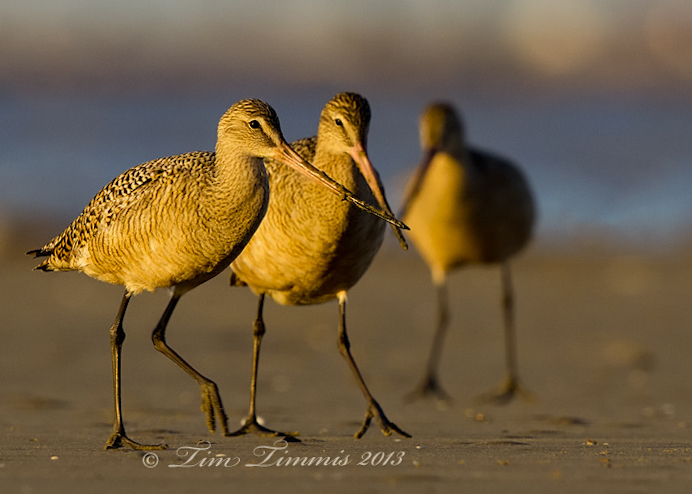
All of these photos were taken with a Canon 7D and Canon 500mm F4 IS II mounted on a Skimmer ground pod with Wimberley II gimbal head

Marbled Godwits with my goal while taking this shot was to get the first two with their beaks together.  Got an added bonus with the 3rd one.  Shows the depth of field with a 500mm lens.

Aperture priority, 1/500 sec @ F8, ISO 400, evaluative metering, no exposure compensation or flash

Bolivar Flats_06204122013-2

Got this Marbled Godwit taking off as he walked around us along the beach.

Aperture priority, 1/800 sec @ F8, ISO 400, evaluative metering, no exposure compensation or flash
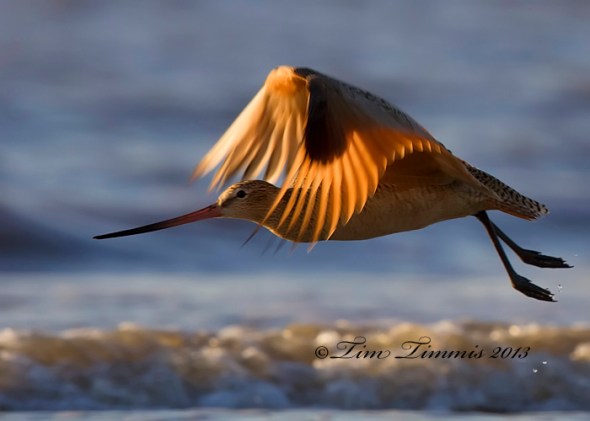
Bolivar Flats_15704122013-2

This Marbled Godwit was doing his best pose for us.

Aperture priority, 1/800 sec @ F8, ISO 400, evaluative metering, no exposure compensation or flash
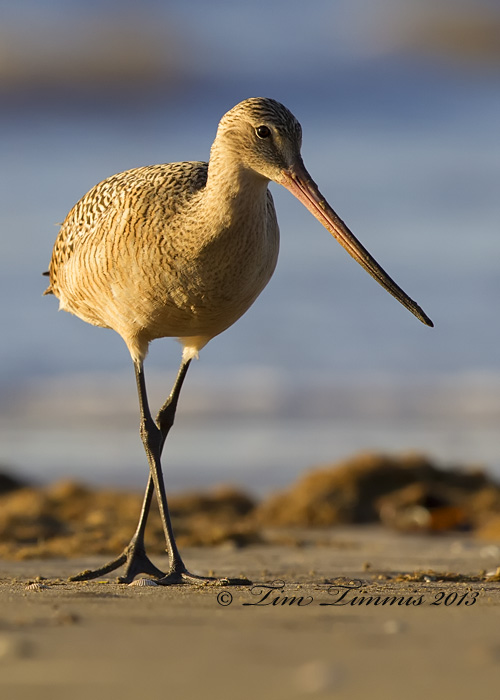
Bolivar Flats_24704122013-2

Our targeted Avocet in full breeding colors as he finally walked away from the other birds around him.

Aperture priority, 1/1250 sec @ F8, ISO 400, evaluative metering, no exposure compensation or flash

Bolivar Flats_36304122013-2

Avocet Water Mask

This is one of my favorite photos from Bolivar this year, so far.  This Avocet was taking a bath very close to me as I was lying down with my ground pod.  He started dunking his head/body into the water and I kept trying to get a photo of him with water on his head.  This one went above my expectations when he came up with his entire head covered with water and the splash coming off the top.  This is where 8 frames/sec comes in handy.

Taken with Canon 7D and Canon 500mm F4 IS II with 1.4x teleconverter mounted on Skimmer ground pod with Wimberley II gimbal head

1/1600 sec @ F10, ISO 400, manual exposure, 700mm

Bolivar Flats_55302242013-2

Leading Workshops at Galveston’s FeatherFest

Galveston’s FeatherFest is just around the corner, April 11-14.  I’ll be leading bird photography workshops again this year along with a couple of field trips.  My field trips are booked up but there is still room in the classroom workshops.  Look forward to seeing some of you there.

http://www.galvestonfeatherfest.com/

Nest Building Ritual

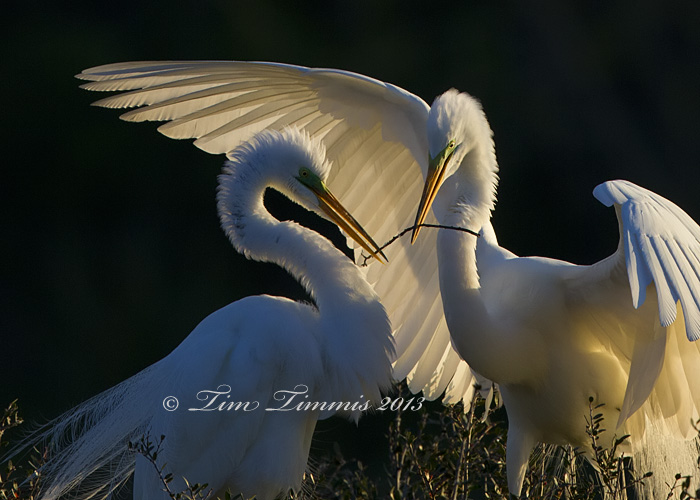
When the mate arrives back at the nest with a stick, the ritual begins with lots of squawking.  The stick is then transferred with an abundance of fanfare to the other egret.  They often both hang onto to the stick while placing it into the nest.  It’s quite the ceremony and interesting to watch and photograph.

I tend to keep my focus on one pair of birds that are in a good position with a decent background.  If you get lucky, they repeat the ritual time after time and allow for some great photo op’s.  This was one of those times.  One of my favorite shots from High Island so far this year.

Using manual exposure and exposing for the brightest spots on the white birds keeps the whites from blowing out, darkens the scene and resulted in the black background.

Taken with Canon 7D and Canon 500mm F4 IS II mounted on tripod with Wimberley II head

1/1250 sec @ F8, ISO 400, manual exposure, 500mm

High Island_04403022013-2

Backlit and Lovin’ It

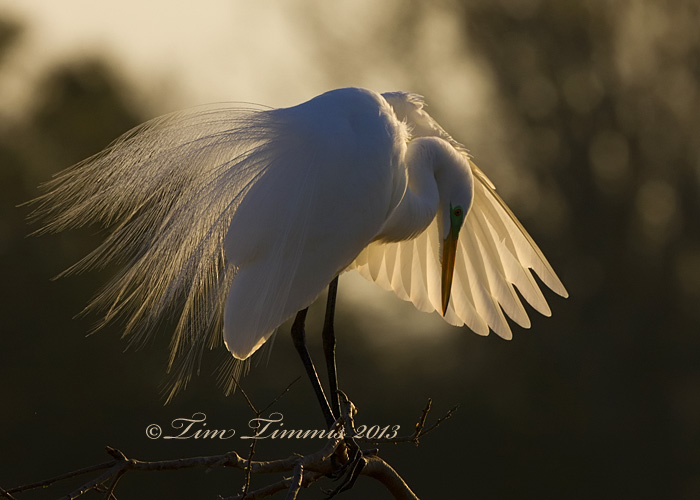
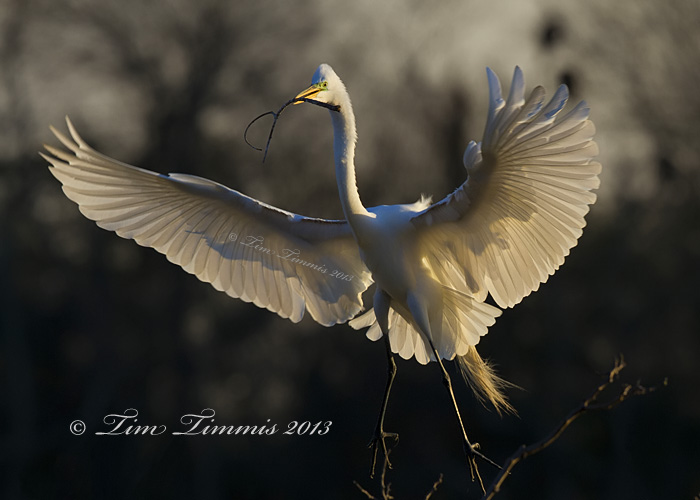
I’m a major fan of backlit bird photos, especially from High Island’s rookery.  Sunrise is a very special time at the rookery.  The sun comes up in your face and provides some great backlit photo op’s.  This Great Egret was showing off it’s breeding plumage and backlit wings.

Taken with Canon 7D and Canon 500mm F4 IS II lens mounted on tripod with Wimberly II head

1/1600 sec @ F8, ISO 400, manaul exposure

High Island_27203162013-2

1/1600 sec @ F8, ISO 400, manaul exposure

High Island_27503162013-2

High Island Nest Building – Part II

Apparently only one stick is not enough to build a nest with, go figure.  Therefore, here are a few more sticks in transit.  The first photo is the same bird from the previous post as he was coming in for a landing.  All taken in manual mode to control the exposure on the white birds.  Stick transfer shots are next.

Taken with Canon 7D and Canon 500mm F4 IS II mounted on tripod with Wimberley II head

1/800 sec @ F8, ISO 400,  manual exposure

High Island_96903022013-2

1/1000 sec @ F9, ISO 400, manual exposure

High Island_41603082013-3

1/1250 sec @ F9, ISO 400, manual exposure

High Island_51903082013-2

High Island Nest Building – Part 1

The nesting activity has started early this year at High Island’s rookery.  It’ my favorite time when breeding plumage is on display along with the Great Egrets busy mating and building nests.  The rookery is filling up quickly with it being difficult to get isolated bird shots.

My keeper rate has gone up this year with my 500mm lens and using manual exposure more.  However, 500mm with a crop sensor camera is almost too close in some cases as I’ve clipped lots of wings on action shots.

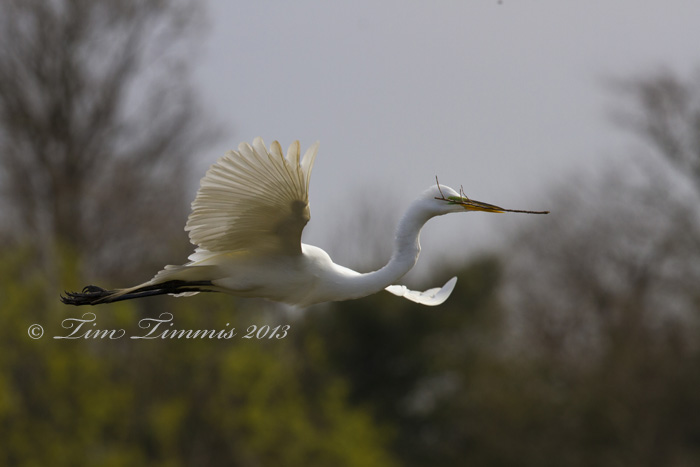
Caught this Great Egret with wings spread flying back to the nest with a stick.  Unfortunately, the mosquitos have almost the same wing span. They are very nasty this year, at least around sunrise, so be prepared.

More to come…


Taken with Canon 7D and Canon 500mm F4 IS II lens mounted on a tripod with Wimberley II gimbal head

1/800 sec @ F8, ISO 400, manual exposure at 500mm

High Island_96203022013-2