
Avocet Halo Affect
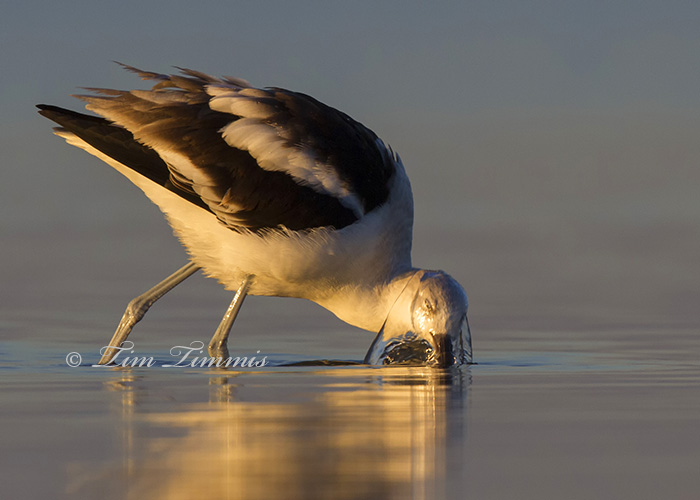
One way to get action shots of shorebirds is to shoot a burst of shots when their head starts going towards the water. You can catch some interesting splashing photos. In this case, the Avocet ended up with a water “halo” around his head.
Taken with Canon 7D and Canon 500mm F4 IS II with 1.4x III teleconverter mounted on Skimmer ground pod with Wimberley II gimbal head
1/500 sec @ F11, ISO 500, evaluative metering, – 1/3 exposure compensation

1/400 sec @ F11, ISO 500, evaluative metering, – 1/3 exposure compensation
Flock O’ Snowy’s
My first trip in 2014 led me back to my favorite location, Bolivar Flats. Along the gulf coast, Bolivar is a premier location for shorebird photography, especially if you like to get down and dirty with a ground pod. The tide was going out at sunrise with several exposed sandbars.
My favorite targets, American Avocets, were all bunched up near the jetty behind a group of white pelicans. Didn’t want to spook the pelicans while trying to get to the Avocets so decided to divert to a favorite spot closer to the shoreline around the bend. This area is usually very muddy and it didn’t disappoint. Laid down to see what would come my way when a flock of Snowy Egrets flew in to feed further away from me. Didn’t want to scare them away with standing up and contemplated the best way to get to them. The terrain looked almost like a moonscape with holes in the muck like craters filled with water and higher flat areas like plateaus. Decided that crawling wasn’t a great idea so ended up walking on my knees using my flash bracket as a cane for balance. Went about 30 yards and laid down again to shoot and rest. The muck was smoothed out at this point and then belly crawled the rest of the way. The muck was so slick I was almost gliding. Got fairly close to the flock and a single Snowy off to the left feeding. Was getting some decent shots when the flock suddenly flew away. Looked to my right and another photographer had walked up along the shoreline and spooked the birds. Goes with the territory sometimes. Stayed put and some of the birds came back to finish off the session.
When I got up, I couldn’t see the camo pattern on my waders as the mud/muck was caked on so thick. Good times.
Taken with Canon 7D and Canon 500mm F4 IS II with 1.4x III teleconverter mounted on Skimmer ground pod with Wimberley II gimbal head
1/640 sec @ F11, ISO 400, evaluative metering, -1/3 exposure compensation
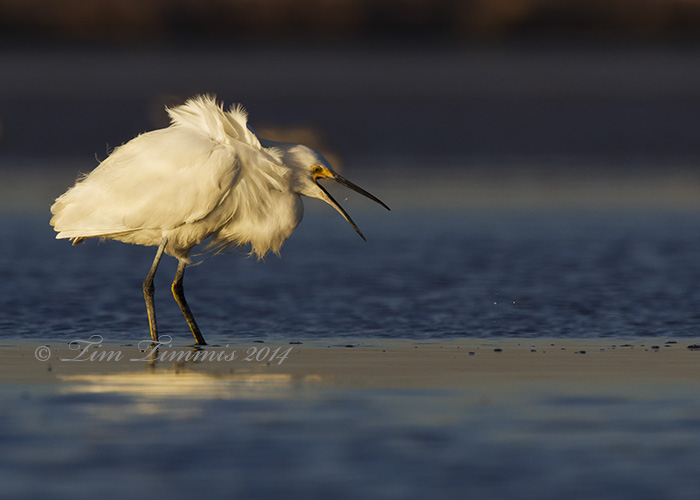
1/800 sec @ F11, ISO 400, evaluative metering, -2/3 exposure compensation
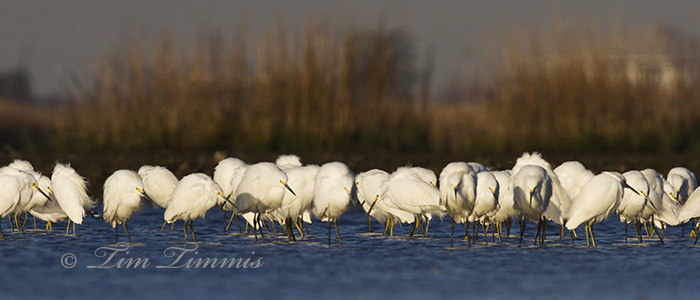
1/1250 sec @ F11, ISO 400, evaluative metering, -2/3 exposure compensation

Long Billed Curlew in Silhouette
Here are a couple more silhouette shots from Bolivar Flats. This time, Long Billed Curlew’s. Just can’t resist silhouette shots before the sun comes up. A guilty pleasure of mine.
Taken with Canon 7D and Canon 500mm F4 IS II lens with 1.4x III teleconverter mounted on Skimmer ground pod with Wimberley II gimbal head.
1/125 sec @ F5.6, ISO 800, evaluative metering, + 2/3 exposure compensation

1/125 sec @ F5.6, ISO 800, evaluative metering, + 2/3 exposure compensation

Skimming into 2014
My last outing in 2013 was filled with silhouettes of Black Skimmers on the Gulf of Mexico at Bolivar Flats. Calm winds and calm water had the skimmers out in force. Took these before the sun came up in aperture priority with ISO cranked up to 800 to get some decent shutter speeds.
It was a great ending to 2013. It has been a very challenging and rewarding year for me. Photography highlights included a great trip to California to photograph sea otters, leading workshops at Galveston’s FeatherFest, teaching private lessons, getting some future opportunities and spending quality time in nature along the gulf coast. Thanks to everyone who stopped by to check out my blog. Hope that everyone has a fun/safe new year and a great 2014.
Taken with Canon 7D and Canon 500mm F4 IS II with 1.4x III teleconverter mounted on Skimmer ground pod with Wimberley II head
1/800 sec @ F5.6, ISO 800, evaluative metering, +2/3 exposure compensation

1/640 sec @ F5.6, ISO 800, evaluative metering, +2/3 exposure compensation
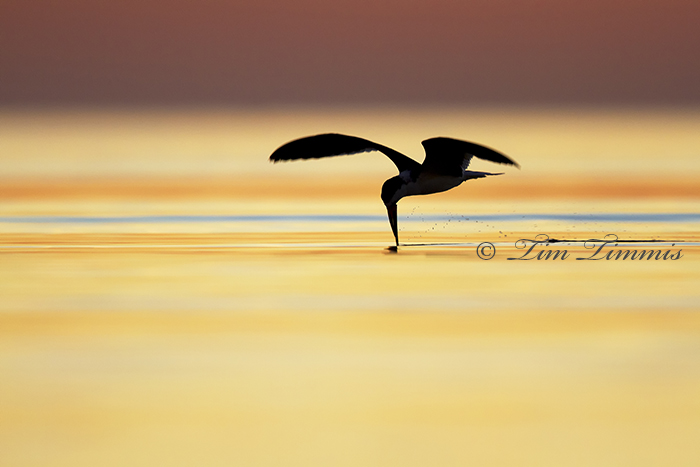
1/640 sec @ F5.6, ISO 800, evaluative metering, +2/3 exposure compensation

Strutting Avocets
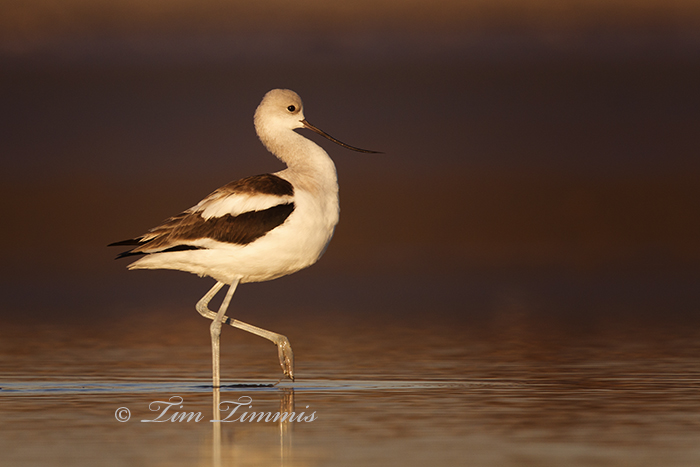
These Avocets were strutting their stuff along the gulf coast. Used negative exposure compensation to keep the white highlights from blowing out after checking for “blinkies”, i.e. flashing highlights.
Taken with Canon 7D and Canon 500mm F4 IS II with 1.4x III teleconverter mounted on Skimmer ground pod with Wimberley II gimbal head
1/640 sec @ F11, ISO 400, evaluative metering, -1/3 exposure compensation
1/640 sec @ F11, ISO 400, evaluative metering, -1/3 exposure compensation

Peregrine Falcon
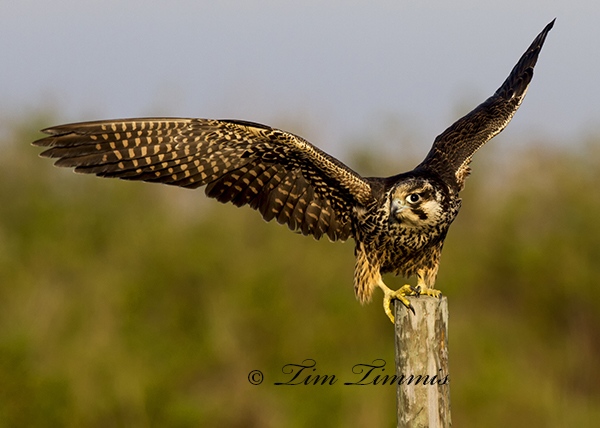
I’ve been looking for the Peregrine Falcon that hangs out at Bolivar during the winter months but hadn’t seen him until this trip. Found him sitting on a fence post as I was driving away from the beach. Didn’t recognize him at first and thought that he was a small hawk as I drove past him and made eye contact. Stopped the car and drove backwards to keep him on my left side. I’ve learned to keep my camera handy on the way out just for such occasions. Was able to get a few shots before a car came by and scared him off.
Taken with Canon 7D and Canon 500mm F4 IS II lens with 1.4x III teleconverter, handheld
1/800 sec @ F9, ISO 400, evaluative metering

1/800 sec @ F9, ISO 400, evaluative metering
Avocet Posing
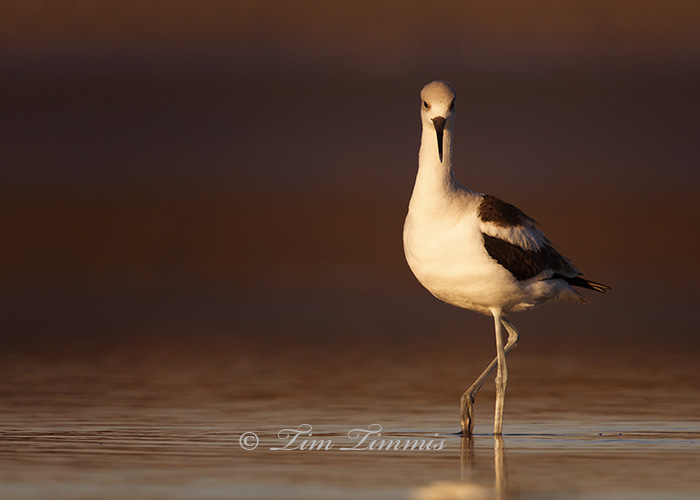
Found almost perfect conditions yesterday along the gulf coast with low tide, 36 deg F temperature, calm winds and sunshine. Was hoping for still as glass water but it wasn’t quite there. Found several flocks of American Avocets just off shore. Good opportunity to try out my repaired camera by getting sand all over it. Was successful at that, along with getting very close to some Avocets. Laid down on a sandbar with water on both sides of me and waited for the Avocets to walk closer. Got some shots looking towards the gulf and remembered one of my golden rules, look behind you. Turned around and found several Avocets walking in the water right behind me. Slowly pivoted on my stomach and got lots of close-up shots as they kept walking in front of me along the narrow stretch of water between my sand bar and the next one. Can’t wait to go out again.
Taken with Canon 7D and Canon 500mm F4 IS II lens with 1.4x III teleconverter mounted on Skimmer ground pod with Wimberley II gimbal head
Aperture priority, 1/640 sec @ F11, ISO 400, evaluative metering, -1/3 exposure compensation, 700mm
Blurred Wings over Waves
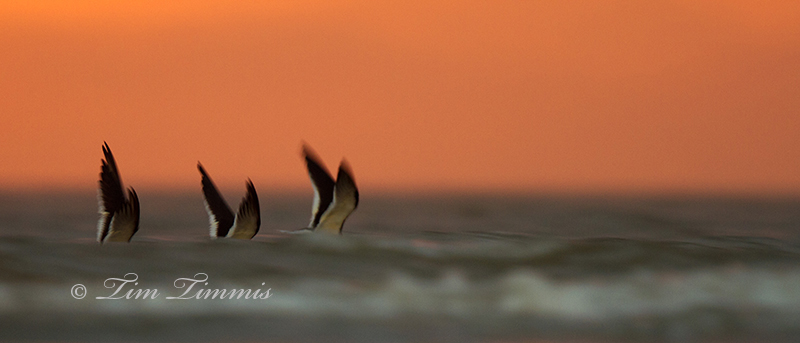
Caught these Black Skimmers as they went behind some waves in the Gulf of Mexico.
Taken with Canon 7D and Canon 500mm F4 IS II with 1.4X III mounted on Skimmer ground pod with Wimberley II head.
1/80 sec @ F5.6, ISO 500, +2/3 exposure compensation
7D Repaired/Returned
Got may camera back today via my friends at Fed Ex. Here is what Canon said about the repairs: “Your product has been examined and it was found that the internal component was broken causing the error to be displayed. The mirror box assembly and shutter assembly were replaced. Further, it was found that the top cover assembly has been submerged in liquid causing one or more buttons or controls to operate improperly. The top cover was replaced. Product functions were confirmed”.
To clarify, it wasn’t submerged in liquid but probably had some salt water dripped on it on a few/many occasions, for some odd reason. They replaced the back cover last time it was repaired so I’ve almost got a new camera at this point. I use a raincoat to protect the lens but the camera isn’t totally covered and it’s easy to have water drip off of my sleeves when I get up from lying on the water laden sand bars.
Now I have to reprogram all of the custom function settings. Good thing that I wrote them down.
While waiting for my camera to return, I ended up upgrading to Photoshop CC/Lightroom while the special deal was on for $10/month. Haven’t tried Lightroom yet but I like Photoshop CC so far. Also got the NIK software package since my old version of Noise Ninja wouldn’t work with Photoshop CC. I really like NIK Dfine for noise reduction. Color Efex Pro 4 looks very interesting as well. New toys to play with.
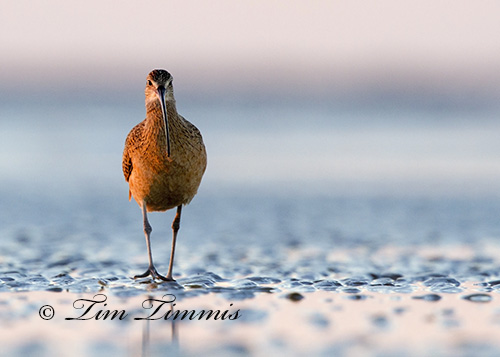
Here is another photo of a Long Billed Curlew from my last outing to Bolivar. More to come.
Taken with Canon 7D and Canon 500mm F4 IS II lens with 1.4x III teleconverter mounted on Skimmer ground pod with Wimberley II head
1/200 sec @ F 9, ISO 500, evaluative metering, + 1/3 exposure compensation
Canon 7D Repair Update
My camera repair saga continues. Got a voice mail from Canon today, which wasn’t a good sign. Called them back and found out that my 7D was going to cost over twice their original estimate. Apparently more repairs were required once they got into it. My previous repairs always cost around $215. This one is going to be $655. They have to replace the shutter, mirror box and the top cover. I looked up the price for a new 7D and decided to get this one repaired instead and will likely buy the next version of the 7D if it comes out next year. Should get it back sometime next week.
This makes the 8th shutter that I’ve worn out on a total of 4 cameras. I really need to upgrade to a professional level camera one of these days. But as I mentioned to Doug on my last post, I’m still not convinced that I want a full frame camera for wildlife photography.
Success + Camera Failure
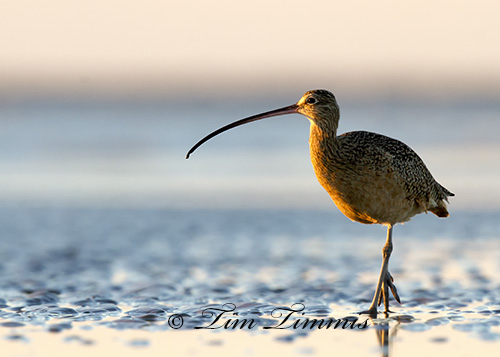
Spent Friday and Saturday mornings enjoying low tide at Bolivar Flats. It was a nice chilly 38 deg. F on Friday at sunrise but the high winds kept the bird activity low. Saturday had less wind and more cooperative birds. Found a flock of Avocets hanging out near a sand bar off shore in the Gulf. Waded out to an adjacent sandbar and slowly made my way towards them. Didn’t want to spook them so I laid down a distance from their location and crawled towards them while pushing my ground pod along. Ended up moving +/- 40 yards on my elbows/knees, which I’m still feeling today. Had to stop along the way to rest and take photos of other shore birds in the area, including this cooperative Long Billed Curlew. Only minor cropping on this one to get him off-center in the photo.
Finally got fairly close to the Avocets and spent about an hour watching and taking photos of them. Right before I was going to leave, my camera locked up showing ERR 22 with instructions to remove/reinstall the battery. Did this several times without any luck. Packed my gear up and headed home. Ended up shipping my 7D to Canon repair service in California. Will hopefully get it back soon as I’ve got more birds to shoot before the year is done. This one doesn’t sound like a shutter so not sure what the issue is.
Taken with Canon 7D and Canon 500mm F4 IS II with 1.4x III teleconverter mounted on Skimmer ground pod with Wimberley II head
1/125 sec @ F 7.1, ISO 500, evaluative metering, +2/3 exposure compensation, 700mm
The Snowy Splash
After taking some Avocet photos at Bolivar Flats, I moved to a different location where four Snowy Egrets were hanging out fishing. Got close and laid down on a sandbar with my ground pod. I would shoot off a burst of shots when their head started to go towards the water, which led to some interesting splash shots. Had to use negative exposure compensation to keep the whites from being over exposed and blowing out.
Taken with Canon 7D and Canon 500mm F4 IS II with 1.4x III teleconverter mounted on Skimmer ground pod with Wimberley II head
Aperture priority, 1/500 sec @ F11, ISO 200, evaluative metering, -1/3 exposure compensation, 700mm

Stop! said the Avocet
This Avocet appears to be yelling at the waves to stop them from coming in. Didn’t work but added some interest to the shot.
Taken with Canon 7D and Canon 500mm F4 IS II lens with 1.4x III teleconverter mounted on Skimmer ground pod with Wimberley II head
1/250 sec @ F8, ISO 500, evaluative metering, + 1/3 exposure compensation, fill flash with better beamer set at -3 stops
Avocet just Chillin
The last few weeks have been a challenge so it was good to get out again to take some shorebird photos, although the alignment of the stars must have been off yesterday.
While driving to Galveston, an electronic sign along the interstate showed that the ferry to Bolivar was going to be shutdown from 8:00 a.m. to 11:00 a.m., which meant that I could get to Bolivar but couldn’t return on the ferry. A two-hour drive home going around Galveston Bay was the alternative. Turning around wasn’t an option as it was going to be low tide at Bolivar and the shorebirds were calling. Although I had spent quite a bit of time the night before getting prepared for this excursion, I decided at the last moment in my infinite wisdom not to take my camera bag. It’s too small to hold my 500mm lens when the 1.4x is attached. Bad decision as my supply of CF memory cards were in that bag. Luckily there was one 32 gig card in my camera that was enough to get me through the mornings shoot. Arrived at Bolivar before sunrise and geared up. Another glitch in the system was a hole in my rubber boot. Beginning to wonder if someone was trying to give me a major hint. Ended up ignoring the pending signs of doom and had a good time with capturing photos of Avocets, Willets, Marbled Godwits and Snowy Egrets.
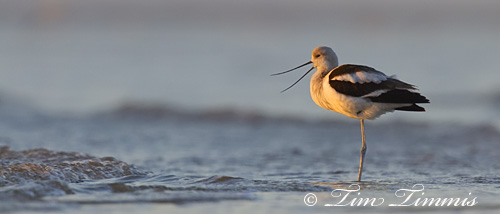
There were hundreds if not a few thousand Avocets feeding just off shore. This lone Avocet landed nearby just after sunrise and rested on one leg with its beak nestled in his feathers. Got close to him by crawling on hands and knees and got this nearly full framed shot. He kept his eye on me but didn’t spook.
Taken with Canon 7D and Canon 500mm F4 IS II with 1.4x teleconverter mounted on Skimmer ground pod with Wimberley II gimbal head
Aperture priority, 1/500 sec @ F8, ISO 400, evaluative metering, +2/3 exposure compensation, 700mm

Northern Harrier
Found this Northern Harrier at Bolivar Flats while taking shorebird photos. Tracked him from my prone position as he flew along the shoreline for a good series of shots. This photo is my favorite pose but sometimes you can’t control the backgrounds.
Taken with Canon 7D and Canon 500mm F4 IS II lens with 1.4x III teleconverter mounted on Skimmer ground pod with Wimberley II gimbal head

Reddish Egret Stare Down
Here are a couple of Reddish Egret photo’s from last weekend at Bolivar Flats. Found this bird while walking along the beach back to my car. Wasn’t really in the mood to lay down again as my neck was hurting but am glad that I did. He was waiting patiently for fish to swim by with his neck retracted close to his body. He stuck it out a couple of times which made for a more interesting photo. In the first shot, he was probably wondering who the idiot was lying on the ground taking his picture. That would be me…
Taken with Canon 7D and Canon 500mm F4 IS II lens with 1.4X III teleconverter mounted on Skimmer ground pod with Wimberley II gimbal head
1/400 sec @ F10, ISO 400, evaluative metering, +2/3 exposure compensation, 700mm
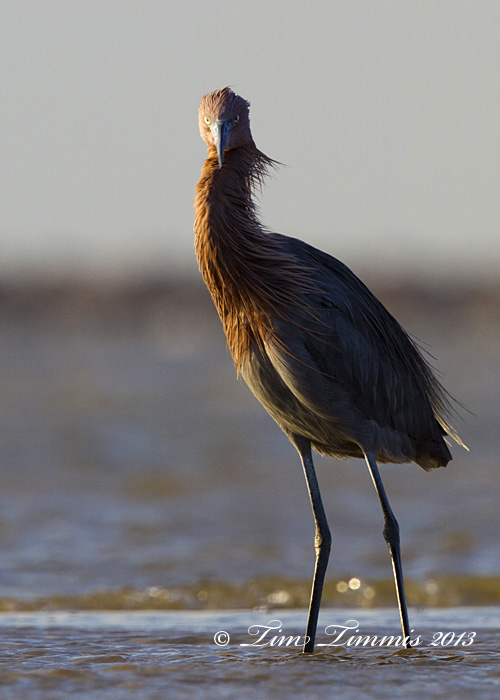
1/400 sec @ F10, ISO 400, evaluative metering, +2/3 exposure compensation, 700mm

All Shook Up
It felt like going home again when visiting Bolivar Flats last weekend. My favorite place to take shorebird photos, it has been almost 6 months since my last visit in April when leading a workshop at Galveston’s Featherfest. The weather, tide and my schedule finally cooperated, so it was off to Bolivar.
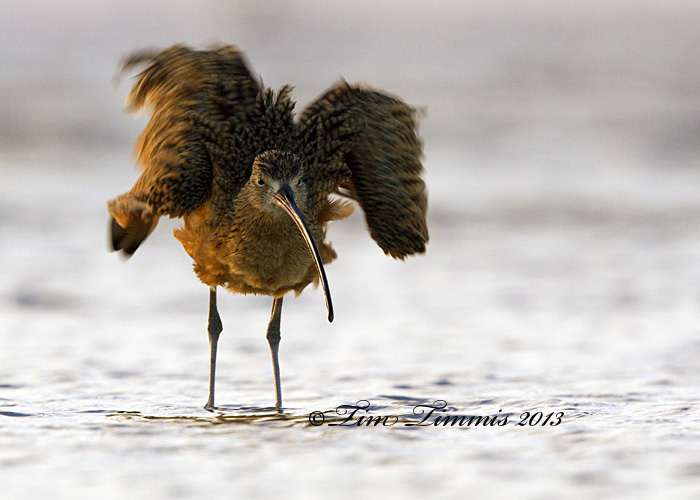
Saw the usual suspects including a reddish egret, great blue heron, white pelicans, avocets, sanderlings, snowy egret, etc. This Long Billed Curlew got his feathers ruffled, but not at my presence. He didn’t see me while I was lying down with the ground pod shooting away as he walked back and forth in front of me. This was very close to a full framed shot with using my teleconverter to get some extra reach. The sun was behind the clouds at sunrise but eventually peaked out.
Taken with Canon 7D and Canon 500mm F4 IS II lens with 1.4x III teleconverter mounted on Skimmer ground pod with Wimberley II gimbal head
1/400 sec @ F9, ISO 500, evaluative metering, 700mm
Nearly Head-on Crash with Sandhill Cranes
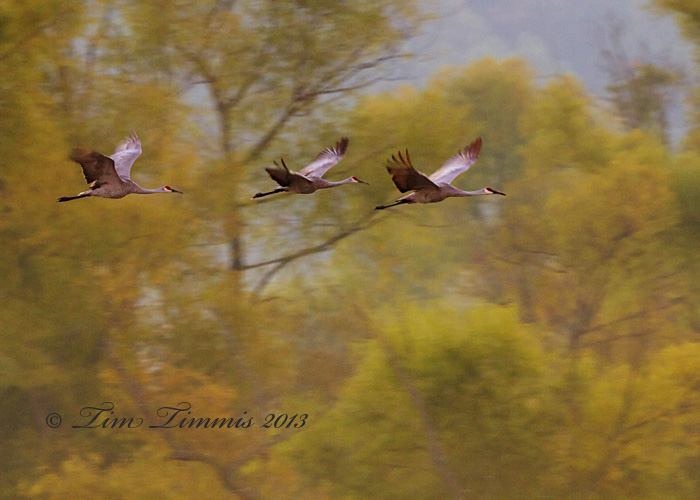
My goal is always to get up close and personal with wildlife but this encounter was a little too close for comfort.
While taking my usual early morning tour of the Indiana countryside while on vacation, I rounded a corner while looking off to the left in a large field to see if any Sandhills were waiting for me. No luck on the left but suddenly caught a glimpse of something coming quickly from my right and three Sandhill cranes were flying right in front of my car. I locked up the brakes on the dirt road and missed them by a couple of feet at most. My reflexes are apparently still in tact as I was able to quickly hit the brakes and grab my camera on the seat at the same time to keep it from crashing into the dashboard. My life didn’t flash before my eyes but what did was the thought of having to tell my dad that I wrecked his car after getting hit by some very large birds. Luckily, that didn’t happen.
They were hanging out in the ditch on the right side of the road and darted in front of me. Apparently the family truckster, aka SUV, wasn’t very intimidating as they landed just on the other side of the road to my left. Grabbed my camera and started shooting. They were too close at 700mm so ended up taking off the teleconverter after several close-up’s. They gradually walked further away and were the subjects for my previous silhouette post once the sun poked through the fog.
Taken with Canon 7D and Canon 500mm F4 IS II lens with 1.4x III teleconverter, handheld out the car window.
1/320 sec @ F5.6, ISO 800, evaluative metering, +2/3 exposure compensation, 700mm

1/800 sec @ F5.6, ISO 800, evaluative metering, 700mm

Sandhill Silhouettes
With some early morning fog and backlighting, these Sandhill Cranes were made for silhouettes. Since I’m a major fan of wildlife silhouettes, didn’t take much arm twisting to get me to take advantage of the opportunity. Used negative exposure compensation to darken the scene and enhance the shot. Taken handheld out the car window.
Taken with Canon 7D and Canon 500mm F4 IS II lens and 1.4x III teleconverter
1/1250 sec @ F11, ISO 400, evaluative metering, -1 exposure compensation
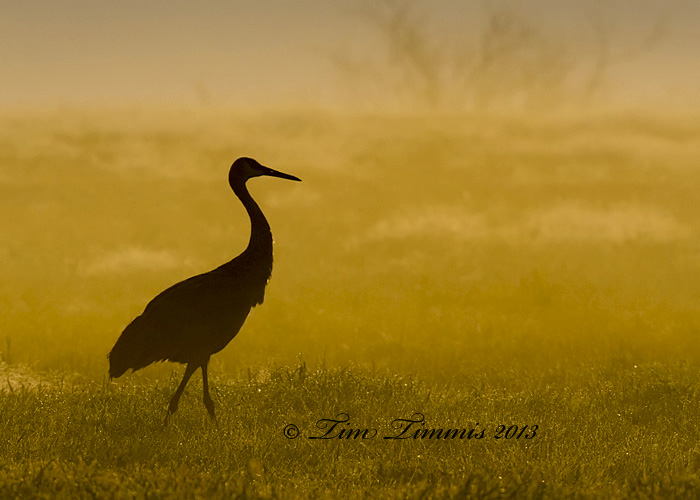
1/1250 sec @ F11, ISO 400, evaluative metering, -1 exposure compensation

Sandhill Cranes in Indiana
Made a trip home to north eastern Indiana recently to visit family. It was later in the year than we usually go so wasn’t sure what to expect from a wildlife photography perspective. Was pleasantly surprised with the abundance of Sandhill Cranes that were near Mongo, IN. Went out several mornings at sunrise to find them. It was down to 37 deg F in the mornings, which felt great. Such a nice change from the Houston heat.
This was my first trip home with my 500mm lens. Had to drag it around the week before while on a business trip before heading to Indiana. It was worth the effort as I needed the extra reach with most of the shots. Didn’t have room in my suitcase for my tripod so had to handhold it.
Got a little too up close and personal with the Sandhill’s as I almost hit three of them with my car. More on that later…
Taken with Canon 7D and Canon 500mm F4 IS II lens, handheld
1/20 sec @ F4, ISO 800, evaluative metering, +1/3 exposure compensation

1/125 sec @ F5.6, ISO 800, evaluative metering
Anhinga in Silhouette
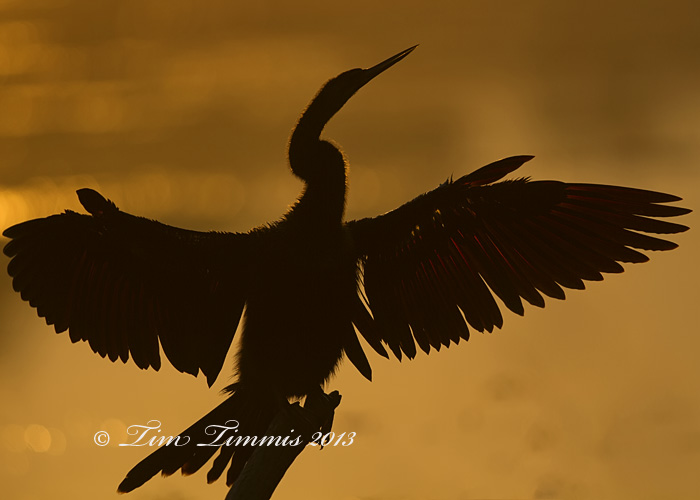
On my last trip to Brazos Bend State park a few weeks ago, there was very little bird action except for this one lone Anhinga at Elm Lake. He was drying out in their typical wings out pose. Walked behind him and had to move off of the trail to try to get a full framed shot with my 500mm lens. With the sun directly behind him, I backed up as far as I could go up against a tree to get this shot. Didn’t want to go any further off the trail with the abundant local alligator population. Used negative exposure compensation to enhance the silhouette.
Just got back from vacation and had some decent luck with Sandhill Cranes, which I’ll post later. Still going through a few thousand photos.
Taken with Canon 7D and Canon 500mm F4 IS II lens mounted on Gitzo tripod with Wimberley II gimbal head
1/3200 sec @ F4, ISO 100, evaluative metering, -2 exposure compensation
Skimmers in Action
Here are a few more action shots of Skimmers trying to catch fish. Easier said than done sometimes.
Taken with Canon 7D and Canon 500mm F4 IS II lens mounted on Skimmer ground pod with Wimberley II gimbal head


Avocet Dipped in Chocolate?
It looks a little like chocolate on his foot but I’m sure that it doesn’t taste like it. Just a little stuck in the mud but a nice pose none the less.
Taken with Canon 7D and Canon 500mm F4 IS II with 1.4x III teleconverter mounted on Skimmer ground pod with Wimberley II gimbal head
1/640 sec @ F11, ISO 400, -2/3 exposure compensation, 700mm

Down the Hatch
It can be a challenge to get close to Black Crowned Night Herons. Got a bonus on this trip to Bryan Beach, TX with seeing three BCNH’s at eye level with this one eating breakfast. Unlike my previous post with the Tern that couldn’t swallow the fish, this BCNH had no problem swallowing it whole. I was able to get fairly close using my ground pod as he was too preoccupied with feeding. Apparently he was really hungry as he kept fishing after chugging this one.
Taken with Canon 7D and Canon 500mm F4 IS II lens mounted on Skimmer ground pod with Wimberley II gimbal head
1/640 sec @ F5.6, ISO 400, evaluative metering, -1/3 exposure compensation, 500mm

1/500 sec @ F5.6, ISO 400, evaluative metering, 500mm

 Tim Timmis Photography