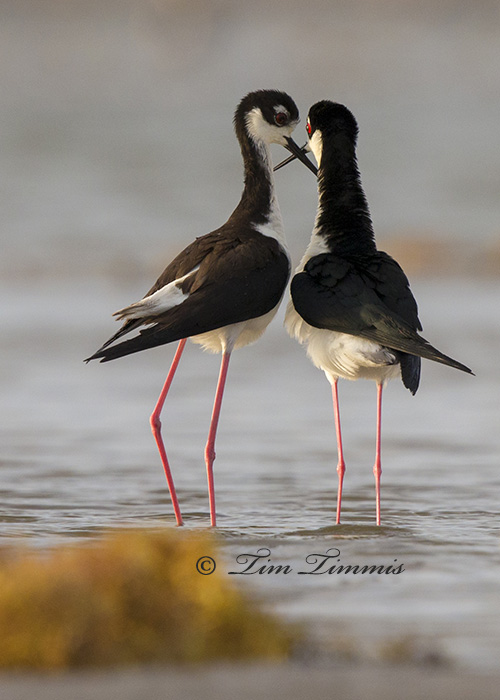
Mating Stilts
Takes a good balancing act for Black-necked Stilts to mate with those extra long legs. Just wish that they had not been facing away from me but you take what you can get.
Taken with Canon 1DX and Canon 500mm F4 IS II with 1.4x III teleconverter mounted on Skimmer ground pod with Wimberley II gimbal head
1/1,000 sec @ F10, ISO 1600, evaluative metering, +2/3 exposure compensation

1/1250 sec @ F10, ISO 1600, evaluative metering, +2/3 exposure compensation

1/1,000 sec @ F10, ISO 1600, evaluative metering, +2/3 exposure compensation
Reddish Strut
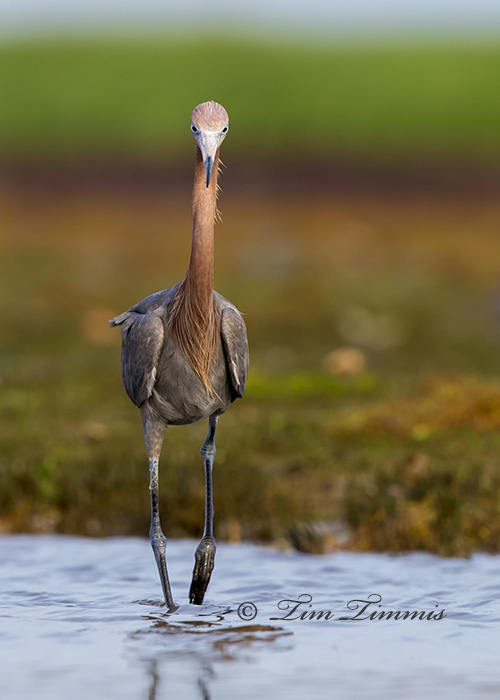
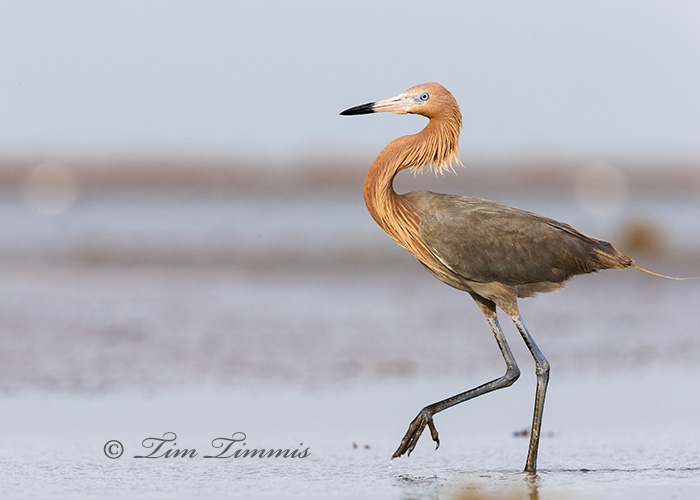
Here are a couple of shots of the Reddish Egret that walked by me as described in my last post. It pays to take shorebird photos from the prone position. Only minor cropping required.
Taken with Canon 1DX with Canon 500mm F4 IS II and 1.4X III teleconverter mounted on Skimmer ground pod with Wimberley II gimbal head
1/400 sec @ F11, ISO 1600, evaluative metering, +1 exposure compensation, 700mm
1/1000 sec @ F11, ISO 1600, evaluative metering, +1 exposure compensation, 700mm
Avocet in Breeding Plumage
Took Friday off of work to properly break in my new camera at Bolivar Flats with a little sand and salt water. It was low tide at sunrise but most of the sandbars were covered in seaweed. Just as well since I forgot to take my rubber boots with me. The outing started out slow with some Willet shots at a distance but ended up great with getting head shots of Avocets and a Reddish Egret.
Relocated my position a couple of times and ended up with two options. Off to my left was a group of Brown Pelicans/Black Skimmers and off to my right was a Reddish Egret with a few Avocets near by. Not likely to get close to the Pelican’s without spooking them so I headed towards the Reddish Egret. Couldn’t get real close without my boots so ended up picking a spot upstream of the Egret and laid down with my ground pod hoping that the birds would come to me. I love it when a plan comes together. The Reddish Egret ended up going right by me and two of the Avocets walked right towards me. One ended up being too close to get a full body shot so I focused on the top half of this body. Minor cropping to reposition him in the frame gave me this shot.
Losing the crop factor from my 7D won’t be a big deal when the birds cooperate like this. Only minor adjustments in Photoshop with saturation/contrast for this photo. No sharpening was required in Photoshop. Something tells me that I’m going to like my 1DX/500mm combo.
Taken with Canon 1DX and Canon 500mm F4 IS II with 1.4x III teleconverter mounted on Skimmer ground pod with Wimberley II gimbal head
1/1250 sec @ F11, ISO 1600, evaluative metering, +1 exposure compensation

First Outing with Canon 1DX
After waiting for Canon to come out with a high-end crop sensor camera, finally decided it was time to upgrade from my 7D to a 1DX. I fought it for quite a while as full frame wasn’t on my radar due to losing the 1.6 crop factor of my 7D. With bird photography being my niche, being focal length limited can be a challenge. A recent trip to Nebraska convinced me that it was time to upgrade with missing some good shots while not being able to crank up the ISO enough to get higher shutter speeds. My 7D is a great camera but it gets noisy above ISO 400.
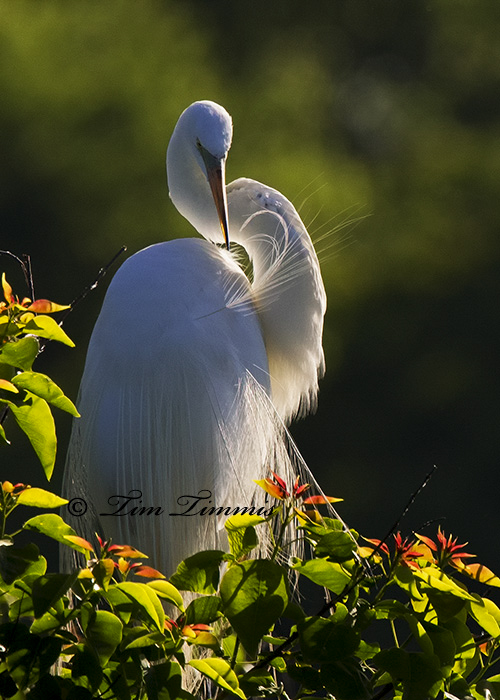
This was my first trip to High Island this year. Each season is a little different at the rookery with this year not being as good as previous years, IMO, with increased growth of the vegetation on the island covering up some of the best perching locations.
Besides the changing landscape, trying out a new camera was also challenging, especially when showing up in the dark about 45 min before the sun came up. Will need lots of practice with this puppy to get used to the button locations. Luckily the buttons to change focus points and ISO settings are similar to the 7D.
The ability to crank up the ISO to get higher shutter speeds was very sweet. Took most of my photos at ISO 1600, which look very similar to my 7D at ISO 400. I’ll post more later comparing the 7D to the 1DX after I get some more trigger time with the new camera.
Taken with Canon 1DX and Canon 500mm F4 IS II with 1.4x III teleconverter mounted on Gitzo tripod with Wimberley II gimbal head
Great Egret preening: aperture priority, 1/2000 sec @ F11, ISO 1600, evaluative metering, -1/3 exposure compensation
Foggy Sunrise
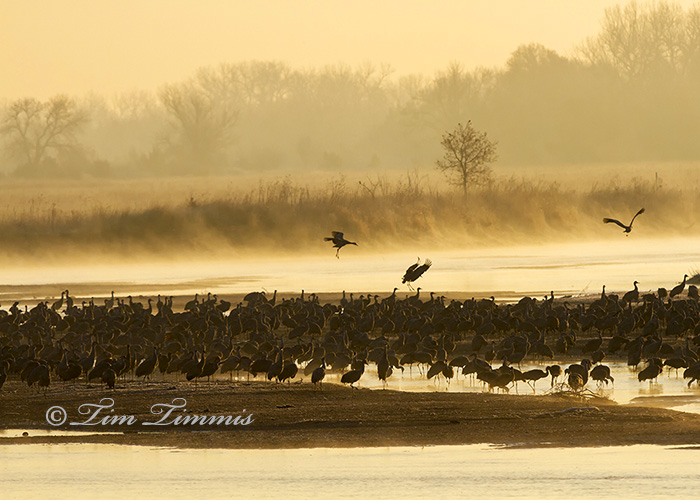
One more Nebraska Sandhill Crane photo for the road. Taken after sunrise over the Platte River in cool 16 deg F weather. The Sandhill’s launched before sunrise with some coming back to the river for some final photo op’s.
Taken with Canon 7D and Canon 500mm F4 IS II mounted on tripod with Wimberley II gimbal head
1/800 sec @ F9, ISO 400, evaluative metering
Dancing Sandhill Cranes
To round out my Nebraska Sandhill Crane posts, the most fun was watching these birds do their mating dances. They would bow down and then jump into the air for all to see. Some would pick up corn stalks and throw them up into the air. The fields were full of Sandhill’s jumping all around. Good times. Just wish that I would have had my new camera on this trip. Can’t wait to go back next year.
Taken with Canon 7D and Canon 500mm F4 IS II out the car window
1/500 sec @ F5.6, ISO 400, evaluative metering, +2/3 exposure compensation

1/400 sec @ F5.6, ISO 400, evaluative metering, +2/3 exposure compensation

1/640 sec @ F7.1, ISO 400, evaluative metering

1/400 sec @ F5.6, ISO 400, evaluative metering, +2/3 exposure compensation

Sandhill’s in Love
These two Nebraska Sandhill Cranes were staying close together, which made for a good photo op. They mate for life and put on quite a show with their mating dance, which I’ll share more photos of that ritual in my next post.
Taken with Canon 7D and Canon 500mm F4 IS II with 1.4X III teleconverter out the car window
Aperture priority, 1/800 sec @ F5.6, evaluative metering, 700mm

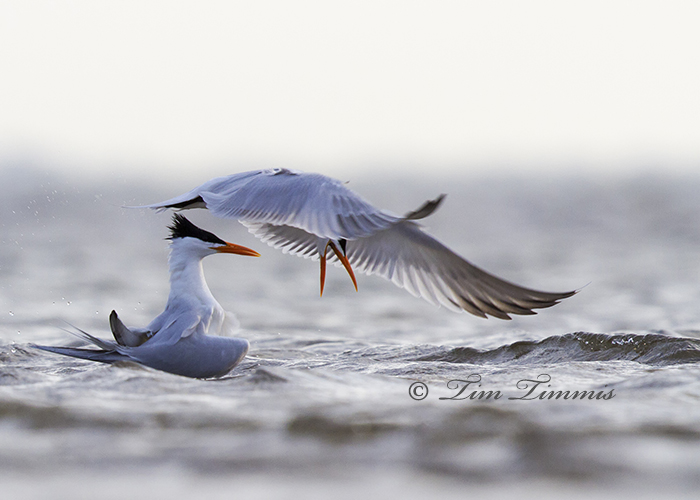
Reddish Chase
Here are a few more shots of Reddish Egrets from my last trip to Bolivar Flats in Texas during my FeatherFest field trip. One Reddish Egret was fishing when another came in and started chasing him around.
Taken with Canon 7D and Canon 500mm F4 IS II lens mounted on Skimmer ground pod with Wimberley II head
Aperture priority, 1/1000 sec @ F5.6, ISO 400, evaluative metering, +2/3 exposure compensation, 500mm
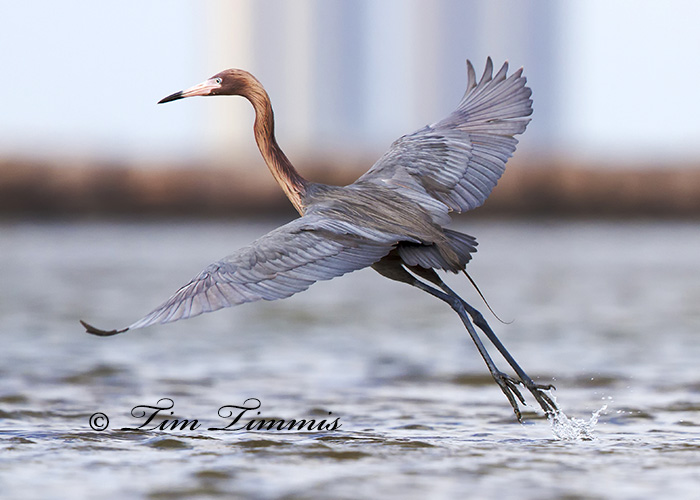
Aperture priority, 1/640 sec @ F9, ISO 500, evaluative metering, +2/3 exposure compensation, 500mm
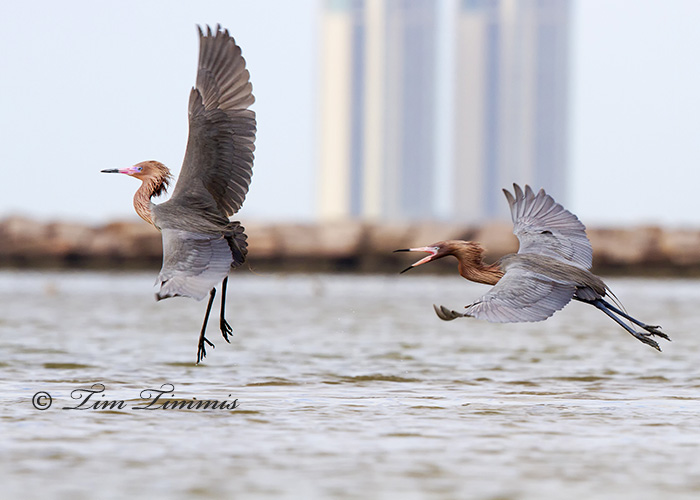
Aperture priority, 1/640 sec @ F9, ISO 500, evaluative metering, +2/3 exposure compensation, 500mm
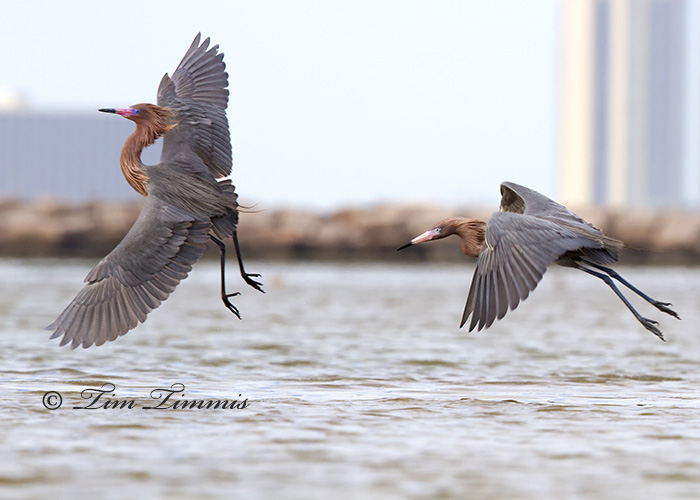
Aperture priority, 1/800 sec @ F9, ISO 500, evaluative metering, +2/3 exposure compensation, 500mm

Aperture priority, 1/800 sec @ F9, ISO 500, evaluative metering, +2/3 exposure compensation, 500mm

Galveston’s FeatherFest “Photographing Shorebirds” Field Trip
My second field trip that I led during Galveston’s FeatherFest this year was “Photographing Shorebirds at East Beach” on Galveston Island. East Beach has been closed due to the recent oil spill near the Texas City dike. Had received special permission to scout of the area the day before the trip to see how close that we could park the bus from the jetty. Luckily, they fully opened the road and the beach on the day of field trip. The beach looked great with no evidence of the oil spill. Congrat’s to everyone that helped with the beach clean-up. Job well done.
With another full class, we hit the beach near the jetty just before sunrise. There were a few hundred Black Skimmers resting near the shoreline that made for some good photo op’s. The sun finally popped over the clouds and give us some good silhouette opportunities. Some local fisherman provided for some flight shots of the Skimmers at they spooked the birds several times. I encouraged everyone to try some slow shutter speed shots as the birds were flying around.
The Gulf of Mexico was rough on the west side of the jetty with some heavy waves that would crash along the jetty, which made for some interesting photo op’s as a Willet was feeding along the top of the jetty.
Once the action started to lessen, decided to move on to plan B, which was the east end of the island, north of the jetty. There were some shorebirds hanging out in some of the tidal pool areas. Came across some Terns, Willets, Marbled Godwits and Avocets. Tried to get close to the Avocets but they walked away to another group further towards the ship channel. Wasn’t sure if we could get close to the main group but we gave it the old college try and it paid off. We ended up walking down the trail and headed cross country and were able to get very close to the main group of Avocets. One batch was feeding and the other was snoozing. Some were in full breeding plumage with the darker feathers around their head.
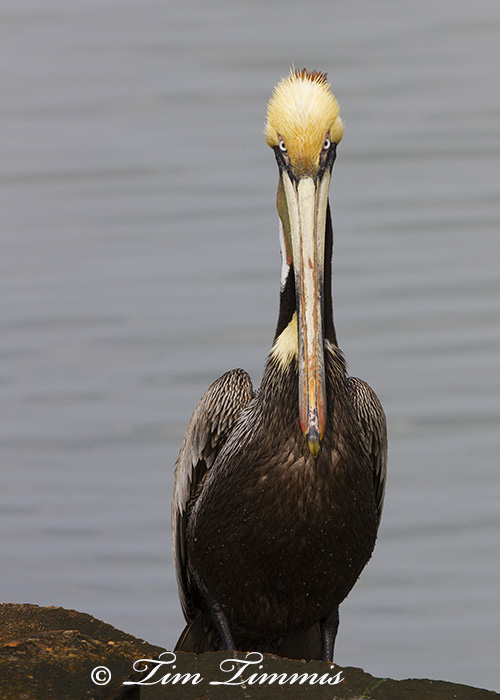
After spending some time with the Avocets, made our way to plan C, which was where the shrimp boats come to dock behind the strand. Last year, a shrimp boat came in right as we got there but no such luck this year. We did get to see some Brown Pelicans and dolphins.
It turned out to be a successful outing and had a great time meeting another group of very nice photographers. Thanks to everyone who attended. Here are a few of my photos.
Taken with Canon 7D and Canon 500mm F4 IS II mounted on tripod with Wimberley II gimbal head
Shutter priority, 1/6 sec @ F25, ISO 400, +1 exposure compensation

Aperture priority, 1/8000 sec @ F4, ISO 400, evaluative metering

Shutter priority, 1/15 sec @ F32, ISO 200, +1 exposure compensation
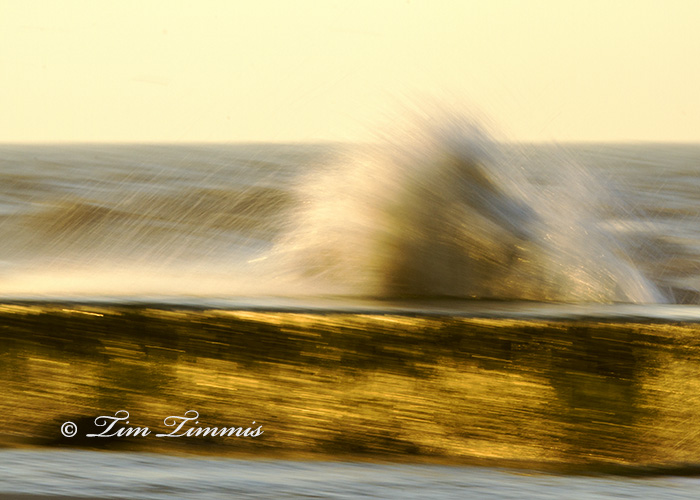
Aperture priority, 1/640 sec @ F11, ISO 400, evaluative metering, +1/3 exposure compensation
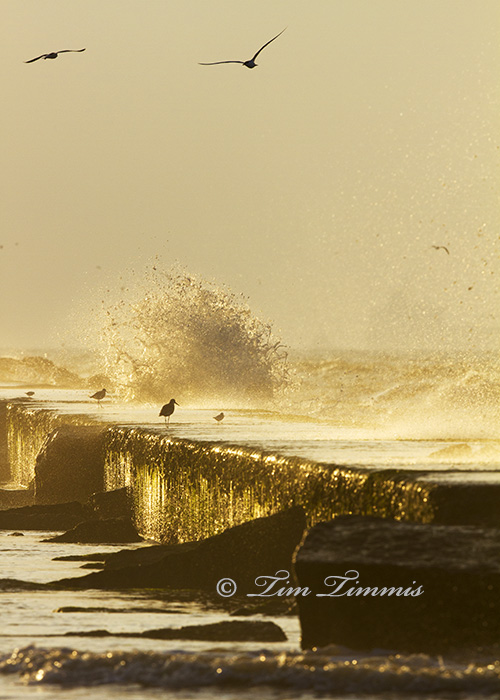
Aperture priority, 1/1250 sec @ F4, ISO 400, evaluative metering

Aperture priority, 1/800 sec @ F10, ISO 400, evaluative metering
Galveston’s FeatherFest “Birds Eye View” Field Trip
Had a great time again this year leading workshops and field trips for Galveston’s FeatherFest. Friday’s field trip was to Bolivar Flats, my home away from home in the world of bird photography, to work on low-level photography “at a bird’s-eye view”. We had a full class as this trip sold out early. We left at 6:00 a.m. and got to the flats about 7:00 a.m. and were met with low tide, wind and partly sunny sky’s with lots of clouds mixed in. Made for some challenging lighting conditions with the sun popping in/out periodically.
We started by taking some silhouette shots of Willets and moved on to some Marbled Godwits and Terns. Several groups of Brown Pelicans made for some good flight shots. It was a target rich environment. There were large flocks of Terns near the jetty that would launch periodically but we couldn’t see any Avocets. Ended up scouting the area further down the shoreline to try to find some other photo op’s. Still no Avocets but did spot a couple of American Oystercatchers. However, they took off before the group could get there.
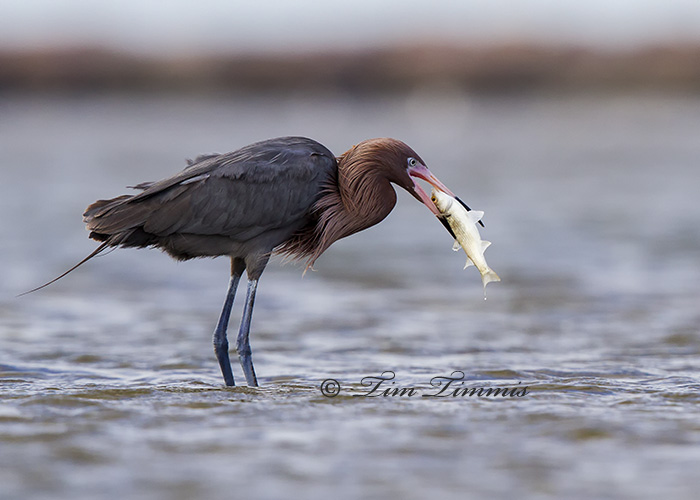
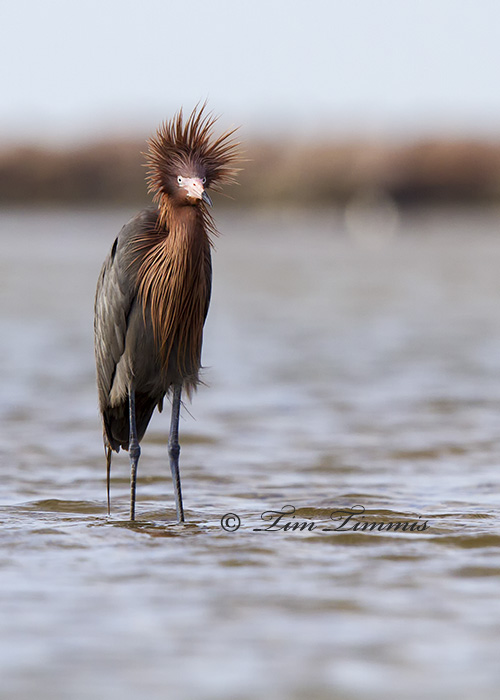
We did get a nice surprise when a Reddish Egret landed right in front of us and started dancing around while fishing. He arrived right on time and was worth the price that I had to pay his agent 😉 He caught two fish with the last one being a good size catch. Another Reddish Egret then showed up and they chased each other around and put on quite a show. When it was time to leave, a few of the ladies didn’t want to go, which was a good sign that they were having a good time.
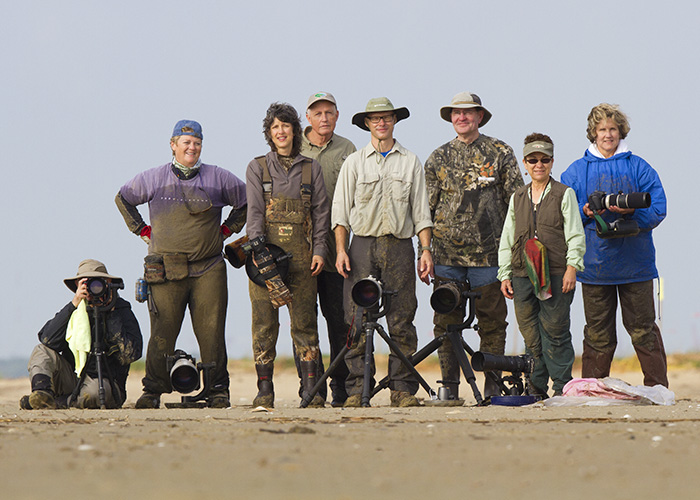
Ended up being a great outing with everyone getting an opportunity to see lots of shorebirds. Had much better luck with the tide/number of birds compared to last year. The participants got covered in sand/salt water as seen in the group photo. Thanks to everyone that attended this year and to Phil for helping out. I’m looking forward to doing it again next year.
My photos were taken with a Canon 7D and Canon 500mm F4 IS II mounted on Skimmer ground pod with Wimberley II gimbal head.
Aperture priority, 1/1000 sec @ F5.6, ISO 400. evaluative metering, +2/3 exposure compensation, 500mm

Aperture priority, 1/1000 sec @ F5.6, ISO 400. evaluative metering, +2/3 exposure compensation, 500mm

Aperture priority, 1/1000 sec @ F5.6, ISO 400. evaluative metering, +2/3 exposure compensation, 500mm

Aperture priority, 1/800 sec @ F5.6, ISO 400. evaluative metering, +2/3 exposure compensation, 500mm
Aperture priority, 1/800 sec @ F7.1, ISO 400. evaluative metering, +2/3 exposure compensation, 500mm
Aperture priority, 1/400 sec @ F11, ISO 400. evaluative metering, +2/3 exposure compensation, 500mm
Sandhill Wingspan
Spent several hours driving the dirt roads paralleling the Platt River in Nebraska where the Sandhill Cranes were feeding in the surrounding corn fields. With about 175,000 Sandhills in the area, there were plenty of photo op’s. This one had his full wingspan on display. Had some clouds which ended up being a blessing with the color in his feathers coming out. This nearly full framed shot is one of my favorites. Taken handheld out the car window. Some were too close and I should have taken off the teleconverter but didn’t want to take the time to do it.
Taken with Canon 7D and Canon 500mm F4 IS II with 1.4x III teleconverter, handheld
1/400 Sec @ F5.6, ISO 400, evaluative metering, +2/3 exposure compensation.

Galveston’s Featherfest this week
Galveston’s FeatherFest annual birding event is coming up this week and I’m fired up. This will be my third year helping out at FeatherFest with leading four workshops and two field trips. Always a good time. This will be a very nice change of pace for me. Look forward to seeing everyone there.
Sandhill Crane Migration
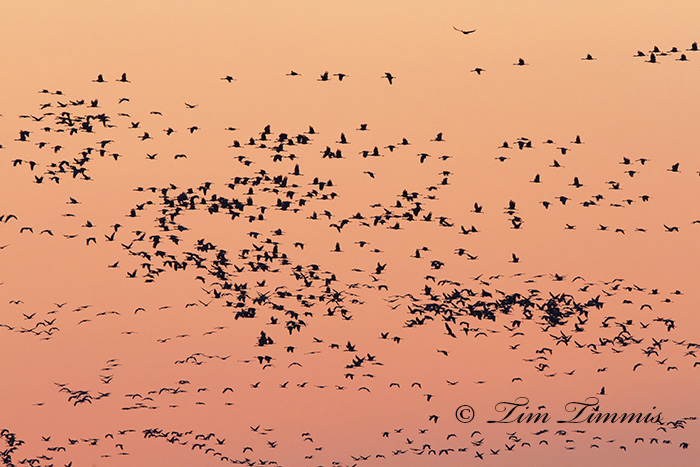
I’ve always heard about the great photo op’s of Sandhill Cranes in New Mexico in Nov/Dec but never much about the migration back to the great white north in the spring in Nebraska. From Feb through April, 80% of the Sandhill Cranes in the world migrate through Nebraska and forage along the Platt River between Grand Island and Lexington, Nebraska. They feed on the waste grain in the corn fields to increase their body weight by about 20% before heading north to breed. They migrate to Canada, Alaska and even as far as Siberia based on tracking devices placed on some of the birds in Nebraska.
From seeing thousands of Sandhill’s feeding and dancing in the corn fields to tens of thousands of them landing and taking off from the river, it was an amazing time to be in Nebraska. The sights and sounds were incredible. More photos to follow. I’ll have to figure out how to post a video so that you can hear them talking off at sunrise.
Taken with Canon 7D and Canon 500mm F4 IS II lens and 1.4x III teleconverter
1/640 sec @ F7.1, ISO 400, evaluative metering, handheld out the car window

1/400 sec @ F7.1, ISO 400, evaluative metering, +2/3 exposure compensation, handheld out the car window

1/250 sec @ F10, ISO 800, evaluative metering
Leggy Reflection
This group of Avocets were showing off their legs and reflections at Bolivar Flats.
Taken with Canon 7D and Canon 500mm F4 IS II with 1.4x III teleconverter mounted on Skimmer ground pod with Wimberley II head
1/1000 sec @ F9, ISO 400, evaluative metering, -2/3 exposure compensation, 700mm

Silent Scream
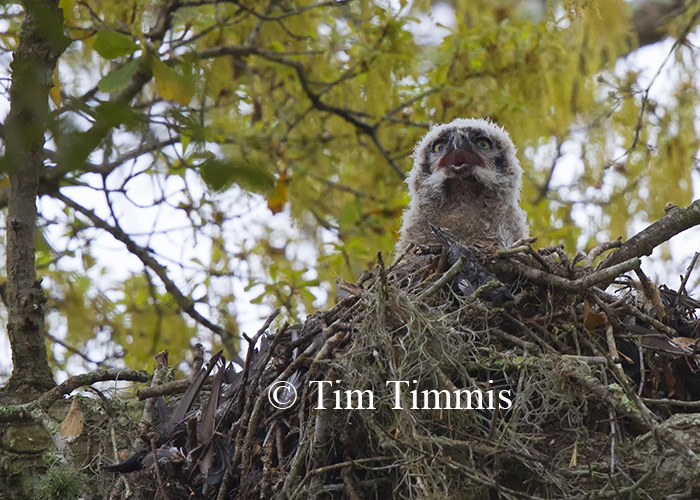
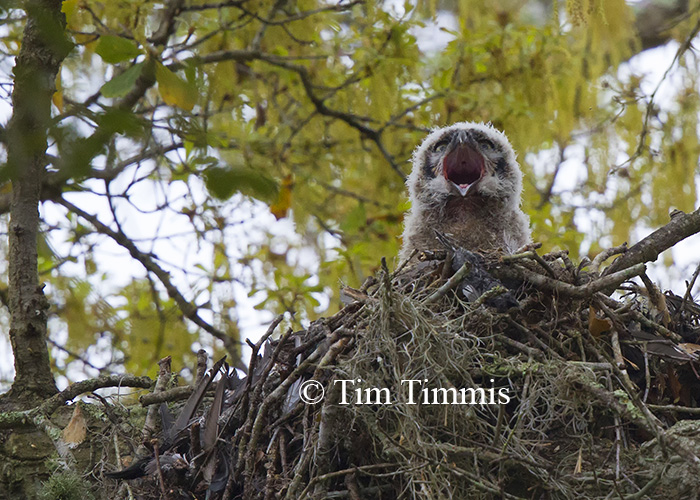
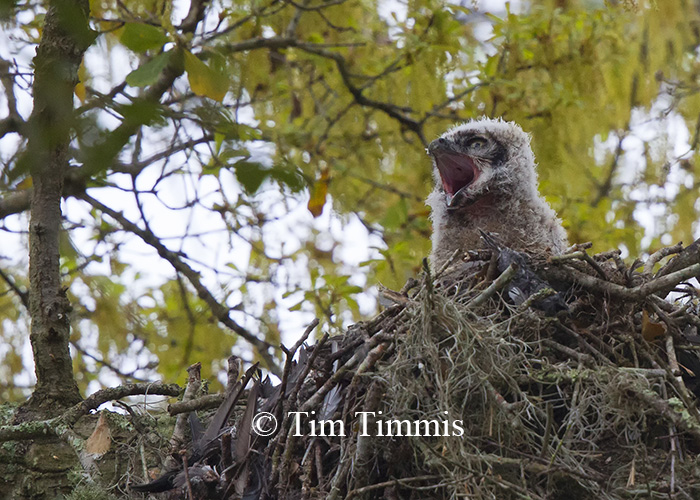
This Great Horned Owl chick was intently tracking something and trying to scream but to no avail. Nary a peek could be heard. Silence can be golden or deadly, if you are trying to call momma back to the nest.
Taken with Canon 7D and Canon 500mm F4 IS II with 1.4x III teleconverter mounted on tripod with Wimberley II head, 580 EX II flash with better beamer
1/160 sec @ F5.6, ISO 1600, evaluative metering, +2/3 exposure compensation, fill flash at -3 stops

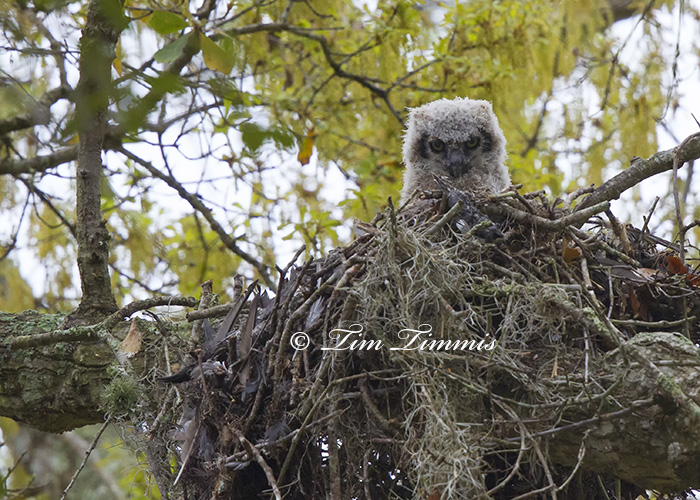
Great Horned Owl Chick
With being in a major rut lately due to no photography, decided around 3:00 a.m. Saturday morning (jet lag + normal brain damage) to head out to Brazos Bend State Park. My normal modus operandi would have kept me home with cloudy weather and the chance for rain but I really needed to get out and shoot for my own sanity. Encountered some light rain on the hour drive to the park but blew it off as scattered early morning fog/dew/wet stuff, anything but rain. Of course I believed the weather channel’s radar, at 3:00 a.m. Needless to say, turned out not to be a bright sunny day.
Got there about 1/2 hr before sunrise, which was a little too early on a cloudy day. Made my way around 40 acre lake when it started to sprinkle. Took off my jacket, covered the camera and kept on hiking. Not much activity except some Coots and distant Great Egrets. Headed back up the trail to find the owl nest after installing the 1.4x teleconverter. Found a few decent photo op’s along the way including a Northern Shoveler and a Great Blue Heron building a nest in a tree.
Got a little more rain as I neared the parking lot and decided to put my camera in the trunk to keep it dry. Walked down the trail to find the owl’s nest. Had to stop under a large tree to keep out of the rain when it started to come down with more intensity. Finally spotted the nest and started to walk back to get my camera when I turned around and saw the chick staring at me. Began to wonder if momma was in the nest or ready to attack from another tree. Got my gear and confirmed that the parent wasn’t in the nest, which provided some cool photo op’s of the chick. He was very attentive and would watch everyone that came walking by, including a few nearby squirrels.
Sandy showed up and we had a good talk while waiting for the mother to come back. Saw a glimpse of her flying back into the tree but she didn’t return to the nest. She ended up falling asleep in the tree so I headed home. A potentially crappy day turned out to be a good one. A very cool experience was had by all, well at least me. Thanks again Doug for the tips about the owl.
Taken with Canon 7D and Canon 500mm F4 IS II with 1.4x III teleconverter mounted on tripod with Wimberley II head
1/160 sec @ F5.6, ISO 1600, evaluative metering, +2/3 exposure compensation, fill flash with better beamer at – 3 stops
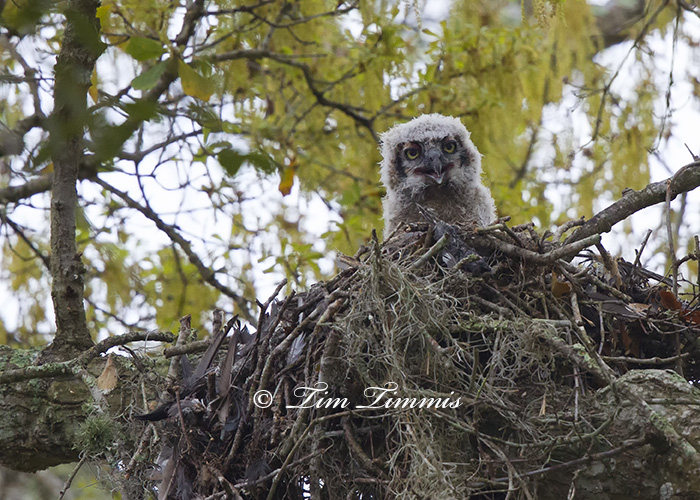
1/320 sec @ F5.6, ISO 1600, evaluative metering, +2/3 exposure compensation, fill flash with better beamer at – 3 stops
Published in Texas Highways Magazine
Finally got published in Texas Highways magazine (travel magazine) with help from Kathy Adams Clark, Houston based nature photographer/owner of KAC Productions. I’ve joined KAC Productions as a contributing nature photographer with Kathy marketing some of my photos. Didn’t take long to get published so I’m looking forward to a successful working relationship with KAC. Since I don’t have the time to do much self marketing, this opportunity is ideal for my situation.
Here is my photo that’s in the April issue. American Avocets from Bolivar Flats, full framed photo without cropping.

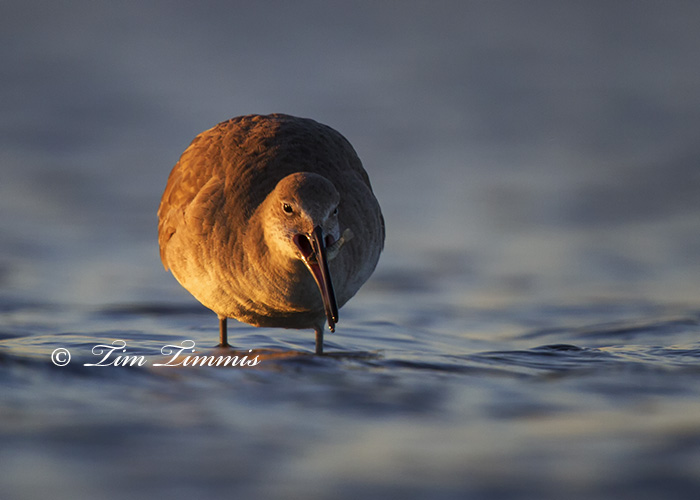
Willet Catches a Fish
I’ve seen a few Willets catching fish but it’s fairly rare from my experience. Got some nice side lighting at sunrise on this shot along with an open beak as he was facing in my direction. Bolivar Flats rarely fails to provide some good photo op’s.
Taken with Canon 7D and Canon 500mm F4 IS II with 1.4x III teleconverter mounted on Skimmer ground pod with Wimberley II gimbal head
1/640 sec @ F5.6, ISO 500, evaluative metering, +2/3 exposure compensation
Avocet with Breeding Plumage
My day job and non-cooperative weather has kept me away from photography lately so it’s time to dig into the archives. Found this Avocet that was coming into his breeding plumage at Bryan Beach, TX last summer.
Taken with Canon 7D and Canon 500mm F4 IS II lens mounted on Skimmer ground pod with Wimberley II head
1/500 sec @ F4, ISO 500, evaluative metering

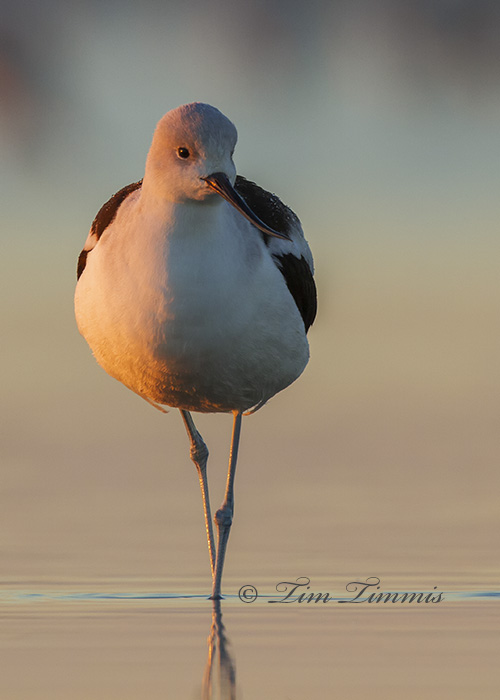
American Avocet at Sunrise
This Avocet was posing nicely for me on a cold winter morning at sunrise. Wish I was there this morning in the same conditions but rain and cloudy weather kept me grounded. Gives me some time to process more photos like this one. Another close-up shot with only minor cropping to a vertical format.
Taken with Canon 7D and Canon 500mm F4 IS II with 1.4X III teleconverter mounted on Skimmer ground pod with Wimberley II
1/200 sec @ F9, ISO 800, evaluative metering +2/3 exposure compensation, 700mm
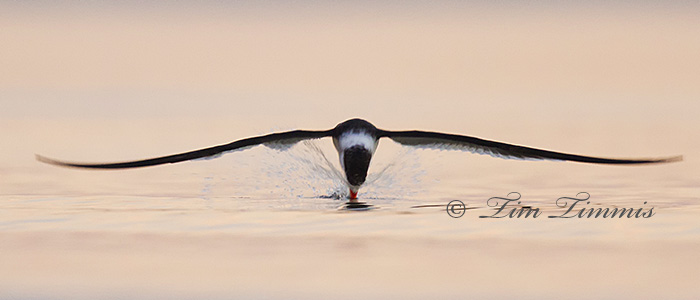
Head-on Skimmer
The normal flight path of Black Skimmers at Bolivar Flats is parallel with the shore line. Got lucky with this one as he was flying directly at me. My 7D did a good job of tracking the focus. Had to crank the ISO up to 800 to get the shutter speed above 1/100 sec. Taken just before sunrise while lying on a sand bar with my gound pod.
Taken with Canon 7D and Canon 500mm F4 IS II with 1.4x III teleconverter mounted on Skimmer ground pod with Wimberley II gimbal head
1/160 sec @ F5.6, ISO 800, evaluative metering, +2/3 exposure compensation, 700mm

1/200 sec @ F5.6, ISO 800, evaluative metering, +2/3 exposure compensation, 700mm

1/200 sec @ F5.6, ISO 800, evaluative metering, +2/3 exposure compensation, 700mm
1/200 sec @ F5.6, ISO 800, evaluative metering, +2/3 exposure compensation, 700mm

Willet Posing
This Willet was giving me his best head-on pose with some good eye contact. Had to use a little negative exposure compensation after the histogram showed some over exposed “blinkies” on his chest.
Taken with Canon 7D and Canon 500mm F4 IS II with 1.4xIII teleconverter mounted on Skimmer ground pod with Wimberley II head
1/500 sec @ F9, ISO 400, evaluative metering, -1/3 exposure compensation

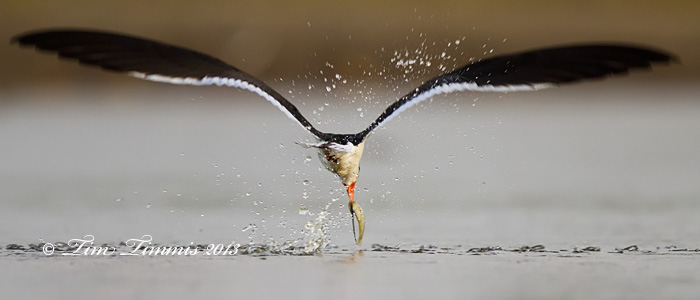
Skimmer Catching Fish
Skimmers are always fun to watch as they fly along the water trying to catch fish. The challenge is to be at the right place at the right time when they actually catch a fish. Caught this one as he was going away from me. This photo highlights the narrow depth of field of the 500mm lens with the band of water in focus.
Taken with Canon 7D and Canon 500mm F4 IS II mounted on Skimmer ground pod with Wimberley II gimbal head
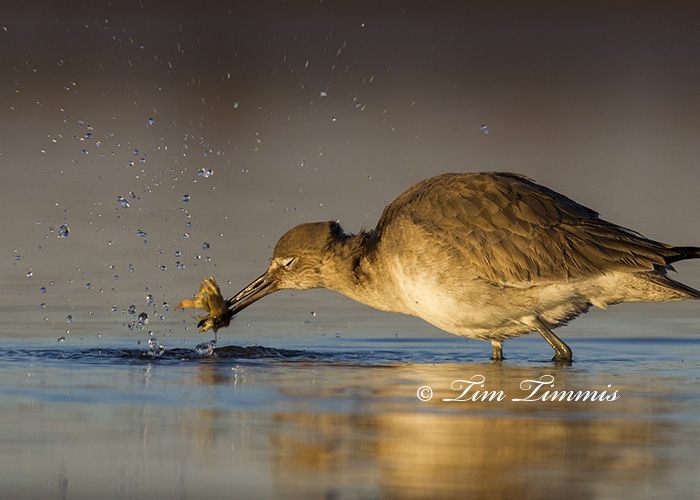
Willet vs. Crab
The Willet won.
Taken with Canon 7D and Canon 500mm F4 IS II lens with 1.4x III teleconverter mounted on Skimmer ground pod with Wimberley II
1/640 sec @ F11, ISO 400, evaluative metering, -1/3 exposure compensation, 700mm

1/640 sec @ F11, ISO 400, evaluative metering, -1/3 exposure compensation, 700mm
 Tim Timmis Photography