
FeatherFest Bolivar Flats Field Trip – Part II
Here are some more of my photos from my workshop at FeatherFest at Bolivar Flats. These Pelicans were hanging out on the barricade poles where you park. We took advantage of the early morning light with this gang of Pelicans and then moved to the opposite side to get some silhouette shots.
Taken with Canon 7D and Canon 500mm F4 IS II, handheld
1/640 sec @ F4, ISO 400, evaluative metering, no exposure compensation or flash

1/800 sec @ F4, ISO 400, evaluative metering, no exposure compensation or flash

1/8000 sec @ F8, ISO 400, evaluative metering, -1 exposure compensation

1/8000 sec @ F8, ISO 400, evaluative metering, -1 exposure compensation

1/640 sec @ F8, ISO 400, evaluative metering
Galveston’s FeatherFest Field Trip to Bolivar Flats
Had a great time this week with leading 4 classroom workshops and 2 field trips at Galveston’s FeatherFest. The first field trip was at Bolivar Flats, which I kind of know like the back of my hand. The goal was to give the participants experience at using a ground pod and to get some low-level shorebird photos. Bolivar is at it’s best at low tide and of course it was high tide on Friday morning. Never the less, we packed 10 of us into a small van and headed to the flats. Note to self: get a larger vehicle next year and leave earlier.
The good news was that the sun was out and the wind and waves were low. The bad news was that with high tide, there were no exposed sand bars off of the shoreline so we had to stay on the beach. There were several Pelicans on the poles at the barricade, which made for some good shots including silhouettes. Went a little further down the beach and saw a Willet and some type of small sparrow in the brush. Got down on the ground to shoot some small Sanderlings and 3 Marbled Godwits came walking towards us. It was a good example of how close the birds will come to you while lying down on the ground.
We ended up working our way down the beach and got up and down several times. My sharp-eyed liaison assistant, Phil, spotted a lone Avocet in full breeding color mixed in with some other birds further down the shoreline. I told the group that it would be a miracle to get close to him but we would give it a shot. We ended up walking closer to him with my goal to get to a point where there was some yellow plastic on the beach. The birds started to stir a little, so we went down to the ground. The Avocet was mixed in with several other birds and was difficult to get a good shot of him at that distance. We ended up doing the old belly crawl trying to get closer while pushing the ground pods along. When we made it to the yellow plastic, I was satisfied that we had reached that goal. My group was very ambitious and wanted more so we kept crawling. This is where a Skimmer ground pod really shines with it being easy to move along the sand.
We ended up crawling fairly close to the Avocet but ran out of time and had to head back to the van. I was hoping that he would give us a good stretch and fly but he looked too tired. It’s rare to see a lone Avocet like that as they are usually in a large flock. The field trip turned out better than I expected with being stuck on the shoreline.
Thanks to everyone who came on this field trip. It was a good time and can’t wait to do it again next year. I’ll post of few more photos from this trip and my second trip on Sat. around Galveston later.
All of these photos were taken with a Canon 7D and Canon 500mm F4 IS II mounted on a Skimmer ground pod with Wimberley II gimbal head
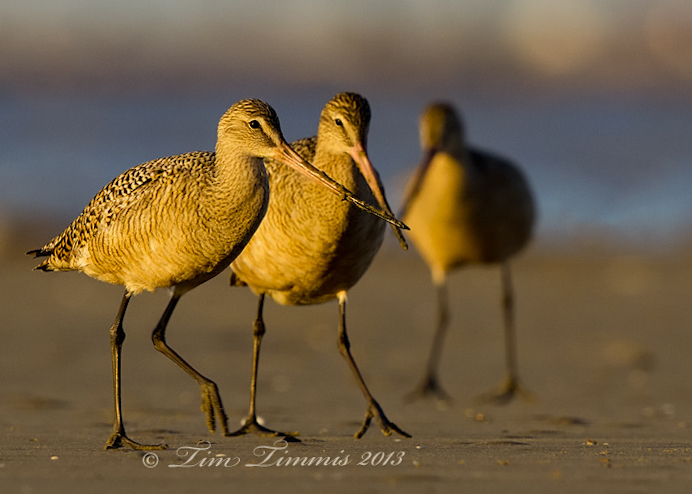
Marbled Godwits with my goal while taking this shot was to get the first two with their beaks together. Got an added bonus with the 3rd one. Shows the depth of field with a 500mm lens.
Aperture priority, 1/500 sec @ F8, ISO 400, evaluative metering, no exposure compensation or flash
Got this Marbled Godwit taking off as he walked around us along the beach.
Aperture priority, 1/800 sec @ F8, ISO 400, evaluative metering, no exposure compensation or flash

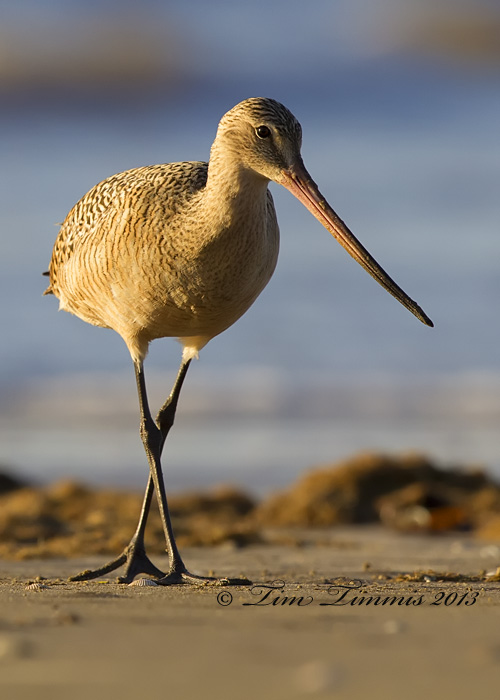
This Marbled Godwit was doing his best pose for us.
Aperture priority, 1/800 sec @ F8, ISO 400, evaluative metering, no exposure compensation or flash
Our targeted Avocet in full breeding colors as he finally walked away from the other birds around him.
Aperture priority, 1/1250 sec @ F8, ISO 400, evaluative metering, no exposure compensation or flash

Avocet Water Mask
This is one of my favorite photos from Bolivar this year, so far. This Avocet was taking a bath very close to me as I was lying down with my ground pod. He started dunking his head/body into the water and I kept trying to get a photo of him with water on his head. This one went above my expectations when he came up with his entire head covered with water and the splash coming off the top. This is where 8 frames/sec comes in handy.
Taken with Canon 7D and Canon 500mm F4 IS II with 1.4x teleconverter mounted on Skimmer ground pod with Wimberley II gimbal head
1/1600 sec @ F10, ISO 400, manual exposure, 700mm

Nest Building Ritual
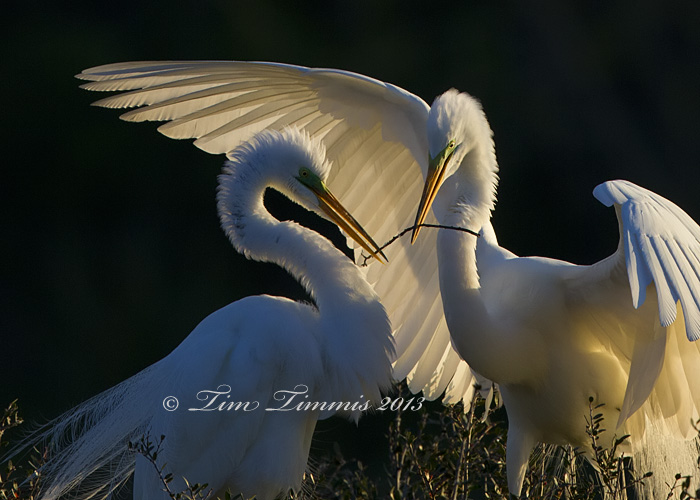
When the mate arrives back at the nest with a stick, the ritual begins with lots of squawking. The stick is then transferred with an abundance of fanfare to the other egret. They often both hang onto to the stick while placing it into the nest. It’s quite the ceremony and interesting to watch and photograph.
I tend to keep my focus on one pair of birds that are in a good position with a decent background. If you get lucky, they repeat the ritual time after time and allow for some great photo op’s. This was one of those times. One of my favorite shots from High Island so far this year.
Using manual exposure and exposing for the brightest spots on the white birds keeps the whites from blowing out, darkens the scene and resulted in the black background.
Taken with Canon 7D and Canon 500mm F4 IS II mounted on tripod with Wimberley II head
1/1250 sec @ F8, ISO 400, manual exposure, 500mm
Backlit and Lovin’ It
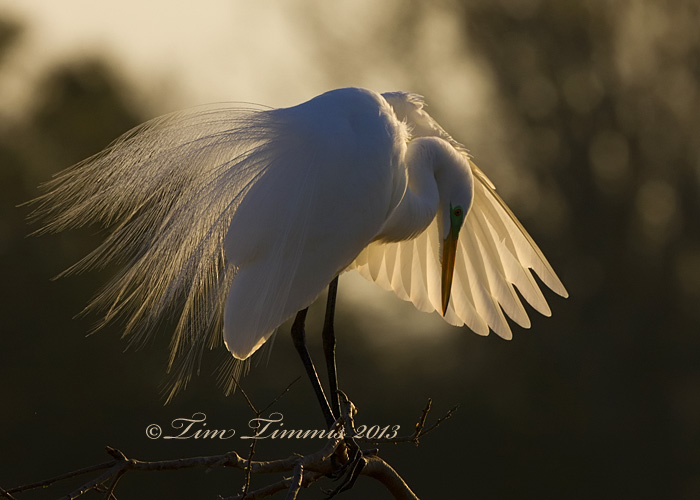
I’m a major fan of backlit bird photos, especially from High Island’s rookery. Sunrise is a very special time at the rookery. The sun comes up in your face and provides some great backlit photo op’s. This Great Egret was showing off it’s breeding plumage and backlit wings.
Taken with Canon 7D and Canon 500mm F4 IS II lens mounted on tripod with Wimberly II head
1/1600 sec @ F8, ISO 400, manaul exposure
1/1600 sec @ F8, ISO 400, manaul exposure

High Island Nest Building – Part II
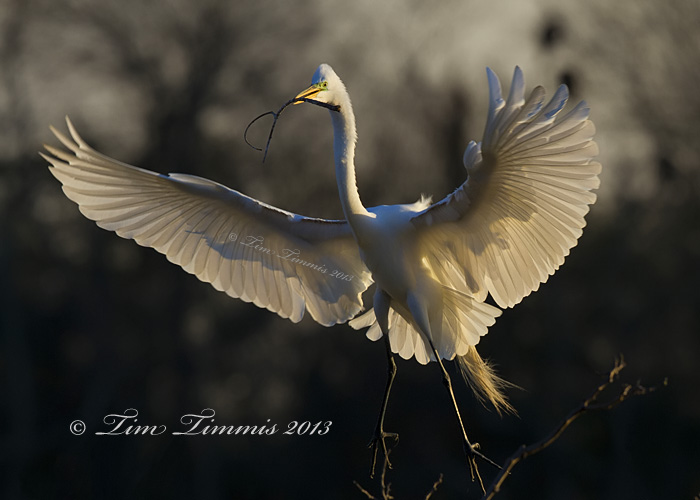
Apparently only one stick is not enough to build a nest with, go figure. Therefore, here are a few more sticks in transit. The first photo is the same bird from the previous post as he was coming in for a landing. All taken in manual mode to control the exposure on the white birds. Stick transfer shots are next.
Taken with Canon 7D and Canon 500mm F4 IS II mounted on tripod with Wimberley II head
1/800 sec @ F8, ISO 400, manual exposure
1/1000 sec @ F9, ISO 400, manual exposure

1/1250 sec @ F9, ISO 400, manual exposure
High Island Nest Building – Part 1
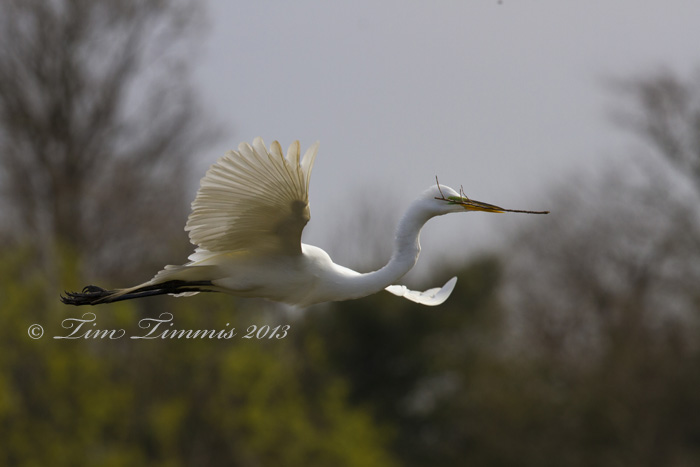
The nesting activity has started early this year at High Island’s rookery. It’ my favorite time when breeding plumage is on display along with the Great Egrets busy mating and building nests. The rookery is filling up quickly with it being difficult to get isolated bird shots.
My keeper rate has gone up this year with my 500mm lens and using manual exposure more. However, 500mm with a crop sensor camera is almost too close in some cases as I’ve clipped lots of wings on action shots.
Caught this Great Egret with wings spread flying back to the nest with a stick. Unfortunately, the mosquitos have almost the same wing span. They are very nasty this year, at least around sunrise, so be prepared.
More to come…
Taken with Canon 7D and Canon 500mm F4 IS II lens mounted on a tripod with Wimberley II gimbal head
1/800 sec @ F8, ISO 400, manual exposure at 500mm

Dripping Avocet
What a difference a day makes. The previous day at Bolivar Flats was cloudy with few birds within reach. The next day was sunny with Avocets right in front of me. My rules of thumb are 1) If you have a bad day photographing wildlife, go back the next day and try again and 2) If you have a great day of shooting wildlife, don’t go back to the same location the next day as you will likely be disappointed as it won’t be the same.
The challenge with Avocets is that they are very skittish, can be difficult to find in a good shooting location and travel in large flocks making it hard to get an isolated bird shot. Found a group of Avocets near a sand bar but didn’t want to get too close and spook them. Found a good shooting location and laid down and waited for them to come to me, which is usually the best strategy. It paid off this time and they made their way towards me. Got several isolated birds and had some being too close at 700mm.
Liked this shot with him looking right at me and the water dripping from his beak. Shot in aperture priority and had to use negative exposure compensation to keep from blowing out the white areas of the bird.
Taken with Canon 7D and Canon 500mm F4 IS II lens with 1.4xIII teleconverter mounted on Skimmer ground pod with Wimberley II head
1/1250 sec @ F9, ISO 400, evaluative metering, -2/3 exposure compensation

Sticky Water
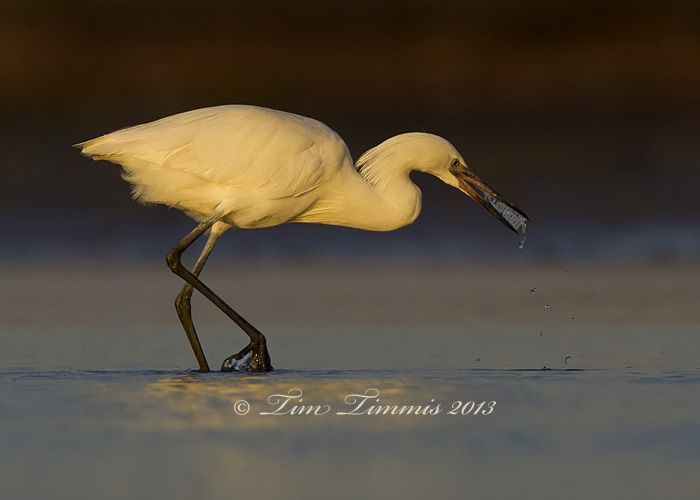
The chemical engineer in me wants to call this “viscous water” but I won’t go there. Caught this White Morph Reddish Egret just at the right time when his beak separated. Haven’t seen this before with and Egret so it made for an interesting shot. Taken just after sunrise in the good ‘ol early morning golden light.
1/1000 sec @ F9, manual exposure, ISO 400, 700mm
Taken with Canon 7D and Canon 500mm F4 IS II with 1.4x III teleconverter mounted on Skimmer ground pod and Wimberley II gimbal head.
Peregrine Falcon
Searched far and wide along the beach for the Peregrine Falcon at Bolivar during this outing with no avail. Had a great day with the Avocets so it wasn’t a total loss. I have learned over the years to keep my camera in the front seat just in case some photo ops present themselves while driving off of the beach. It paid off this time as the Falcon was perched on a fence post on the road to the beach. Slowed down to get a shot and he took off. Turned the car around and following him as he landed on another post. He was on the opposite side of the road from me so I decided to drive fast by him and then turn around. That didn’t spook him and was able to get some photos. Didn’t like the light so I went by him again and turned my car and blocked the road to the beach to get shots from the other side.
Taken with Canon 7D and Canon 500mm F4 IS II with 1.4xIII teleconverter, handheld out the car window.
AV mode, 1/640 sec @ F6.3, ISO 400, evaulative metering, +1 exposure compensation

Willets Part II
Here are a couple more Willet shots from my cloudy outing at Bolivar. The same subject as my previous post but in some different poses. The last one is a full framed shot at 700mm with no cropping.
Taken with Canon 7D and Canon 500mm F4 IS II lens with 1.4x III teleconverter mounted on Skimmer ground pod with Wimberley II head
1/640 sec @ F8, ISO 400, evaluative metering, +1 exposure compensation, 700mm

1/800 sec @ F8, ISO 400, evaluative metering, +1 exposure compensation, 700mm

Willet Portrait
I typically stay home when it’s cloudy but may have to rethink that strategy. Got up last Sat., looked at the radar and saw clouds with some showers in the area. Would have stayed home but was going to meet up Daniel Lim, who introduced me to Bolivar Flats and shooting from the prone position back in 2006. I must have been a slow learner though as I didn’t start shooting this way until 2009.
Couldn’t get close to the Avocets so had to concentrate on the good o’l stand by, the Willet. This is one of my favorite shots. I’ll share a few more later. And yes, I’m still in love with my 500mm lens.
Taken with Canon 7D and Canon 500mm F4 IS II with 1.4x III mounted on Skimmer ground pod with Wimberley II gimbal head.
1/800 sec @ F8, ISO 400, evaluative metering, +1 exposure compensation, 700mm

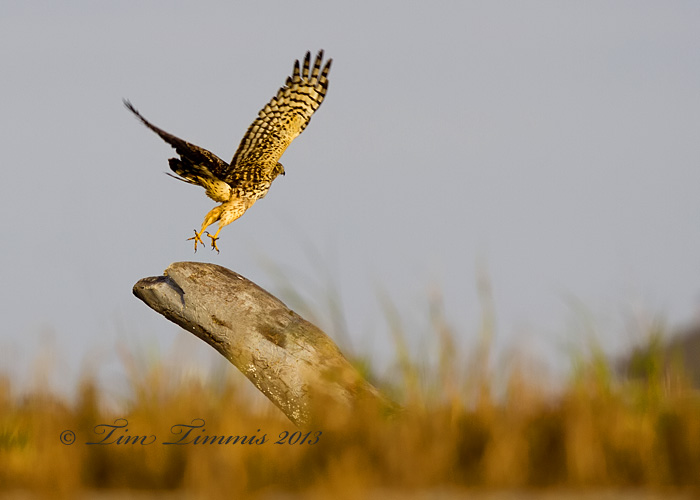
Incoming Harrier
While focusing on shorebird shots at Bolivar Flats, the small birds would frequently spook and fly away. Didn’t pay much attention to why until the photo op’s died down. Then I noticed that they were scattering due to raptors flying overhead. I was laying on a sand bar within about 30 ft of the shore line and the Northern Harriers were doing flybys over the grassy area on shore. Spotting this one flying towards me. My 7D did a great job with maintaining focus as he flew behind the weeds and then landed on a log nearby. Caught him landing with his talons out which was cool. He stayed around for only a couple of minutes and took off with outstretched wings.
Taken with a Canon 7D and Canon 500mm F4 IS II and 1.4x III teleconverter mounted on Skimmer ground pod with a Wimberley II gimbal head.
Aperture priority, 1/640 sec @ F7.1, ISO 400, evaluative metering, +1 exposure compensation, 700mm

Aperture priority, 1/640 sec @ F7.1, ISO 400, evaluative metering, +1 exposure compensation, 700mm

Aperture priority, 1/640 sec @ F7.1, ISO 400, evaluative metering, +1 exposure compensation, 700mm

Aperture priority, 1/640 sec @ F7.1, ISO 400, evaluative metering, +1 exposure compensation, 700mm
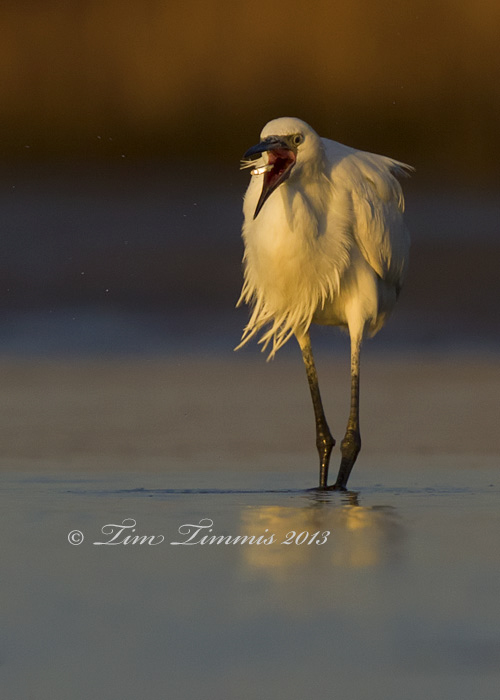
Fish Flipping
It’s fun to watch shorebirds feed. Egrets like to flip their food in the air before they eat it. Got lucky as this White Morph Reddish Egret was pointed in my direction as he was flipping his breakfast.
Taken with Canon 7D and Canon 500mm F4 IS II with 1.4x teleconverter mounted on Skimmer ground pod with Wimberley II gimbal head
1/1000 sec @ F9, manual exposure, ISO 400, 700mm
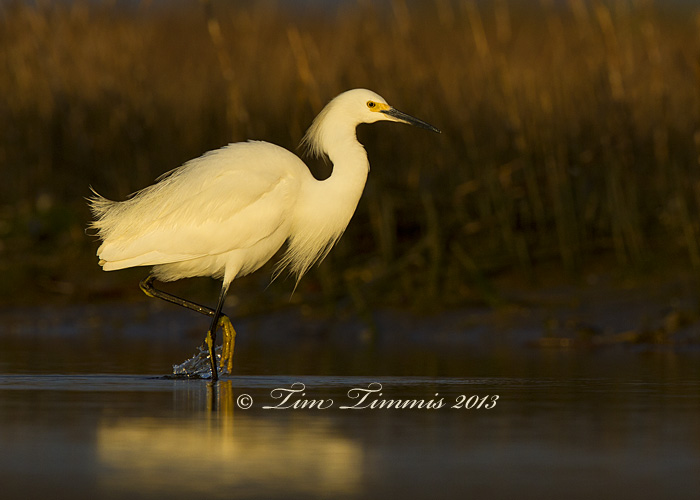
Snowy Egret Pose
This Snowy Egret was hanging out during my last trip to Bolivar Flats. Another example of early morning light on a white bird. His plumage gets me in the mood for the upcoming activity at High Island’s rookery. Can’t wait.
Taken with Canon 7D and Canon 500mm F4 IS II with 1.4x III teleconverter mounted on Skimmer ground pod with Wimberley II gimbal head
1/1000 sec @ F9, manual exposure, ISO 400, 700mm
Willet Silhouette
I just can’t resist taking silhouette shots at sunrise. I was walking along the beach at Bolivar before sunrise with Avocets off to my right and Willets to my left. My goal is always to get Avocet shots but my gut told me to go for the Willets in silhouette as the sun was getting ready to come up. Glad that I made that decision as the Avocets ended up flying away as I was shooting the Willets.
This silhouette shows a good example of the narrow depth of field with a 500mm lens with the blurred foreground and background and a little strip in between that’s in focus.
Taken with Canon 7D and Canon 500mm F4 IS II with a 1.4x III teleconverter, mounted on Skimmer ground pod with a Wimberley II gimbal head.
1/640 sec @ F5.6, ISO 500, evaluative metering, +2/3 exposure compensation, 700mm

The Stand Out
How do you make a white bird stand out? White bird + golden light + dark background + down low + eye contact + water+ reflection = Stand Out.
Got several action shots of this White Morph Reddish Egret along with this pose against a grassy background. I’m pleased with how this one came out. Took a few shots with spot metering and checked the histogram to confirm the exposure was good and then switched to manual exposure mode using the settings that I came up with.
Taken with Canon 7D and Canon 500mm F4 IS II with 1.4x III teleconverter mounted on Skimmer ground pod with Wimberley II head
1/800 sec @ F9, manual exposure, ISO 400
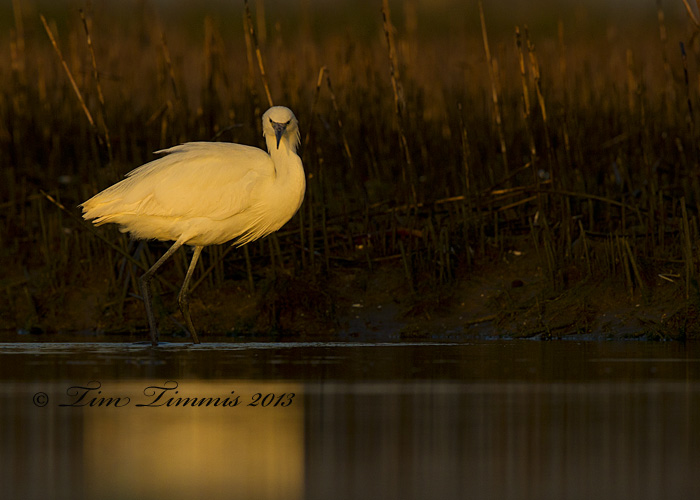
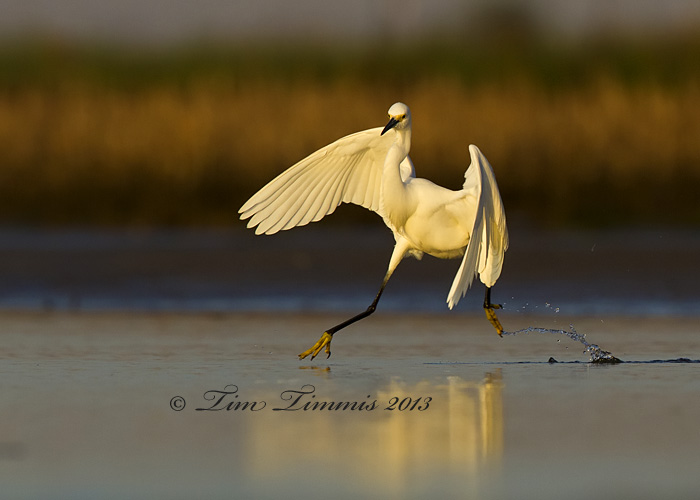
Snowy Egret on the Move
Spent some quality time yesterday morning at Bolivar Flats. The tide and sun were cooperating for once. Found a decent spot where birds were feeding and laid down on a sand bar for about 1.5 hrs to get some shorebird action shots. There was a White Morph Reddish Egret feeding along with this Snowy Egret. They would tolerate each other to a point but the White Morph finally had enough and tried to chase the Snowy away. Caught this shot when the Snowy was running from the White Morph. Luckily he didn’t leave and I ended up with over 3200 photos to sort through. Used manual mode for shooting these white birds to maintain the proper exposure as they were on the move.
Taken with Canon 7D and Canon 500mm F4 IS II with 1.4x III teleconverter mounted on Skimmer ground pod with Wimberlly II head
1/1000 sec @ F9 on manual mode
Sanderling Feeding
Sometimes it takes some effort to get to your veggies. This Sanderling is in full stretch mode to get his breakfast out of the sand.
Taken with Canon 7D and Canon 500mm F4 IS II lens with 1.4x III teleconverter mounted on Skimmer ground pod and Wimberley II head.
1/1250 sec @ F5.6, ISO 400, evaluative metering, +1/3 exposure compensation, 700mm

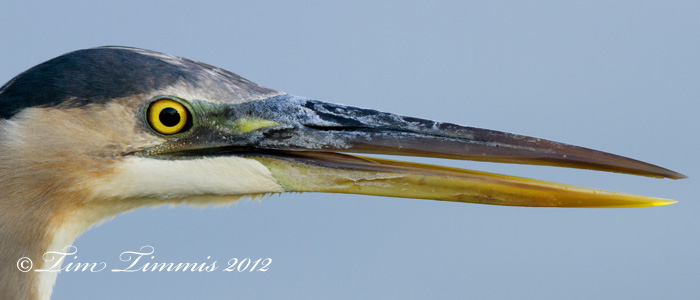
Size Does Matter
Most of the time it’s difficult to get real close to wildlife. Sometimes though you can get lucky and get close enough for a head shot or in this case, a little too lucky, when you can barely get their head in the frame. From the comfort of my stealth Honda, got this shot of a Great Blue Heron at Brazoria NWR. While shooting at 500mm, he came close enough for what I’d call a beak shot. Used a pano crop to highlight the length of his beak. Size does matter, in the bird world.
Taken with Canon 7D and Canon 500mm F4 IS II lens with 1.4x III teleconverter, handheld
1/200 sec @ F8, ISO 400, evaluative metering, + 1/3 exposure compensation, 500mm
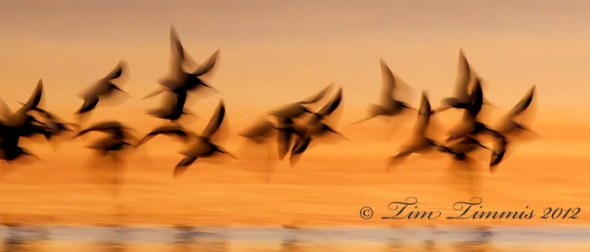
Blurred BIF Silhouette
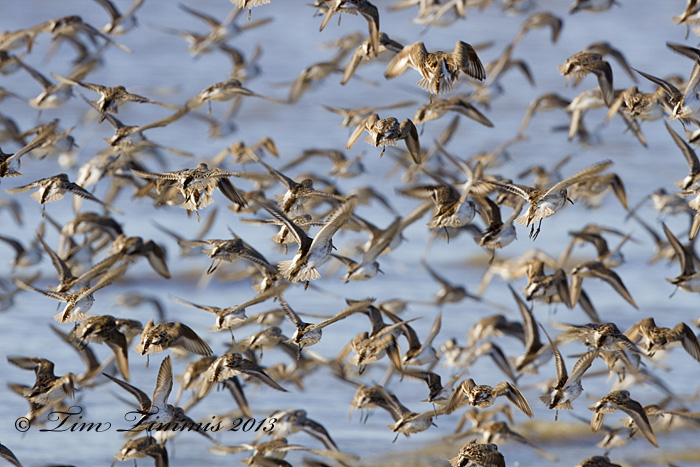
There always seems to be flocks of small shorebirds flying around near sunrise. Caught this group doing a fly by while I was walking down the beach. Made for an interesting blurred silhouette shot. Cranked up the ISO to keep the shot from being a total blur.
Taken with Canon 7D and Canon 500mm F4 IS II lens with 1.4x III teleconverter, hand-held
1/40 sec @ F 5.6, ISO 800, evaluative metering, + 1/3 exposure compensation
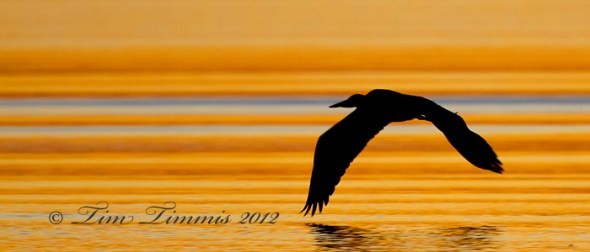
Great Blue Silhouette
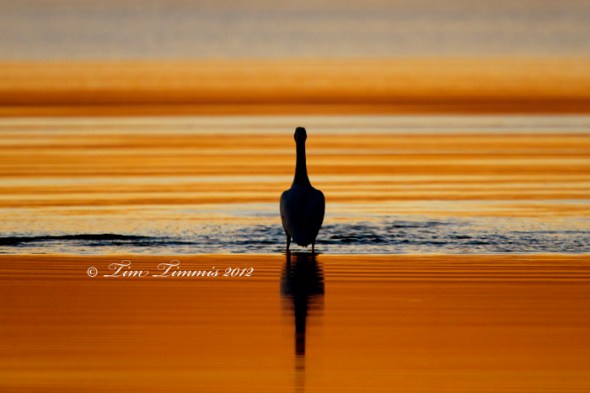
Here is an early morning pre-dawn silhouette of a Great Blue Heron. I typically don’t like shots of birds flying away from me but this one works because of the calm water and the wing almost touching the water. Cropped this one as a pano just because I could. Go figure.
Taken with Canon 7D and Canon 500mm F4 IS II lens with 1.4x III teleconverter, hand-held
1/200 sec @ F5.6, ISO 800, evaluative metering, +1/3 exposure compensation, 700mm
The Year of the Falcon
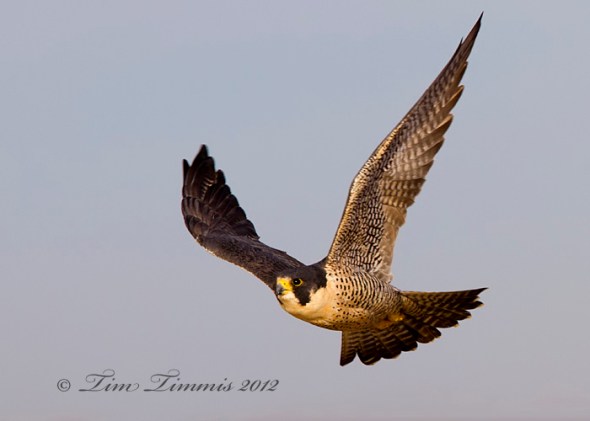
2012 started and ended with Peregrine Falcons at Bolivar Flats in Texas. Got some take-off shots of a Falcon back in January and had the opportunity again in late Dec. After spending some quality time shooting shore birds, headed back to my car when I spotted something out of the ordinary further down on the beach. Looked like a small post sticking up from my vantage point. Raised my camera and saw that it was my old buddy, the Peregrine Falcon. He was perched on top of a plastic bin that was sticking out of the sand.
Made my way towards him and ended up laying down to get a few photos. Wasn’t satisfied with my first position so I got up and moved to my right to get a better angle if he took off. They don’t shift their perched position much and tend to take off in the direction that they are facing. They also like to stretch out their wings right before they take off which can give you a good opportunity for a wings-up position. This one stretched, but did it with his wings down by his side. Shortly afterwards, he took off and flew towards me. Got several shots that I liked with the best of them shown below.
Taken with Canon 7D and Canon 500mm F4 IS II lens with 1.4x teleconverter mounted on Skimmer ground pod with Wimberley II gimbal head
1/1600 sec @ F7.1, ISO 400, evaluative metering, + 1/3 exposure compensation, 700mm
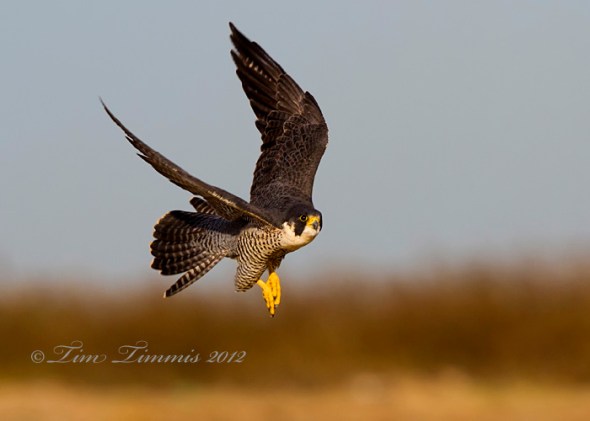
1/1600 sec @ F7.1, ISO 400, evaluative metering, + 1/3 exposure compensation, 700mm
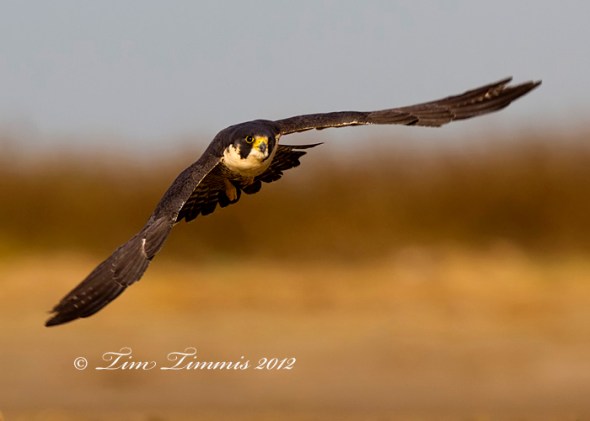
1/1600 sec @ F7.1, ISO 400, evaluative metering, + 1/3 exposure compensation, 700mm

1/1600 sec @ F7.1, ISO 400, evaluative metering, + 1/3 exposure compensation, 700mm
 Tim Timmis Photography