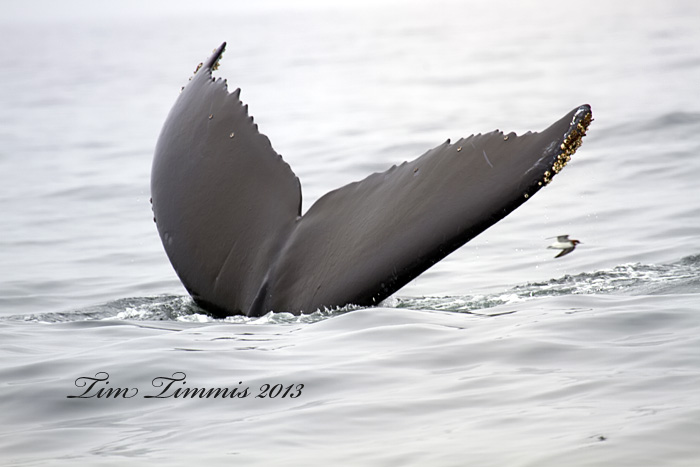
…morning light is magic…

Latest

Gator Crossing

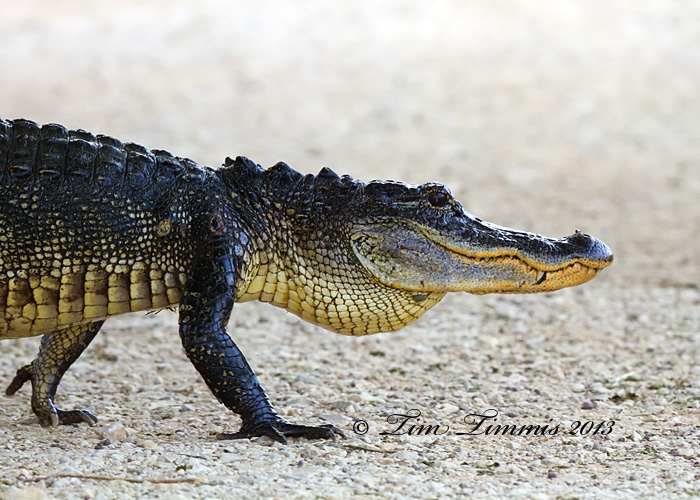
Why did the gator cross the road?  In this case, the mother alligator was heading to check on her babies that were on the other side of the trail after the Great Blue Heron picked one of them off.  Normally when gators cross the trail, they end up lying down and resting along the way as it takes lots of energy for them to walk on land.  Not this time.  Momma was hiking with a vengeance and didn’t stop to smell the roses as she quickly walked from one side to the other.  It only took her about 10 seconds to make the trip based on my photos.  She only stayed about 10 minutes and came back to the other side.  She also looked much larger and intimidating out of the water.

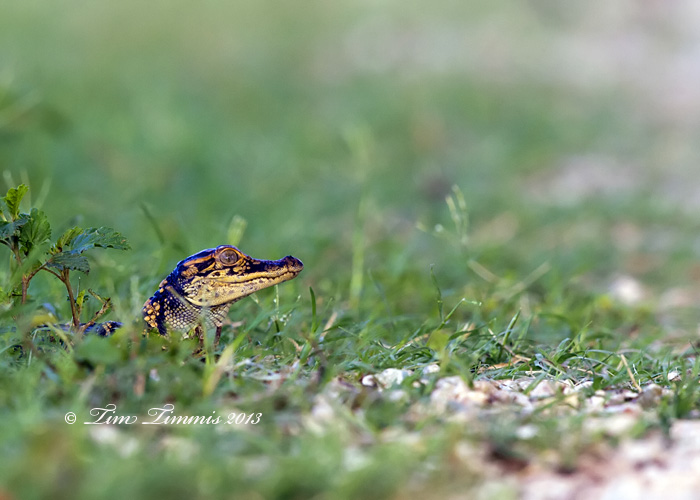
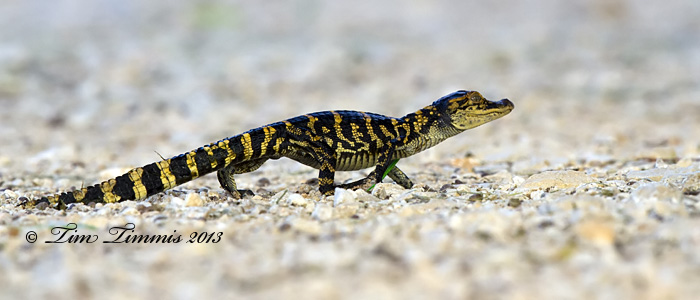
About 1/2 hr later, one of the little ones crossed the trail.  Saw him coming up the bank and ended up taking my camera off of the tripod and laid down on the trail to get a series of photos of the crossing.  I’m usually leery of laying down at BBSP around alligators but couldn’t resist this shot.  Love the markings on the young gator.  He was also tagged, with what looks like green fishing line, as described by one of the park rangers.  A second one was also going to cross but got scared away by someone on a bicycle.  He ended up coming back to momma’s side of the trail about 45 minutes later.  Sometimes the grass isn’t greener on the other side…

Also, here’s a tip on how to identify a female alligator in the wild…check to see if the gator is wearing high heels 🙂  (see photo below)

Taken with Canon 7D and Canon 500mm F4 IS II lens

1/200 sec @ F7.1, ISO 1600, evaluative metering

Brazos Bend_07505262013-2

1/320 sec @ F9, ISO 1600, evaluative metering

Brazos Bend_32505262013-2

1/640 sec @ F9, ISO 1600, evaluative metering

Brazos Bend_33305262013-2

Missed Opportunity – GBH Grabs Baby Gator

While taking baby gator photos at Brazos Bend State Park, had a very interesting experience that left me both angry at myself and also feeling very lucky.

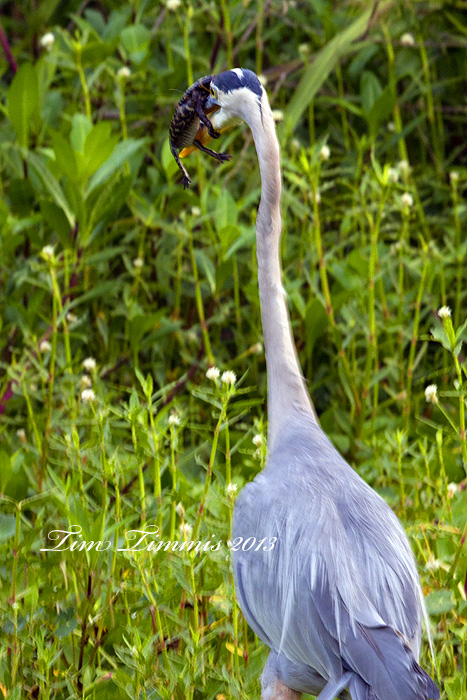
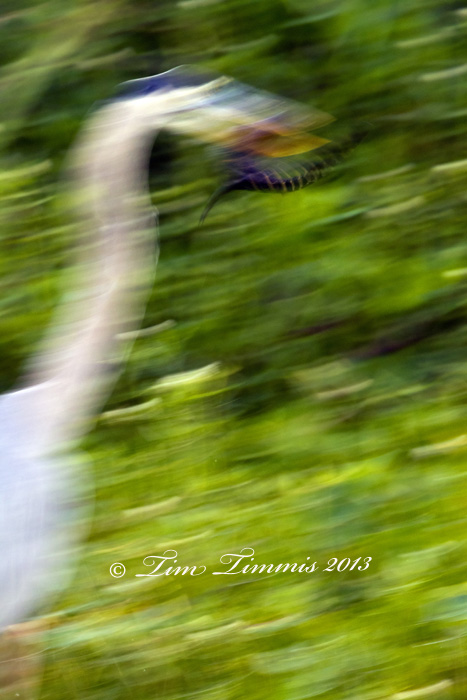
Had the ideal, one in a lifetime, photo opportunity with a Great Blue Heron grabbing a baby alligator.  Found the GBH in the area where the babies were the previous weekend but momma gator was on the other side of the trail.   Knew to keep an eye on the GBH just in case the action happened.  I was trying to get a decent shot of the GBH when I made a couple of major errors right before the action hit.  I turned the camera vertical, switched to the top most focusing point and used F16 to get the GBH in focus as he was full framed at 500mm.  Immediately after I did that, the GBH struck and grabbed a little gator right in front of me.  Had my flash going but it didn’t help much as I lost the focus point and only got a shutter speed of 1/25 to 1/30 sec.  It happened too quick for me to recover and change settings.  Oh well, it happens.

The other interesting part was that the GBH then flew away over the trail where the momma gator was and who apparently was watching the action.  The gator shot out across the water about 40 ft making a large wave trying to get to the GBH.  Now that would have been a photo-op.  She wasn’t even close but it was quite an experience to see the whole episode unfold right in front of me.

The biggest lesson learned for me had nothing to do with my missed photos.  Note to self:  don’t stand between a mother gator and her young when they are attacked.  She could have easily shot out of the water and ran right into me on her way to the GBH.  Therefore, I consider myself lucky to see the action and not to be in the path of an angry mother gator.  In reality, I didn’t kick myself that much as it was very cool to see and there were some other decent photo op’s that day.

Here are some of the resulting photos just to punish myself on what I missed.  Maybe in my next lifetime…

Taken with Canon 7D and Canon 500mm F4 IS II lens mounted on tripod with Wimberley II head, all uncropped full framed photos

1/60 sec @ F11, ISO 1600, evaluative metering, fill flash with better beamer, just prior to setting it to F16

Brazos Bend_01805262013-2

1/30 sec @ F16, ISO 1600, evaluative metering, fill flash with better beamer

Brazos Bend_02105262013-2

1/25 sec @ F16, ISO 1600, evaluative metering, fill flash with better beamer

Brazos Bend_03005262013-2

1/25 sec @ F16, ISO 1600, evaluative metering, fill flash with better beamer

Brazos Bend_03205262013-2

Baby Gator on Lily Pad

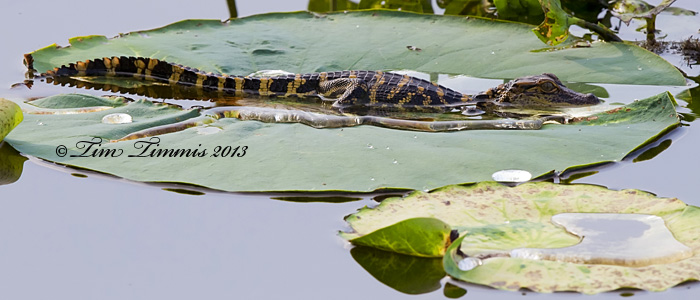
Went back to Brazos Bend State Park this morning and found that the momma gator and several of the babies had moved across the trail into 40 acre lake.  Since there was no log for the gators to lay on, some of them chose to spread out on the lily pads, which made for some interesting photo op’s.  I didn’t sit on the bank as momma gator was very angry after one of her babies got snatched by a Great Blue Heron.  More on that later.

Taken with Canon 7D and Canon 500mm F4 IS II mounted on tripod with Wimberley II head

1/320 sec @ F11, ISO 800, evaluative metering, +2/3 exposure compensation, 500mm

Brazos Bend_24005262013-2

Gator Pile

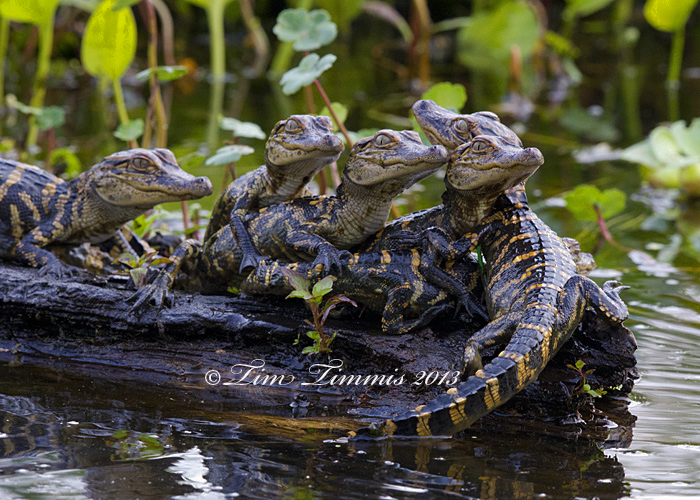
Baby alligators like to sun themselves and they are determined to climb over one another to do it.  Hense, the “gator pile” syndrome.  Unfortunately, the pile can only hold so many and one usually shows up to spoil the fun for the rest of them, which results in the “falling gator pile” syndrome.   The babies that we spotted at Brazos Bend State Park were keeping near the weeds but eventually came out to warm up on the small log.  One of them would climb on the log and the others would then pile on.

Taken with Canon 7D and Canon 500mm F4 IS II mounted on tripod with Wimberley II head.

1/160 sec @ F9, ISO 1600, evaluative metering, 500mm, no flash

Brazos Bend_29505182013-2

1/80 sec @ F9, ISO 800, evaluative metering, 500mm, no flash

Brazos Bend_25405182013-2

Baby Alligators

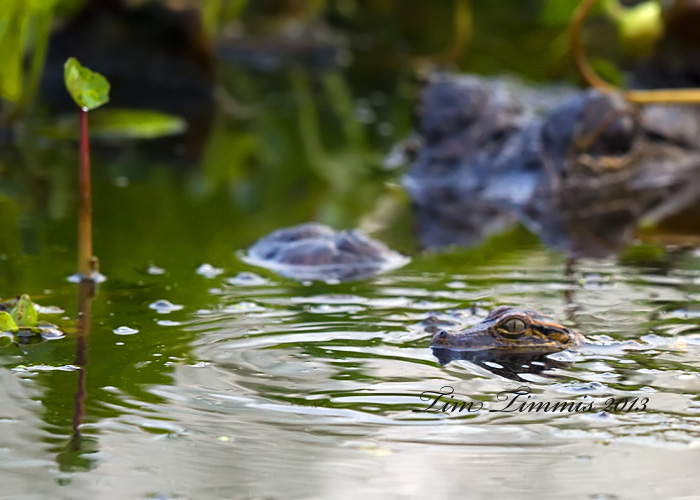
Didn’t have high expectations from a photography perspective last weekend with cloudy weather but sometimes mother nature comes through with a few surprises.  Headed to Brazos Bend State Park and eagle eye Doug ended up spotting a baby gator swimming near the 40 acre lake trail.  Jackpot!  We ended up spending a couple of hours on Sat and again on Sunday sitting on the bank with one eye on the babies and the other on momma.  We ended up seeing about 16 small gators, which were around 8 to 12 inches long and +/- 9 months old as they typically hatch in August.  We were hoping for a “baby on momma’s head” shot but no luck.  Got some of those shots a few years ago and it would be fun to see it again.

The conditions posed a few challenges.  As a general rule, I don’t typically shoot over ISO 500 due to the 7D noise.  Didn’t have much choice on Saturday as I forgot to bring my off-camera flash cord, so no flash for me.  Therefore, got to play with ISO 1600 and ISO 800, which turned out not to be the disaster that I was anticipating.  The noise cleaned up nicely with Noise Ninja.  I’m really glad that I couldn’t use flash on Sat as I didn’t like my flash shots as much on Sunday.

The little buggers were very cute and fun to watch and photograph.  Luckily there was a small log in the water near them and they would climb up on it to sun themselves.  I was very happy with the IS performance of my 500mm lens as the second shot was at only 1/30 sec.  I’ll post some of the group “pile-on” photos later.

Taken with Canon 7D and Canon 500mm F4 IS II mounted on tripod with Wimberley II head

1/400 sec @ F5, ISO 800, evaluative metering, 500mm, no flash

Brazos Bend_06805182013-2

1/30 sec @ F4, ISO 1600, evaluative metering, 500mm, no flash

Brazos Bend_01105182013-2

1/500 sec @ F11, ISO 800, evaluative metering, -2/3 exposure compensation, 500mm, no flash

Brazos Bend_44305182013-2

So I Look Like an Elephant?

Not really…but…kinda…sorta…

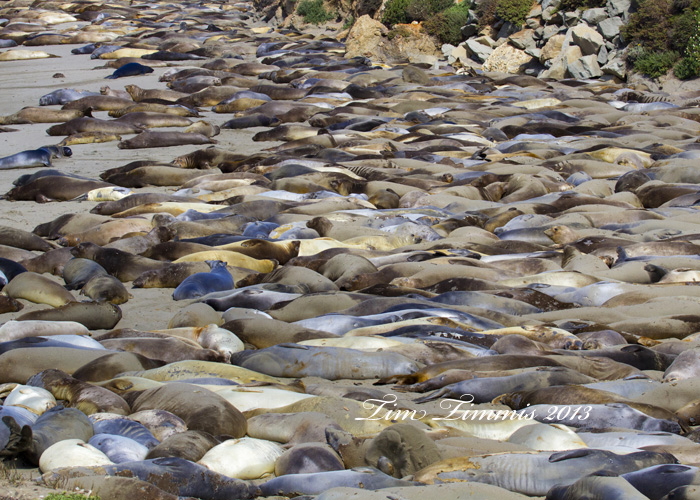
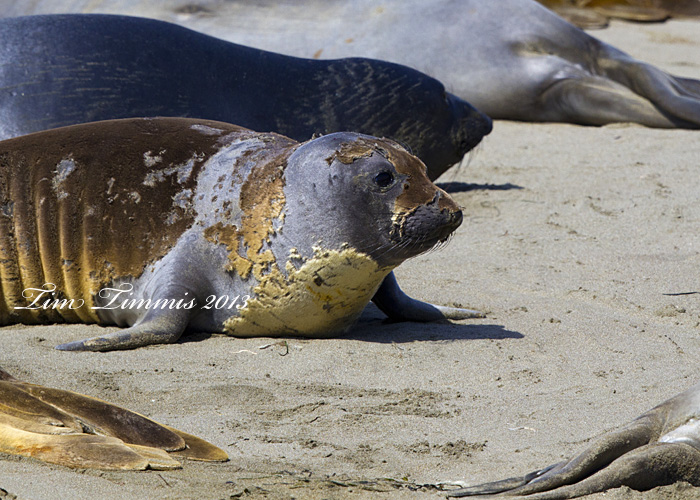
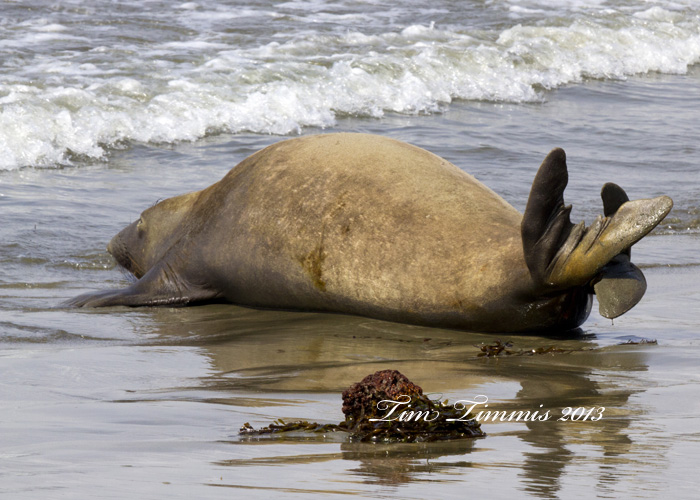
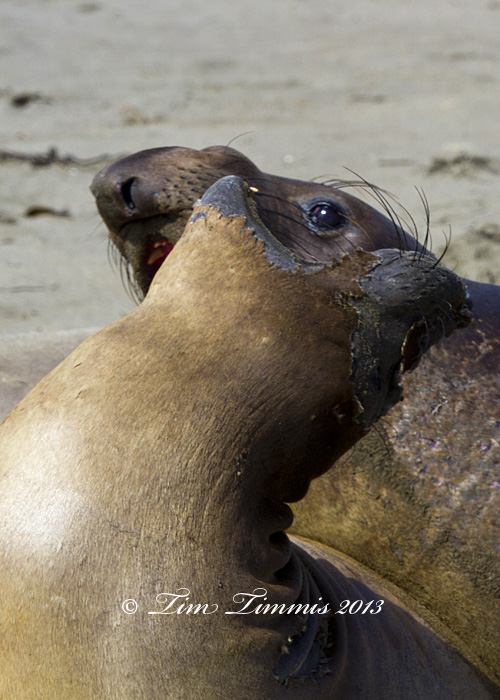
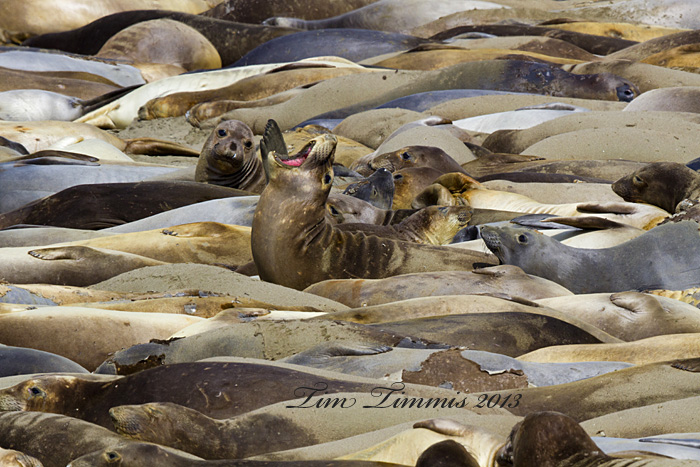
The second day of my California adventure included a visit to Piedras Blancas rookery, where there were thousands of Elephant Seals on a stretch of beach near San Simeon.  I’ve been to High Island rookery many times but I’ve never seen a rookery like this before.  The seals were going through their molting phase but some were very cute none the less.  They have a great set-up with boardwalks along the top of the beach so that you can’t get on the beach but you can get some very close-up photos.

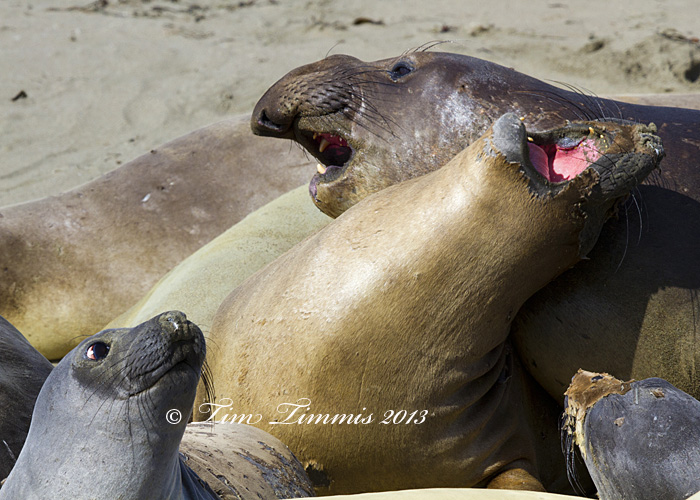
It was a very impressive site to see so many seals all in one location.  They were laying side by side which made for some interesting pattern shots.  Broke out the big lens to get close-up’s.  When one started moving, the other ones would get ticked off and a few fights broke out.  We were a few months late for mating season when the fights are much more intense.

You can get more details on this location and info on the seals on the link below.  A great place to visit if you are ever in this part of California.  I’ll definitely be going back.

http://www.elephantseal.org/

Taken with Canon 7D and Canon 500mm F4 IS II on tripod with Wimberley II gimbal head, except the first photo as noted

1/640 sec @ F11, ISO 400, evaluative metering, 100mm with Canon 100-400mm lens

California Trip_29204272013 (1)-2

1/500 sec @ F11, ISO 400, evaluative metering, 500mm

California Trip_46604272013 (1)-2

1/640 sec @ F9, ISO 400, evaluative metering, +1/3 exposure compensation, 500mm

California Trip_66704272013-2

1/800 sec @ F9, ISO 400, evaluative metering, 500mm

California Trip_70004272013-2

1/500 sec @ F11, ISO 400, evaluative metering, 500mm

California Trip_75604272013-2

1/640 sec @ F10, ISO 400, evaluative metering, 500mm

California Trip_18404272013-2

1/400 sec @ F10, ISO 400, evaluative metering, 500mm

California Trip_09204272013-2

1/800 sec @ F11, ISO 400, evaluative metering, 500mm

California Trip_44404272013 (1)-2

Whale Tales

Tales from the whales…the Monterey Bay, CA whale watching trip was awesome.  The day started early with leaving the hotel in Morro Bay at 5:00 a.m. so that we could get to Monterey Bay in time to catch the boat.  There were +/- 30 to 40 people on the boat along with a couple of dogs (?).  More to come on the canines.  It was a cloudy/foggy/hazy day which wasn’t a bad thing as the sun would have been pretty harsh for photography at mid day.

The best advice from our photographer guide, Bill,  was that I shouldn’t take my 500mm lens as the whales would be too close.  To be honest, I didn’t believe him but luckily took his advice and used my trusty 100-400mm lens.  We sat at the back of the boat and headed out to sea towards the continental shelf where the whales like to feed.  Killer whales had been seen in the area recently so we were hoping for the best but I wasn’t convinced that we would see anything.  My previous whale watching experience was limited to on-shore spotting from Palos Verdes, CA which was always a bust.

On the upper deck of the boat where the captain was, they had a naturalist that would tell us where the action was happening and give some detailed information about the wildlife that we would see.  They also had a dog up on the upper deck, which was a little strange in my opinion.  During the trip off shore, the naturalist didn’t have much to talk about except a few birds flying around.  The boat was bouncing around too much to try to get a decent shot so I stayed put in a seated position.  Finally she spotted a whale off of the right side of the boat so everyone moved in that direction.  I could see a whale with his head sticking straight up out of the water but wasn’t able to get in position quick enough and got a blurry shot, bummer.  At least we had spotted one I thought.  My hopes started to rise.  It was a Humpback whale and we ended up spotting a few of them with 2 getting very close to the boat.

It was like roller derby when they would call out a whale sighting at different positions and everyone was quickly moving from side to side on the boat.  It would have been fun to stand at the back of the boat with a wide angle lens and take pictures of all of the people trying to run back and forth on a bobbing boat.  My 100-400 lens was small enough that it was fairly easy to manuever around with it.  I would lean up against the railing with my body to try to stabilize myself while shooting.  Had to grab the railing a few times as the boat was rocking pretty good.  Talking my long lens would have been a major mistake.  Thanks again Bill for the advice.  A very smart man he is.

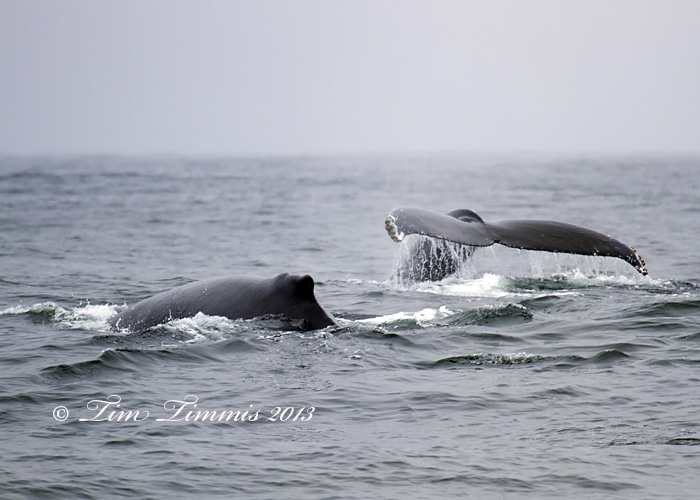
The whale watching boats communicate with each other to share whale locations and two other boats joined our hunt for the mighty humpback’s.  At one point, the 3 boats were maybe 50 yds apart and we had 2 whales leisurely feeding in between us.  It was an awesome experience.  You could tell by their body position when their tails would be coming out of the water.  Had to zoom out a few times as they were too close at 400m.  My bird photography experience came in handy as  and I ended up being fairly fast on the trigger to get action shots when they surfaced.  Trying to get water spout shots was a challenge as by the time that you got your camera up to your eye, the action was over.  Ended up using my camera like a big point and shoot and just would quickly point the camera in the direction of the spout, focus and shoot.  Ended up getting a few decent shots using this highly scientific method.

Now the fun part of the trip.  Once we slowed to a crawl while taking pictures of the whales, the boat was rocking back and forth big time and much more noticeable than when we were moving at higher speeds.  Well, the motion of the ocean was not a good thing for some people in this case.  We had several people “ralfing” off the sides of the boat.  One guy got really good distance with some good ol’ fashion projectile vomiting but I wasn’t able to get a shot of it.  Would have been a classic.  I turned to the guy standing next to me and claimed that the sick guy was “chumming” for whales.  Sorry, I just couldn’t resist.  Luckily, none in our group got sick.

Now for the stupid part of the trip.  One, highly intelligent young couple, brought their very large dog on the boat.  Now that was a very bright idea.  I ended up having a love/hate relationship with that dog.  On the way off shore, the dog ended up leaning up against my leg while bracing himself to keep from falling over.  I didn’t complain too much as he helped keep my one leg warm.  The intelligence factor came into effect when the dog ended up dropping loads out of both ends before the trip was done.  Thanks people.

Needless to say, I had a great time on this whale watching trip.  Here are some of my whale tail shots.  I’ll post some more shots later.

Taken with Canon 7D and Canon 100-400 lens, handheld

Here are the two Humpback Whales that came close to the boat

1/1600 sec @ F5.6, ISO 400, evaluative metering, +1 exposure compensation, 400mm

California Trip_91804282013-2

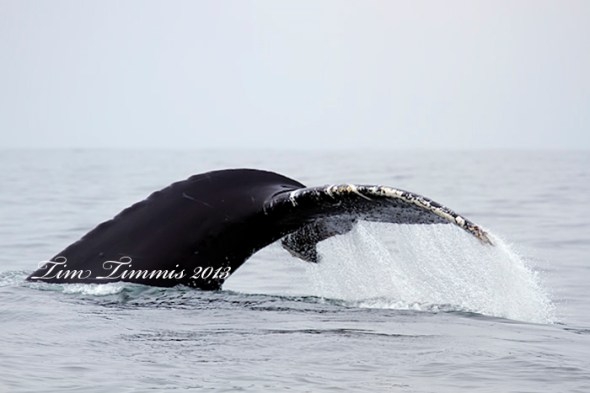
This is a full frame shot without any cropping.  Had to zoom out to get the tail in the frame.

1/800 sec @ F5.6, ISO 250, evaluative metering, +1 exposure compensation, 285mm
California Trip_18604282013-2

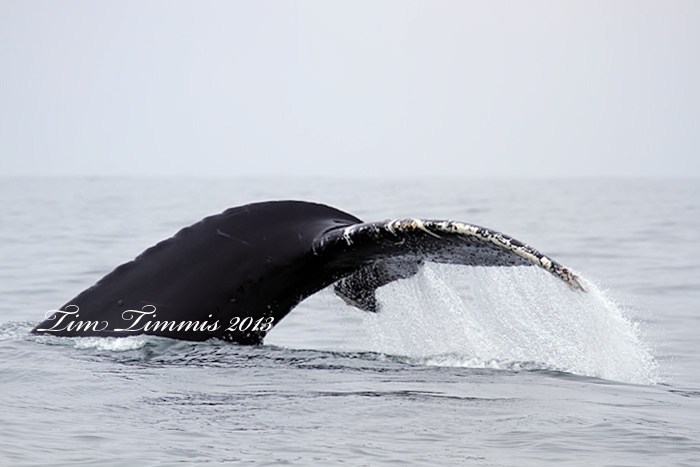
A different angle showing the jagged edge of the tail, barnacles on the tail and a bird flying underneath it.

1/1000 sec @ F5.6, ISO 250, evaluative metering, +1 exposure compensation, 400mm

California Trip_17704282013-2

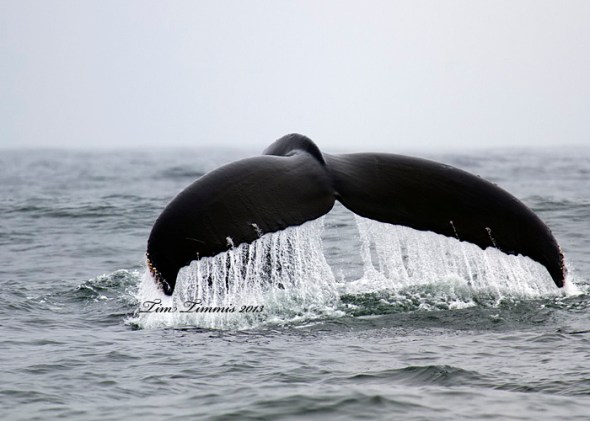
This is my favorite photo from the trip.

1/1250 sec @ F5.6, ISO 400, evaluative metering, +1 exposure compensation, 400mm
California Trip_93504282013-2

California Wrap Sea Otter Style

One of the cool behaviors that we observed at Morro Bay was the Sea Otters wrapping themselves in seaweed to keep them from floating away while they slept.  This one was almost totally wrapped up.

I  lived in the Los Angeles area for a couple of years back in the late 80’s but wasn’t into wildlife photography in the film days, which was a shame.  Jumped at the opportunity to go back to California to take photos of these awesome critters.

Taken with Canon 7D and Canon 500mm F4 IS II with 1.4x III teleconverter, handheld

1/250 sec @ F10, ISO 400, evaluative metering, +1 exposure compensation, 700mm

California Trip_16504292013-2

California Dreamin’

Still dreaming about California after spending 3 days on a photography trip last week.  The tour was led by professional photographer Bill R. Shewchuk from Morro Bay, CA.  Thanks Bill for an excellent tour and all of the advice.  There were 7 of us on the tour and we had a blast.  Thanks Beth for the invitation.

One of my goals this year was to get out of the Houston area to photograph something different.  This trip definitely qualified.  We had photo op’s of Sea Otters, Elephant Seals, Whales, horses, piers, fishing boats and landscapes from Big Sur.  The problem now is that I’m hooked and want to go again.

Here are some of my Sea Otter photos.  These were taken in Morro Bay after the fog rolled in on Monday morning before heading to the airport.  The fog made for better lighting than direct sunlight.  The Otters are adorable and very fun to watch.  When resting, they keep their hands/feet out of the water to regulate their temperature while they roll their bodies 360 deg in the water.

I’ll post some more shots later.  Ended up taking about 6300 photos, which is less than I anticipated.  Took 7 – 32 gig memory cards and didn’t use them all.

Taken with Canon 7D and Canon 500mm F4 IS II lens with 1.4x III teleconverter, handheld

1/200 sec @ F10, ISO 400, evaluative metering, +1 exposure compensation, 700mm

California Trip_33904292013-2

1/200 sec @ F11, ISO 400, evaluative metering, +1 exposure compensation, 700mm

California Trip_27904292013-2

1/250 sec @ F11, ISO 400, evaluative metering, +1 exposure compensation, 700mm

California Trip_26504292013-2

The Catch

My Reddish Egret buddy dove his head into the water and came up with this very large fish.  Another one of my tips from my bird photography classes is to start shooting when you see their head starting to go down towards the water.  That way you can get a cool spash shot or if your lucky, a fish coming out of the water.  I was surprised at how big the fish was and I’m always amazed that they can swollow it whole.

Taken with Canon 7D and Canon 500mm F4 IS II lens with 1.4x III teleconverter mounted on Skimmer ground pod with Wimberley II head.

Aperture priority, 1/800 sec @ F9, ISO 400, evaluative metering

Bolivar Flats_46004202013-2

Aperture priority, 1/800 sec @ F9, ISO 400, evaluative metering

Bolivar Flats_47604202013-2