
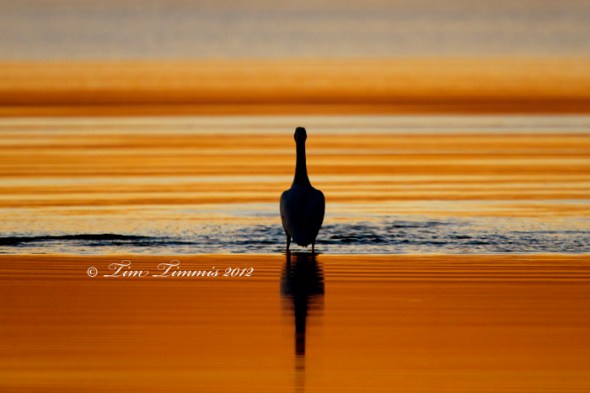
Snowy Egret Pose
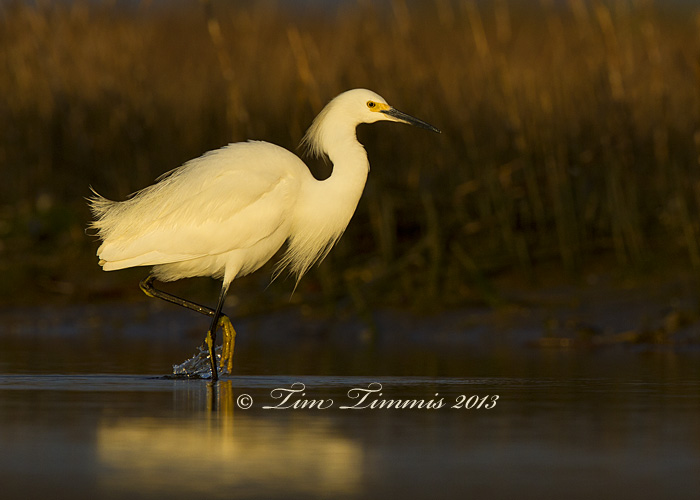
This Snowy Egret was hanging out during my last trip to Bolivar Flats. Another example of early morning light on a white bird. His plumage gets me in the mood for the upcoming activity at High Island’s rookery. Can’t wait.
Taken with Canon 7D and Canon 500mm F4 IS II with 1.4x III teleconverter mounted on Skimmer ground pod with Wimberley II gimbal head
1/1000 sec @ F9, manual exposure, ISO 400, 700mm
Willet Silhouette
I just can’t resist taking silhouette shots at sunrise. I was walking along the beach at Bolivar before sunrise with Avocets off to my right and Willets to my left. My goal is always to get Avocet shots but my gut told me to go for the Willets in silhouette as the sun was getting ready to come up. Glad that I made that decision as the Avocets ended up flying away as I was shooting the Willets.
This silhouette shows a good example of the narrow depth of field with a 500mm lens with the blurred foreground and background and a little strip in between that’s in focus.
Taken with Canon 7D and Canon 500mm F4 IS II with a 1.4x III teleconverter, mounted on Skimmer ground pod with a Wimberley II gimbal head.
1/640 sec @ F5.6, ISO 500, evaluative metering, +2/3 exposure compensation, 700mm

The Stand Out
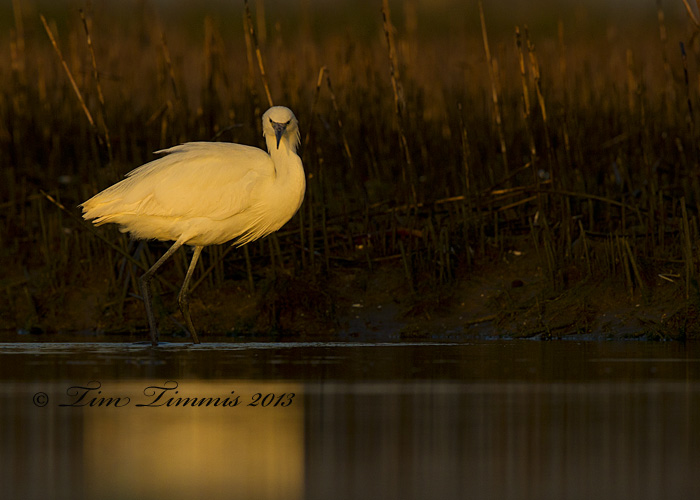
How do you make a white bird stand out? White bird + golden light + dark background + down low + eye contact + water+ reflection = Stand Out.
Got several action shots of this White Morph Reddish Egret along with this pose against a grassy background. I’m pleased with how this one came out. Took a few shots with spot metering and checked the histogram to confirm the exposure was good and then switched to manual exposure mode using the settings that I came up with.
Taken with Canon 7D and Canon 500mm F4 IS II with 1.4x III teleconverter mounted on Skimmer ground pod with Wimberley II head
1/800 sec @ F9, manual exposure, ISO 400
Snowy Egret on the Move
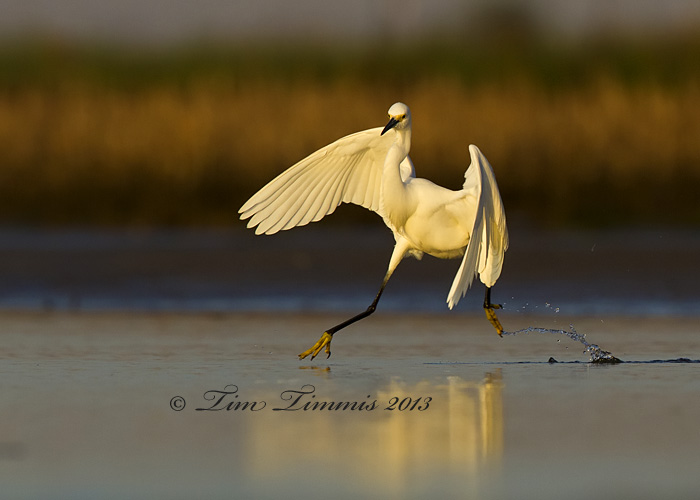
Spent some quality time yesterday morning at Bolivar Flats. The tide and sun were cooperating for once. Found a decent spot where birds were feeding and laid down on a sand bar for about 1.5 hrs to get some shorebird action shots. There was a White Morph Reddish Egret feeding along with this Snowy Egret. They would tolerate each other to a point but the White Morph finally had enough and tried to chase the Snowy away. Caught this shot when the Snowy was running from the White Morph. Luckily he didn’t leave and I ended up with over 3200 photos to sort through. Used manual mode for shooting these white birds to maintain the proper exposure as they were on the move.
Taken with Canon 7D and Canon 500mm F4 IS II with 1.4x III teleconverter mounted on Skimmer ground pod with Wimberlly II head
1/1000 sec @ F9 on manual mode
Sanderling Feeding
Sometimes it takes some effort to get to your veggies. This Sanderling is in full stretch mode to get his breakfast out of the sand.
Taken with Canon 7D and Canon 500mm F4 IS II lens with 1.4x III teleconverter mounted on Skimmer ground pod and Wimberley II head.
1/1250 sec @ F5.6, ISO 400, evaluative metering, +1/3 exposure compensation, 700mm

Size Does Matter
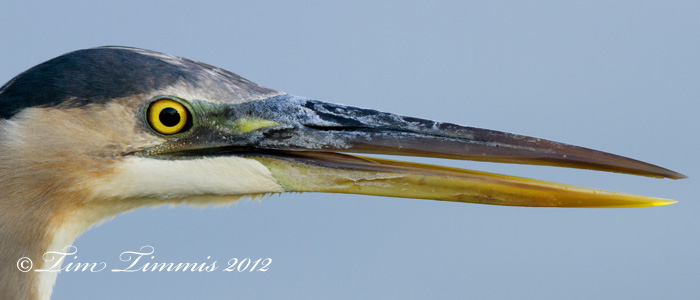
Most of the time it’s difficult to get real close to wildlife. Sometimes though you can get lucky and get close enough for a head shot or in this case, a little too lucky, when you can barely get their head in the frame. From the comfort of my stealth Honda, got this shot of a Great Blue Heron at Brazoria NWR. While shooting at 500mm, he came close enough for what I’d call a beak shot. Used a pano crop to highlight the length of his beak. Size does matter, in the bird world.
Taken with Canon 7D and Canon 500mm F4 IS II lens with 1.4x III teleconverter, handheld
1/200 sec @ F8, ISO 400, evaluative metering, + 1/3 exposure compensation, 500mm
Golden Avocet
Early morning golden light can be like magic for wildlife photos. I’m amazed at how many people I see that show up to locations that I’ve been shooting at as I’m leaving. They don’t seem to have a grasp on the concept of good lighting for wildlife photography. It’s all about the light, in my opinion.
Caught this Avocet in the golden hour just after sunrise. There are a few challenges with Avocet photography. Finding them, getting close to them and getting an isolated shot. They are always in a group while flying, feeding or just walking around. Getting a photo of a single Avocet can be golden, so to speak.
Taken with Canon 7D and Canon 500mm F4 IS II lens with 1.4x III teleconverter mounted on Skimmer ground pod with Wimberley II gimbal head
1/500 sec @ F9, ISO 400, evaluative metering, 700mm

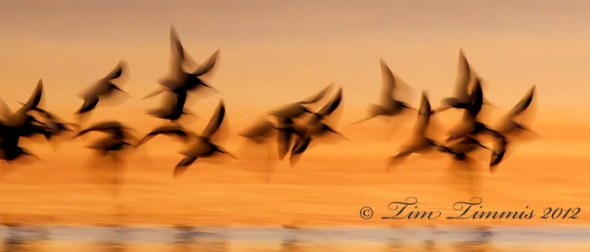
Blurred BIF Silhouette
There always seems to be flocks of small shorebirds flying around near sunrise. Caught this group doing a fly by while I was walking down the beach. Made for an interesting blurred silhouette shot. Cranked up the ISO to keep the shot from being a total blur.
Taken with Canon 7D and Canon 500mm F4 IS II lens with 1.4x III teleconverter, hand-held
1/40 sec @ F 5.6, ISO 800, evaluative metering, + 1/3 exposure compensation
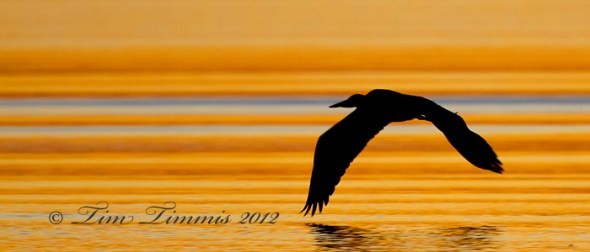
Great Blue Silhouette
Here is an early morning pre-dawn silhouette of a Great Blue Heron. I typically don’t like shots of birds flying away from me but this one works because of the calm water and the wing almost touching the water. Cropped this one as a pano just because I could. Go figure.
Taken with Canon 7D and Canon 500mm F4 IS II lens with 1.4x III teleconverter, hand-held
1/200 sec @ F5.6, ISO 800, evaluative metering, +1/3 exposure compensation, 700mm
The Year of the Falcon
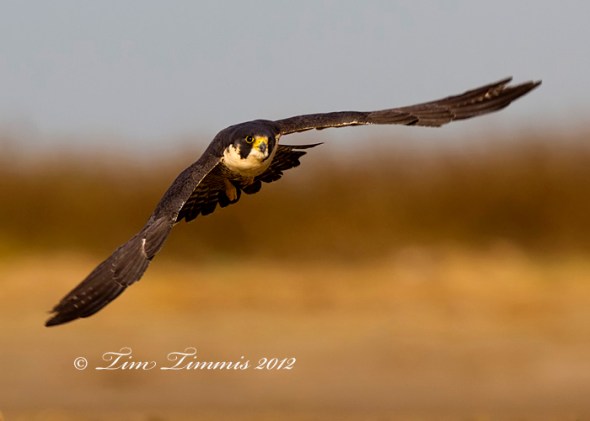
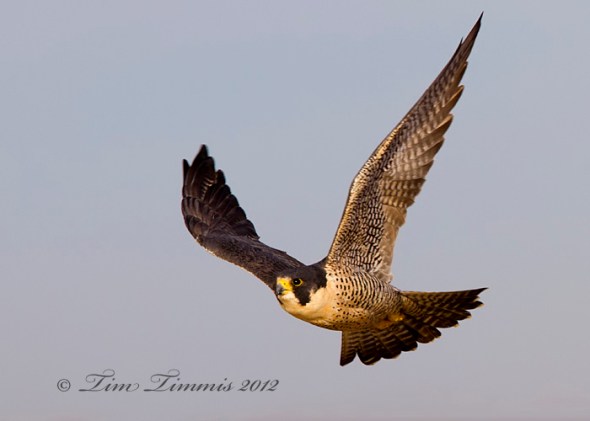
2012 started and ended with Peregrine Falcons at Bolivar Flats in Texas. Got some take-off shots of a Falcon back in January and had the opportunity again in late Dec. After spending some quality time shooting shore birds, headed back to my car when I spotted something out of the ordinary further down on the beach. Looked like a small post sticking up from my vantage point. Raised my camera and saw that it was my old buddy, the Peregrine Falcon. He was perched on top of a plastic bin that was sticking out of the sand.
Made my way towards him and ended up laying down to get a few photos. Wasn’t satisfied with my first position so I got up and moved to my right to get a better angle if he took off. They don’t shift their perched position much and tend to take off in the direction that they are facing. They also like to stretch out their wings right before they take off which can give you a good opportunity for a wings-up position. This one stretched, but did it with his wings down by his side. Shortly afterwards, he took off and flew towards me. Got several shots that I liked with the best of them shown below.
Taken with Canon 7D and Canon 500mm F4 IS II lens with 1.4x teleconverter mounted on Skimmer ground pod with Wimberley II gimbal head
1/1600 sec @ F7.1, ISO 400, evaluative metering, + 1/3 exposure compensation, 700mm
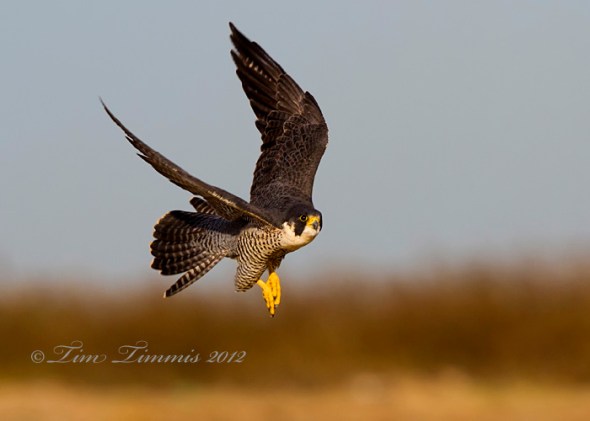
1/1600 sec @ F7.1, ISO 400, evaluative metering, + 1/3 exposure compensation, 700mm
1/1600 sec @ F7.1, ISO 400, evaluative metering, + 1/3 exposure compensation, 700mm

1/1600 sec @ F7.1, ISO 400, evaluative metering, + 1/3 exposure compensation, 700mm
Snowy Egret Catching a Fish
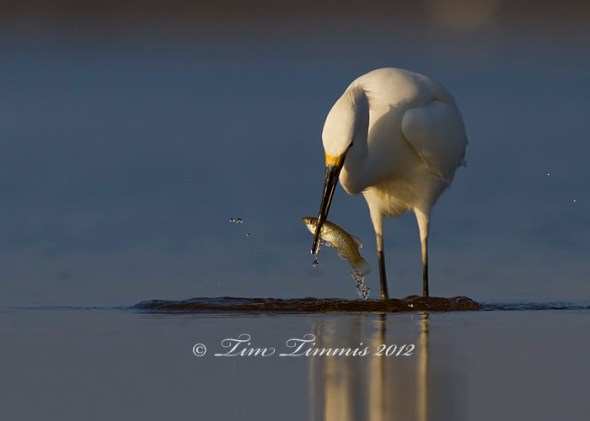
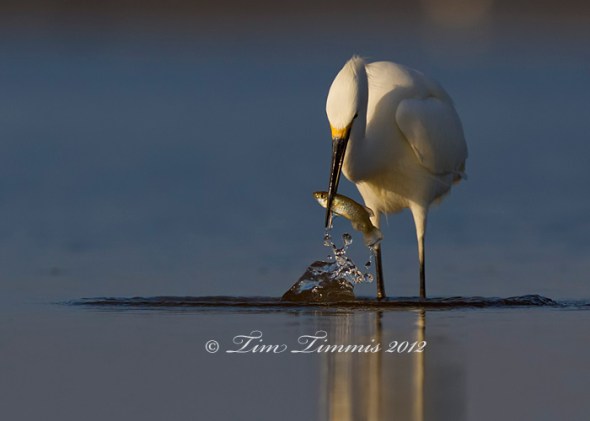
It always a good time when you see a shorebird plunge his head into the water and come up with a fish. This Snowy Egret was working his way towards me and put on a good fishing display. A high-speed camera comes in handy in this situation as you can get a series of shots of the action. Had to use negative exposure compensation to keep the whites from blowing out on this bright white bird.
Taken with Canon 7D and Canon 500mm F4 IS II lens with 1.4x III teleconverter mounted on Skimmer ground pod with Wimberley II gimbal head
1/2000 sec @ F8, ISO 250, evaluative metering, -1 exposure compensation
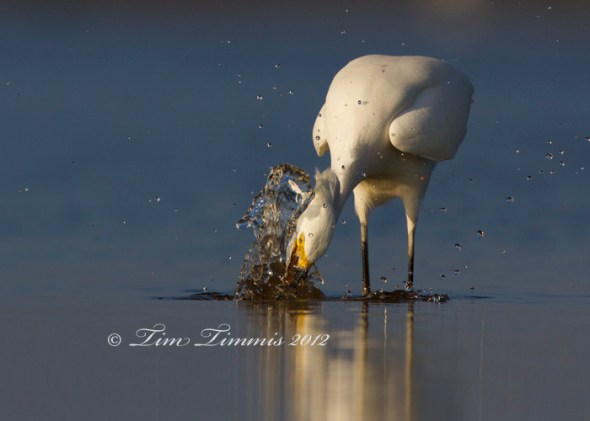
1/2000 sec @ F8, ISO 250, evaluative metering, -1 exposure compenation
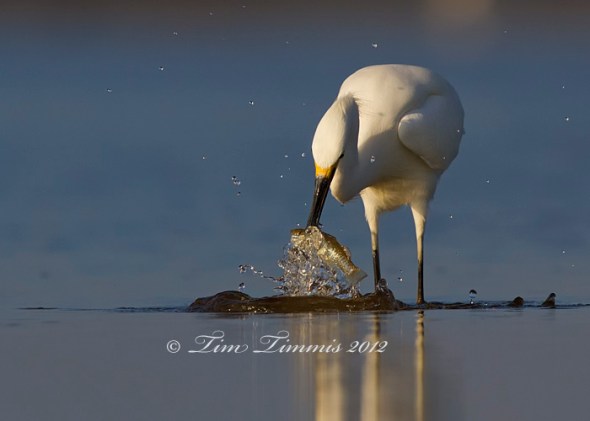
1/2000 sec @ F8, ISO 250, evaluative metering, -1 exposure compenation
1/2000 sec @ F8, ISO 250, evaluative metering, -1 exposure compenation
Avocets in Flight Silhouette
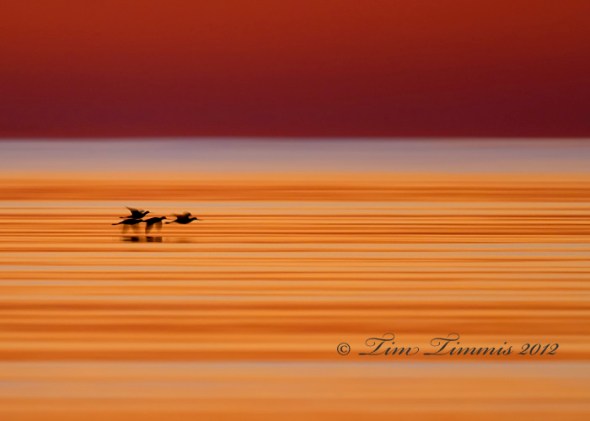
The Gulf of Mexico was very calm last Sat. at Bolivar Flats. It’s a rare occurence that I only see once or twice per year. Makes for some great pre-dawn photo op’s of birds in flight with the nice orange glow before the sun comes up. Took this hand-held shot while standing about knee-deep in the Gulf while waiting for the birds to fly by. The slow shutter speed helped to blur their wings.
Taken with Canon 7D and Canon 500mm F4 IS II leans with 1.4X III teleconverter, hand-held
1/13 sec @ F5.6, ISO 500, +2/3 exposure compensation, 700mm
Drip…drip…drip…
Caught this Willet with water dripping out of his beak as he was pulling his head out of the water. I always start to shoot when their beak starts going into the water to help capture what they may come up with when coming out of the water.
Taken with Canon 7D and Canon 500mm F4 IS II lens and 1.4x III teleconverter, mounted on Skimmer ground pod with Wimberley II gimbal head
1/500 sec @ F9, ISO 400, evaluative metering, 700 mm

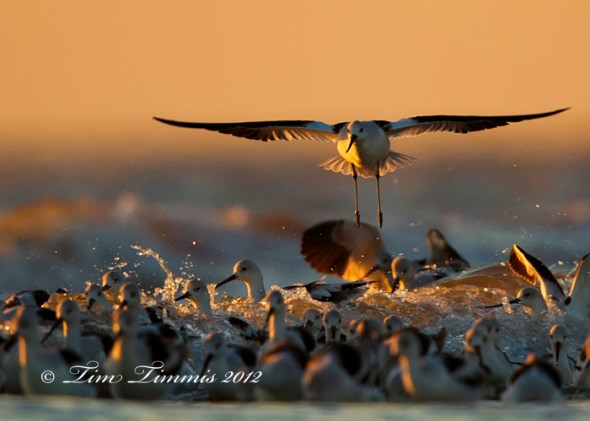
Avocets in Flight at Sunrise
It can be challenging to get flight shots while laying down with a ground pod. It’s difficult to keep panning with the birds for any distance since your range of motion is limited in that position. This group of Avocets from Bolivar were flying near a sand bar with the Gulf of Mexico in the background. Close to a full frame shot.
Taken with Canon 7D and Canon 500mm F4 IS II lens and 1.4x III teleconverter mounted on Skimmer ground pod with Wimberley II gimbal head
1/800 sec @ F5.6, ISO 500, evaluative metering, +2/3 exposure compensation

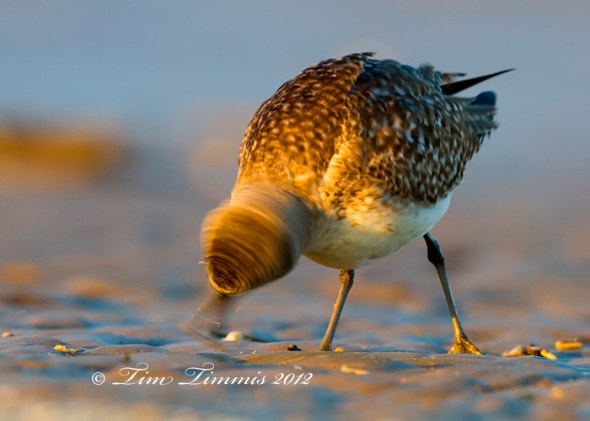
A Real Head Spinner
I’d get a massive headache if I had to do this while eating. Plus there would be food everywhere.
Taken with Canon 7D and 500mm F4 IS II lens and 1.4x III teleconverter, mounted on Skimmer ground pod with Wimberley II head
1/160 sec @ F 8, ISO 400, 700mm
Landing Difficulty
Sometimes life can make it hard to find a good spot to land. Same is true in the animal kingdom.
Taken with Canon 7D and Canon 500mm F4 IS II lens with 1.4x III teleconverter mounted on Skimmer ground pod and Wimberley II gimbal head
1/640 sec @ F 5.6, ISO 400, spot metering, 700mm
Yellow Legs
The elusive Yellow Legs can be hard to find and difficult to shoot as they dart around so much. They typically hang out near the weeds along the shore line. Was fortunate to have one very close to me at Bolivar. He was attracted to the area right in front of me when the Snowys and Avocets moved in to feed. Very little cropping on these shots.
Taken with Canon 7D and Canon 500mm F4 IS II with 1.4x III mounted on Skimmer ground pod and Wimberley II gimbal head
1/1250 sec @ F8, ISO 400, evaluative metering, +1/3 exposure compensation, 700mm

1/1000 sec @ F8, ISO 400, evaluative metering, +1/3 exposure compensation, 700mm
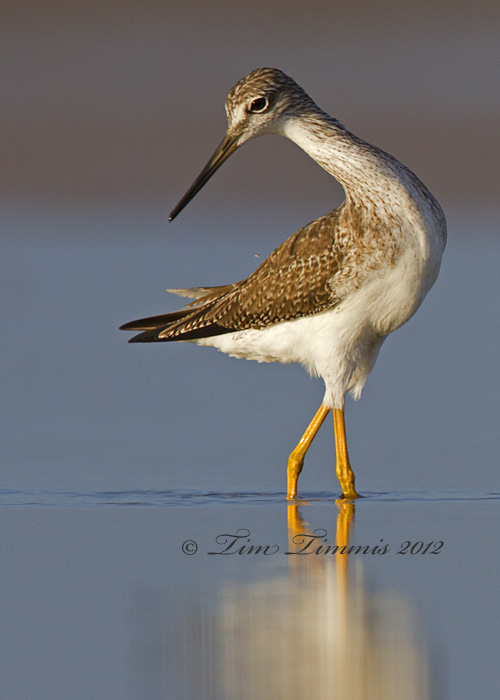
1/1250 sec @ F8, ISO 400, evaluative metering, +1/3 exposure compensation, 700mm

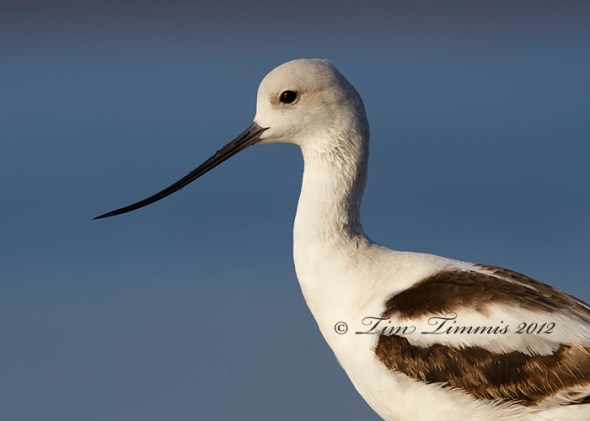
Avocet Close Ups
Here’s what happens when Avocets get too close. These are full frame shots from Bolivar Flats. Good times were had by all…me and a few hundred of my bird friends.
Taken with Canon 7D and Canon 500mm F4 IS II with 1.4x III mounted on Skimmer ground pod with Wimberley II gimbal head
1/640 @ F10, evaluative metering, ISO 250, 700mm

1/800 @ F10, evaluative metering, -1/3 exposure compensation, ISO 250, 700mm
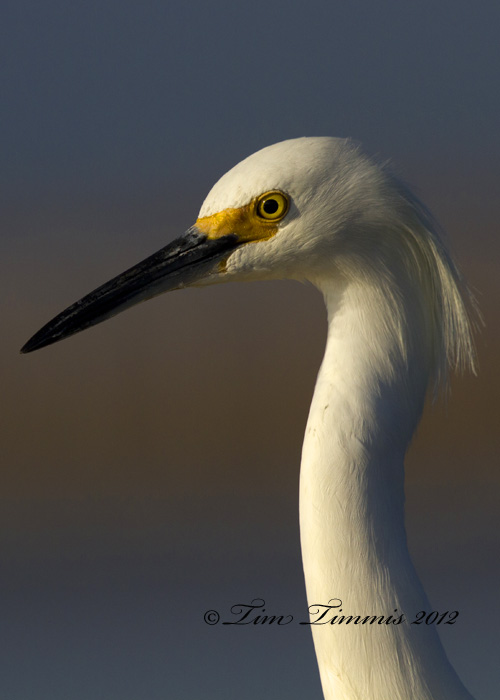
Snowy Egret Head Shot
Here is a headshot of a Snowy Egret from my last trip to Bolivar Flats. He was too close for anything but a close up at 700mm. Didn’t want to try to take off my 1.4x so I settled for a close up. Had to use negative exposure compensation to keep from blowing out the whites. I used to use spot metering a lot but am switching to using evaluative metering and adjusting the manual exposure compensation to keep the exposures accurate when they move around.
Taken with Canon 7D and Canon 500mm F4 IS II and 1.4x III teleconverter mounted on Skimmer ground pod with Wimberley II head
1/1600 sec @ F8, ISO 250, evaluative metering, -1 exposure compensation
Shorebird Jackpot
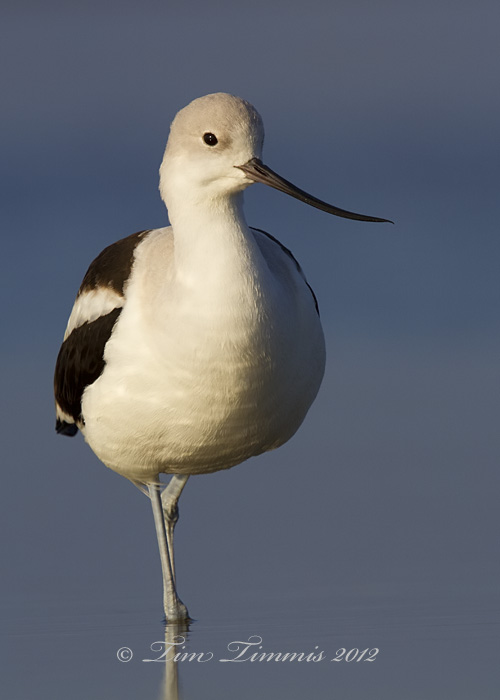
Hit the jackpot last weekend at Bolivar Flats with my shorebird friends. The morning started out a little boring but ended up with a bang. Tried to get close to a group of Avocets by wading out into the Gulf with my intent to lay down on a sandbar that was still several inches under water. Decided that it wasn’t a great idea with a pricy lens in tow. Moved my position around a couple of times and ended up lying next to a small tide pool area with several Avocets hanging out beyond it. Couldn’t get closer without spooking them so I decided to get into a decent shooting position and wait for them to come to me, I hoped. Was rewarded when one Snowy Egret came into my area to catch a fish. That attrackted several more Snowy’s and other birds. Ended up with having 6 Avocets, 6 Snowy Egrets, 3 Willets and a Yellow Legs within 30 ft of me. They got too close at 700mm and I had to settle for head shots in the end. A great problem to have.
It was a good day with taking 3627 photos. Took a while to sort through them all but ended up with saving 1200 with 146 being potential wall hangers. Here is one of my favorite Avocets from this outing. Only cropped to a vertical shot. More to come…
Taken with Canon 7D and Canon 500mm F4 IS II lens with 1.4x III teleconverter using a Skimmer ground pod with Wimberley II gimbal head
1/1000 sec @ F 10, ISO 250, evaluative metering, -1/3 exposure compensation, 700mm
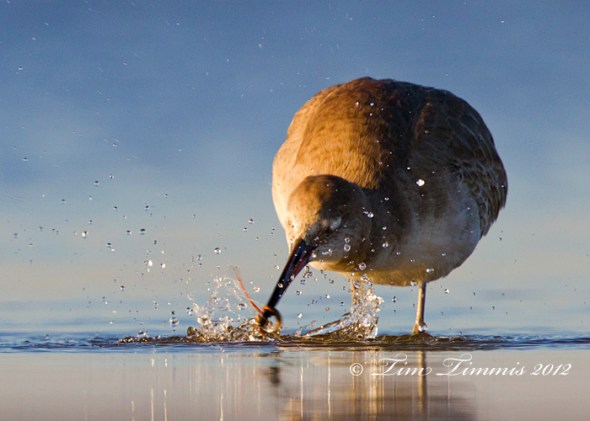
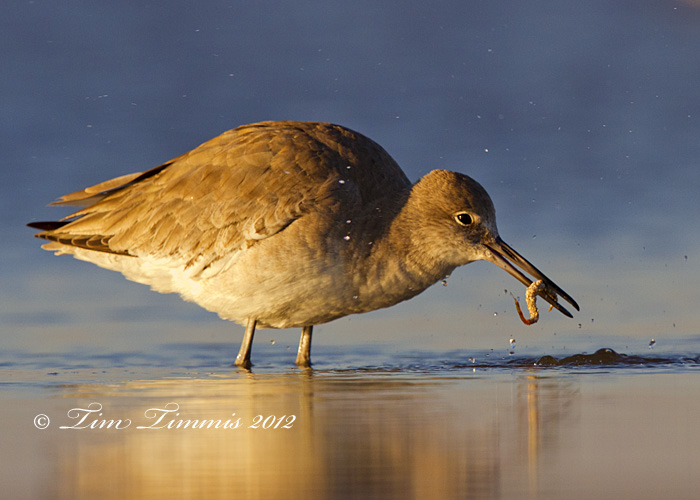
Willet Feeding
If all else fails, I’ll take photos of Willets at Bolivar Flats. They are the old stand-by that are always around and cooperative. This one was busy feeding on some local vegetation. Made for some cool splashing activity while down at its level with ye old ground pod. Went back to Bolivar yesterday and hit the jackpot. More to come…
Taken with Canon 7D and Canon 500mm F4 IS II lens with 1.4x III teleconverter mounted on Skimmer ground pod with Wimberley II gimbal head.
1/2000 sec @ F7.1, ISO 400, spot metering, + 2/3 exposure compensation, 700mm
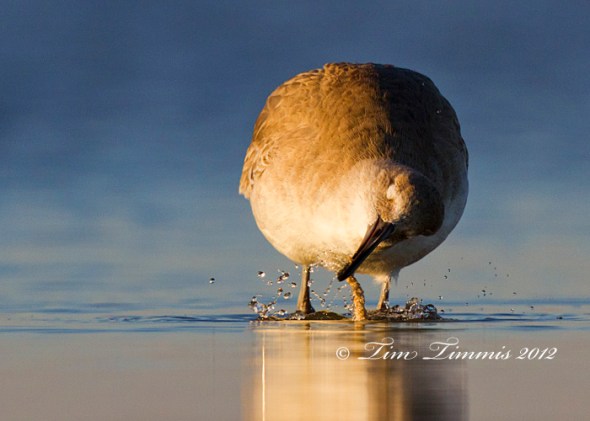
1/2000 sec @ F7.1, ISO 400, spot metering, + 2/3 exposure compensation, 700mm
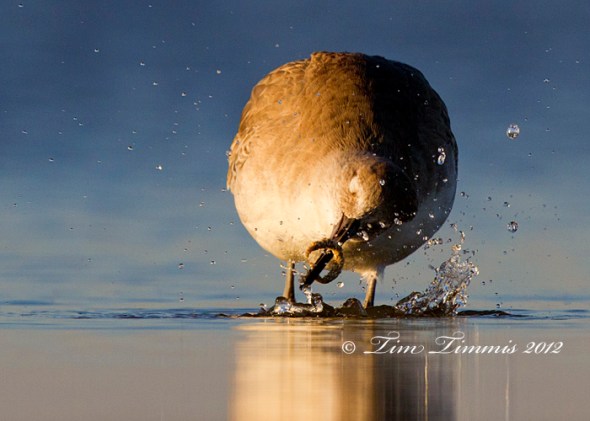
1/1000 sec @ F7.1, ISO 400, spot metering, + 2/3 exposure compensation, 700mm
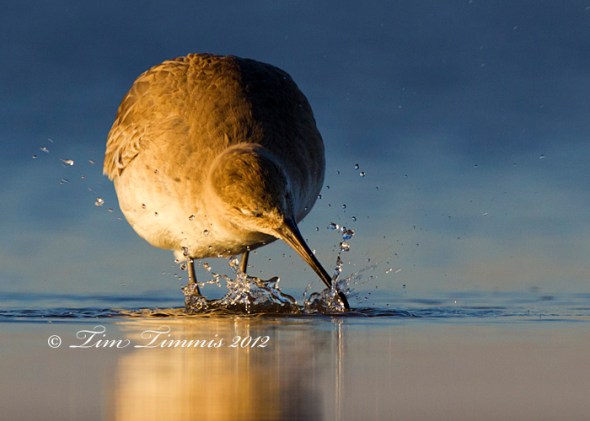
1/1250 sec @ F7.1, ISO 400, spot metering, + 2/3 exposure compensation, 700mm
1/800 sec @ F7.1, ISO 400, spot metering, + 2/3 exposure compensation, 700mm
Clapper Rail
While taking photos of a Great Blue Heron out the car window at Brazoria NWR, I saw movement out of my left eye. I try to keep both eyes open when shooting just for such an occasion. A Clapper Rail had jumped up on a platform right in front of me. I changed the lens to its minimum focusing distance, changed the aperture to F9 and cranked up the exposure compensation another notch to +1. Ended up getting this full framed photo. Had a hard time seeing him as the morning sun was coming up behind me and shining into the view finder with my glasses preventing a tight seal on the eye piece. Was thrilled to get any shots in focus with 1/100 sec shutter speed. Gotta love the IS on the new 500mm lens. Would have been good to crank up the ISO but I couldn’t see the setting in the view finder. He only stayed around for about 20 seconds but it was a fun 20 seconds.
Taken with Canon 7D and Canon 500mm F4 IS II, 1.4x III teleconverter, hand-held out the car window
1/100 sec @ F9, ISO 400, evaluative metering, +1 exposure compensation, 700mm

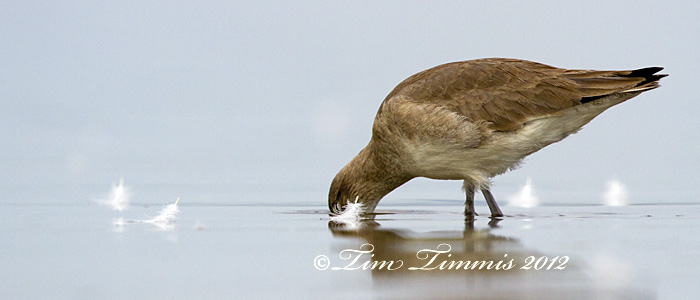
Like Feathers Floating on Water
While the tide rolled in, the feathers on the sand bar around me floated away and helped to highlight this Willet. I didn’t want to move with this Willet being so close so I got a little wet as well. Stayed in place until the water got above my ground pod. The biggest issue with laying in the salt water is that it streams off of your coat sleeves when you get up and can run all over your camera equipment. My Lenscoat raincoat helps to keep the gear dry.
Taken with Canon 7D and Canon 500mm F4 IS II, 1.4x III teleconverter mounted on Skimmer ground pod with Wimberley II gimbal head
1/500 sec @ F 7.1, ISO 500, evaluative metering, +2/3 exposure compensation
 Tim Timmis Photography